
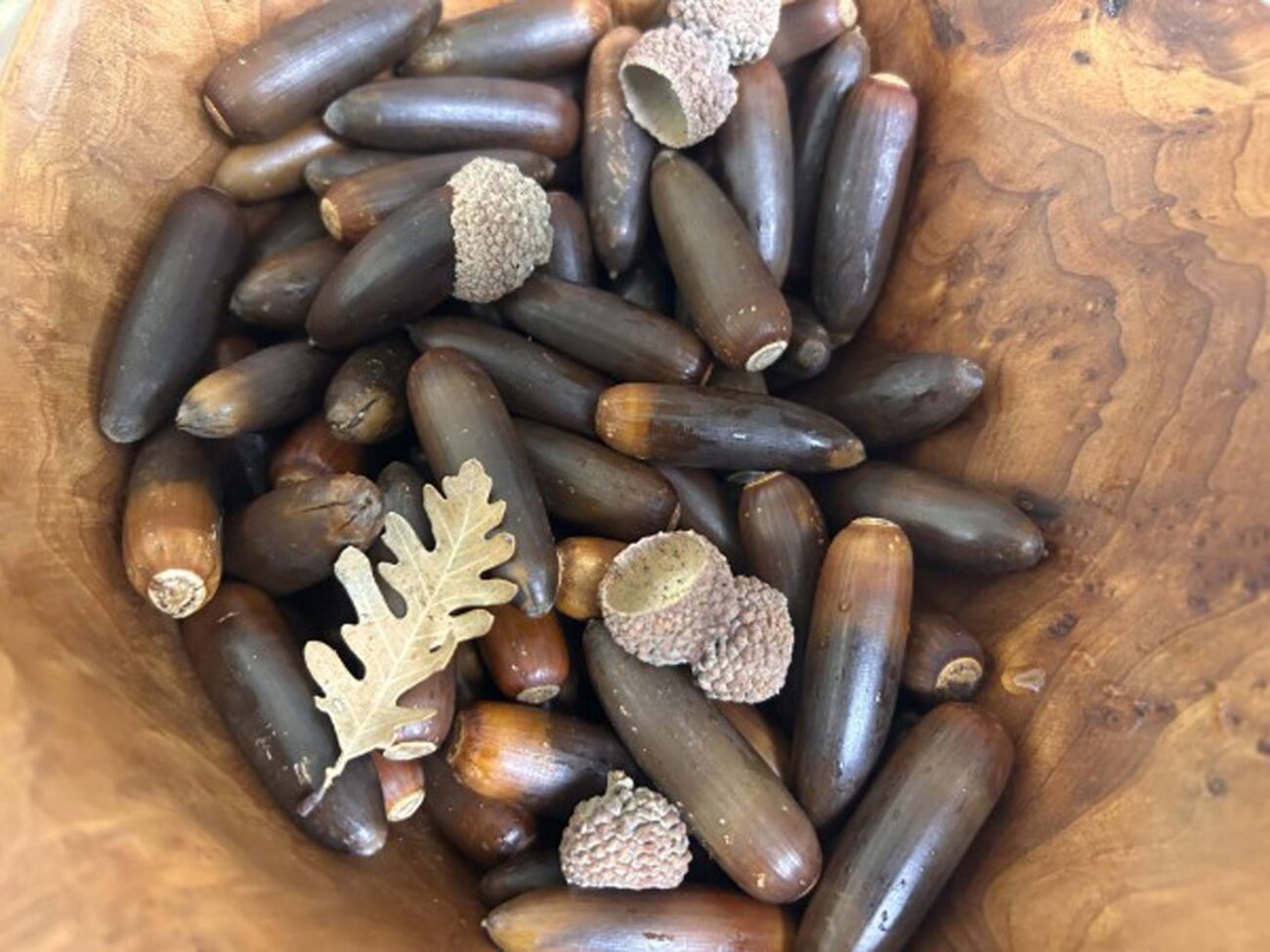
November is here! As our days get suddenly shorter on the 1st of November and the black oaks are burnished deep burgundy to bright yellow in the mountains, it just feels like a natural time to gather in and be thankful. Whether it’s seeds, or friends and relatives, it’s a natural time to connect, appreciate the gifts of 2026, and envision a positive future.
A record-setting El Niño system is coming. That is certainly something to consider and prepare for, to the extent we can. An abundance of water will have a huge upside, of course; it’s just the way it arrives that could present some problems. But, by now we’ve probably all developed some resilience to the extremes that are the new “normal” in our changed climate. We will be finding out as time rolls on, just how resilient California’s native plants are.
If I had to place a bet, I’d bet on the oaks as fantastic survivors. Very fortunately they are, and have been for millions of years, foundational in California ecosystems. Envisioning a positive future for Shasta Chapter would place us between our region’s oak woodlands, and the development interests that repeatedly cut down groves of oaks that are hundreds of years old.
For Shasta Chapter to be effective locally in conservation, we need to have a good relationship with the state level leadership in Sacramento. Laurie Burk, our Editor and Publications Chair for decades, recently resigned due to differences with the central leadership that became apparent in a conservation context last summer. We briefly published her initial resignation post a couple months ago, but context was missing. It simply left too many questions unanswered.
So, back to the drawing board, and this month we are publishing the fuller context. We think it is better to operate in a transparent way. Hopefully, the misunderstanding with our central CNPS leadership will be resolved, and our Chapter will have their backing to be an effective conservation leader in our region. To get there, we must take the next step and to tell it like it was.
I’m sure our state level CNPS staff would have their context as well. That is missing here, because we simply don’t and can’t know what that was. But we can safely assume that CNPS staff are continuously bombarded with conservation dilemmas from throughout California. There are how many local chapters? More than I can count now. CNPS staff have an incredible communications challenge to even stay in touch with us at all. Granting that we’re all human, and have some limitations, and we’re all for conservation of California’s native flora, let’s understand our issues and move forward based on these facts. We’re on the same team.
If I can be allowed to put it into an acorn shell, we just need to understand each other better.
Much gratitude to Laurie Burk for her four decades of generously donating her time and efforts to Shasta Chapter! This month, even in her resignation article, she provides us a foundation for moving forward toward having a better understanding and working relationship with our state level CNPS staff. We thank her for that as well.
~ MaryAnn McCrary, VP