Photo © Doug Mandel.
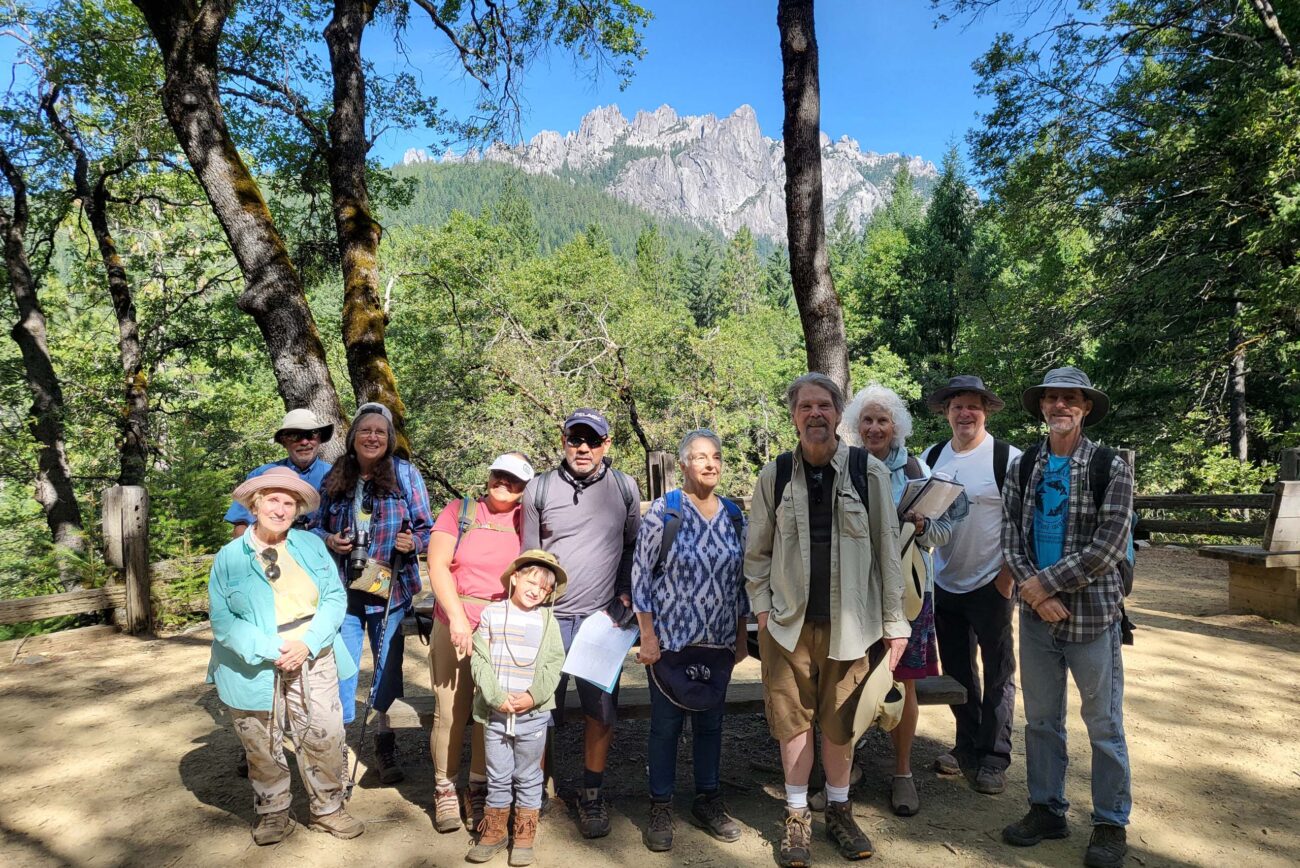
A break in hot weather made for a pleasant hike on largely shaded trails in Castle Crags State Park on June 14. Eleven people, ranging in age from 6 to 78 years old, came out to enjoy this fun field trip.
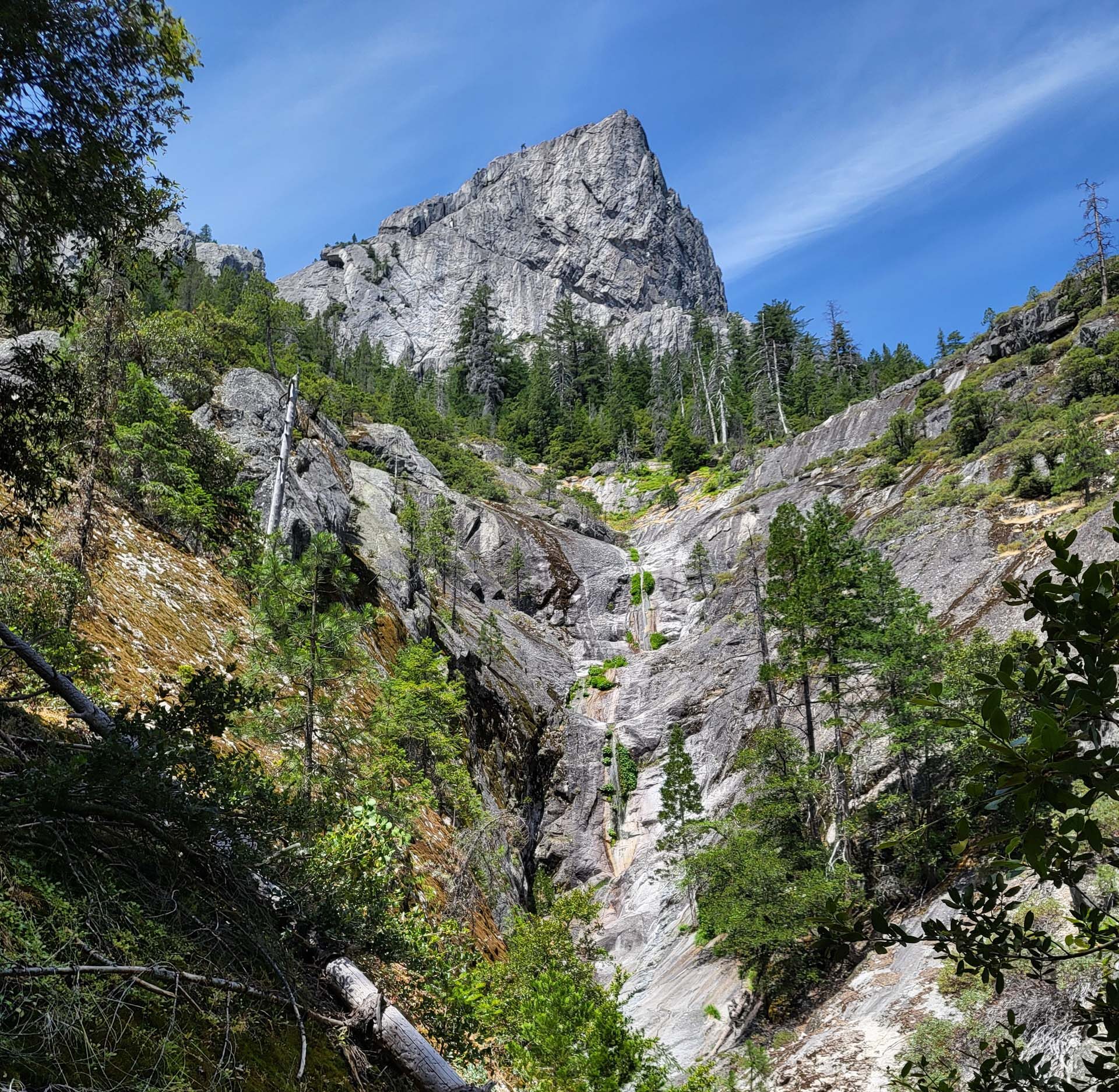
Starting at the trailhead parking lot, we first walked up to the overlook where we had views of both Castle Crags and Mt. Shasta. We identified the more common trees and shrubs on this trail to get our plant memory working, and to introduce beginners to the more common plants. We saw ponderosa and sugar pines, Douglas-fir, incense-cedar, both the shrub and tree varieties of tan oak, black and canyon live oaks, Pacific dogwood, and California hazel, among others. Herbaceous plants included Shasta County arnica, phantom orchid, pine violet, and pinedrops.
After this plant introduction and warmup, we walked the Root Creek Trail, which is a level, ~1.5-mile trail on a northeast-facing slope in mixed-conifer forest. This trail provides a great variety of plants, many of which we had just seen. We crossed several small creeks on footbridges that provided good viewing platforms, so we didn’t have to trample any plants. At these creeks, we found raspberries, ninebark, five-fingered fern, chain fern, mock orange, California lady’s-slipper, leopard lily, Indian rhubarb, elk clover, goat’s-beard, and more, under canopies of big-leaf maple, white alder, and Pacific dogwood, among others.
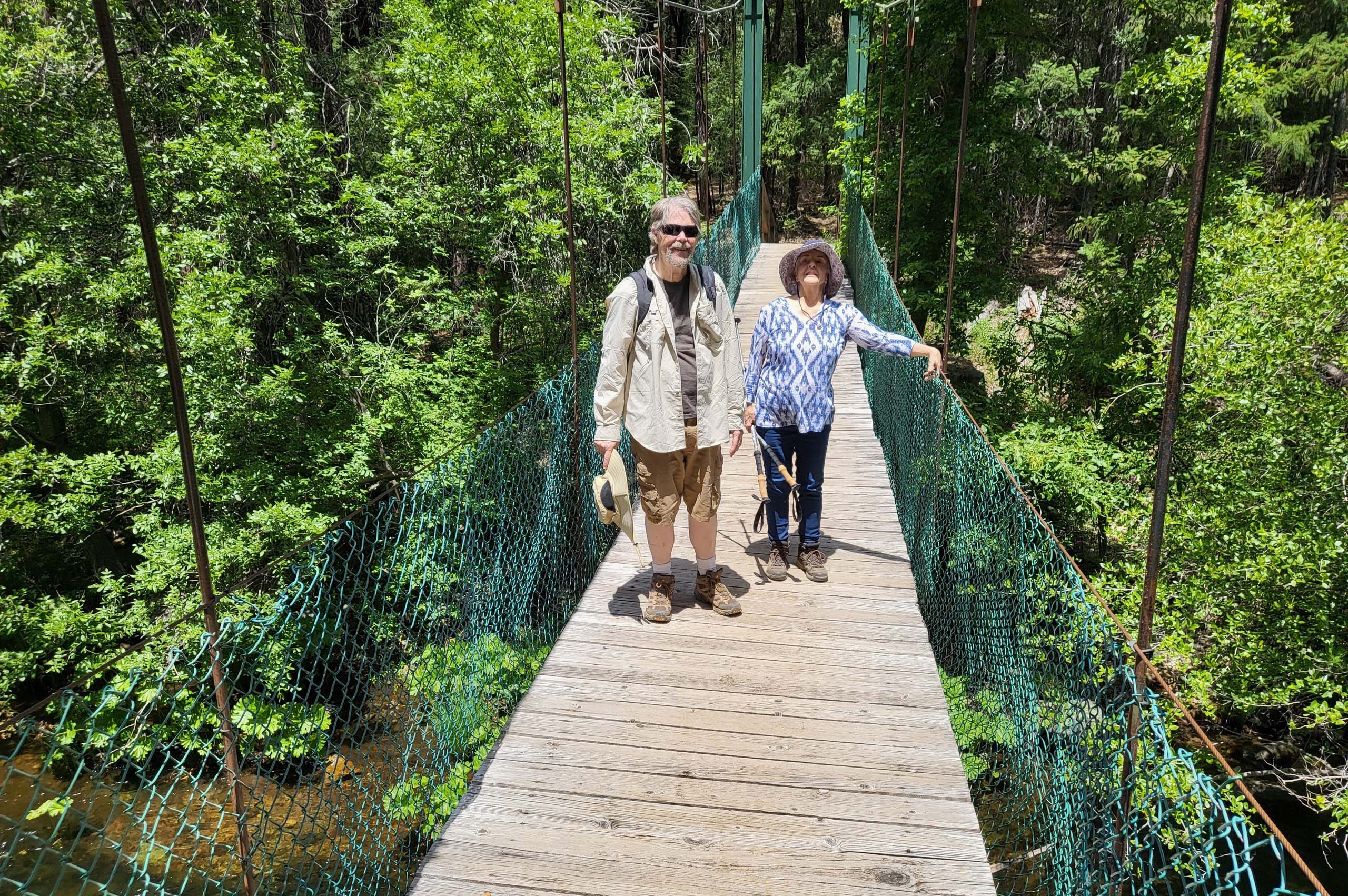
After this hike, seven of our group went on to the pedestrian bridge across the Sacramento River on the River Trail, where, all within about 100 feet, we saw Port Orford cedar, Pacific yew, rattlesnake orchid, and Oregon boxwood.
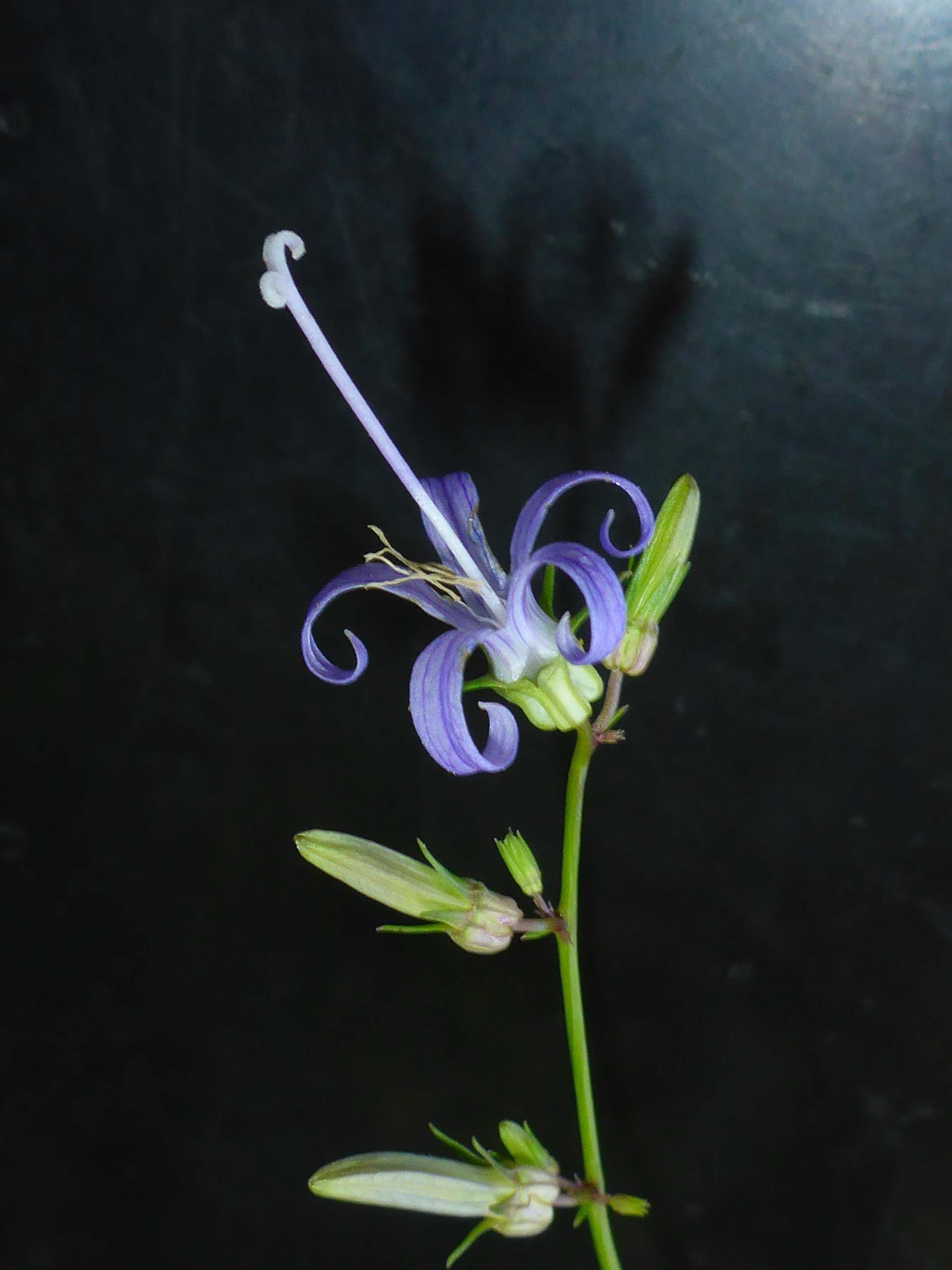
Many participants had iNaturalist on their cell phones. Viktoria Peterson used it to identify a plant that is also found at Whiskeytown National Recreation Area, which I could never key out: California harebell. Doug Mandel, our unofficial photographer, said he entered 32 plants in iNaturalist! ~David Ledger