
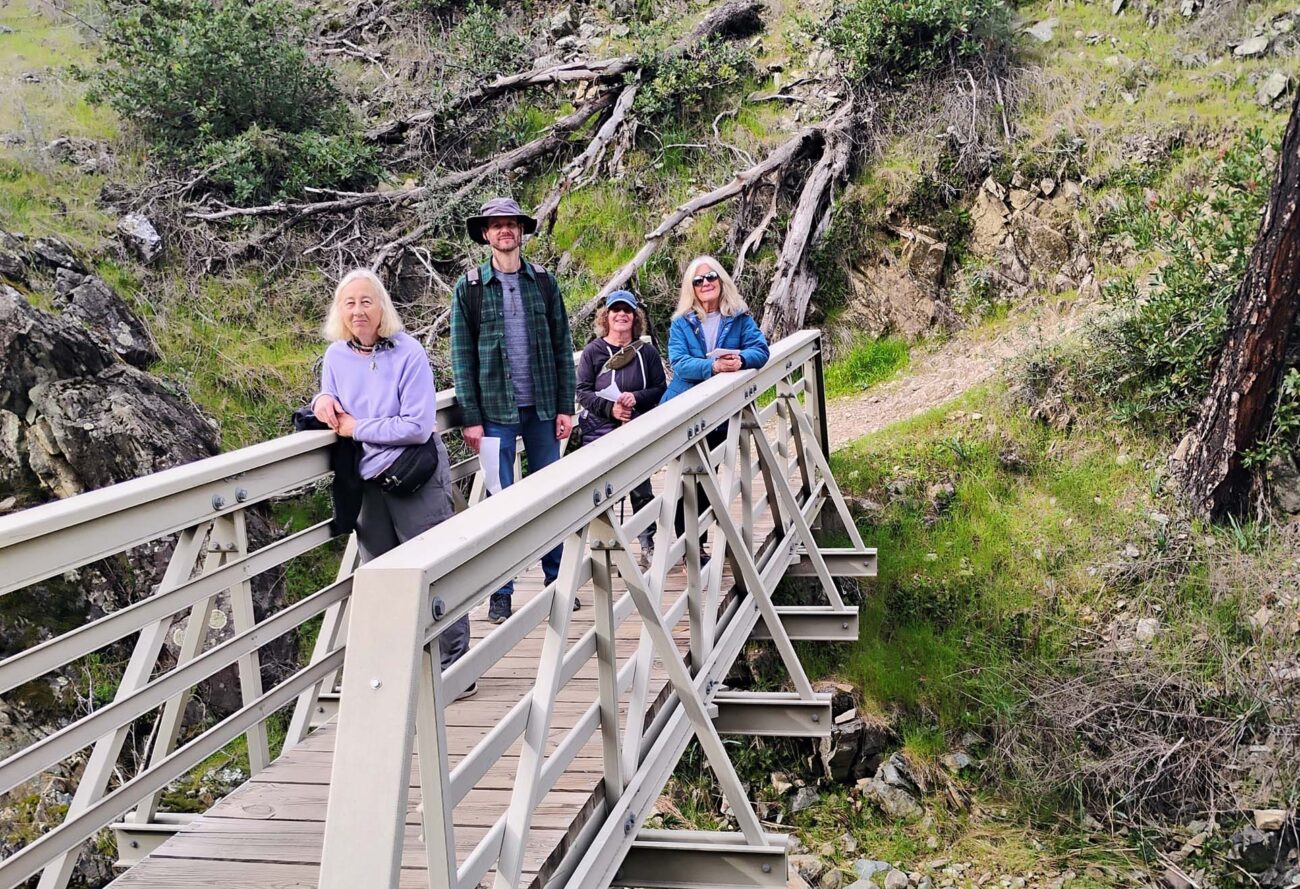
We had wonderful weather for our 3½-mile Trail 58 field trip, but only five people showed up, including myself. It did make it much easier for everyone to see the plants and the many mining artifacts along the trail. This is a fairly easy trail with only one steep section down to a creek. While the 2018 Carr Fire burned this area, more than a few canyon live oaks and gray pines, and a ponderosa pine, survived.
Most of the plants we saw were common, but we did see willow dock (Rumex salicifolia), which was unusual. The following plants were in bloom: a male arroyo willow (Salix lasiolepis), deer brush (Ceanothus integerrimus), climbing bedstraw (Galium porrigens), Henderson’s shooting-star (Primula hendersonii), and young white-leaved manzanita (Arctostaphylos viscida). Surprisingly, there were many Lemmon’s ceanothus shrubs (Ceanothus lemmonii) on the trail but no buckbrush (Ceanothus cuneatus) that we could see. Many more plants should be blooming by early March. This is a good trail to see how fast some chaparral and oak woodlands can recover from fire.
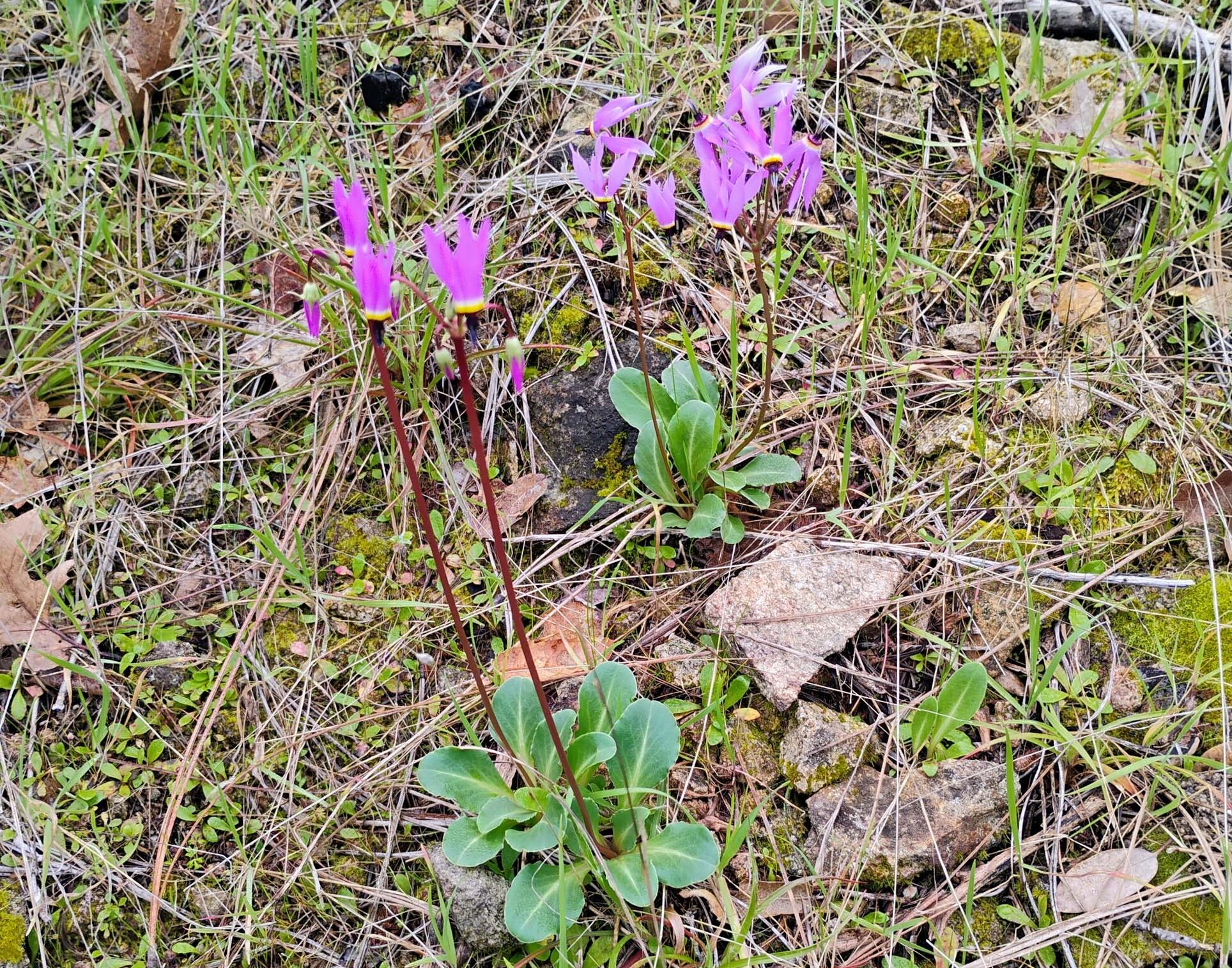
Photo by David Ledger.
On much of the trail, we were looking down on Middle Creek, and we could also see the old pioneer Middletown Road across the canyon, which is now a paved trail popular for biking. Fortunately, little dodging of mountain bikes is required on Trail 58. ~David Ledger