
Photo by Holly White-Wolfe.
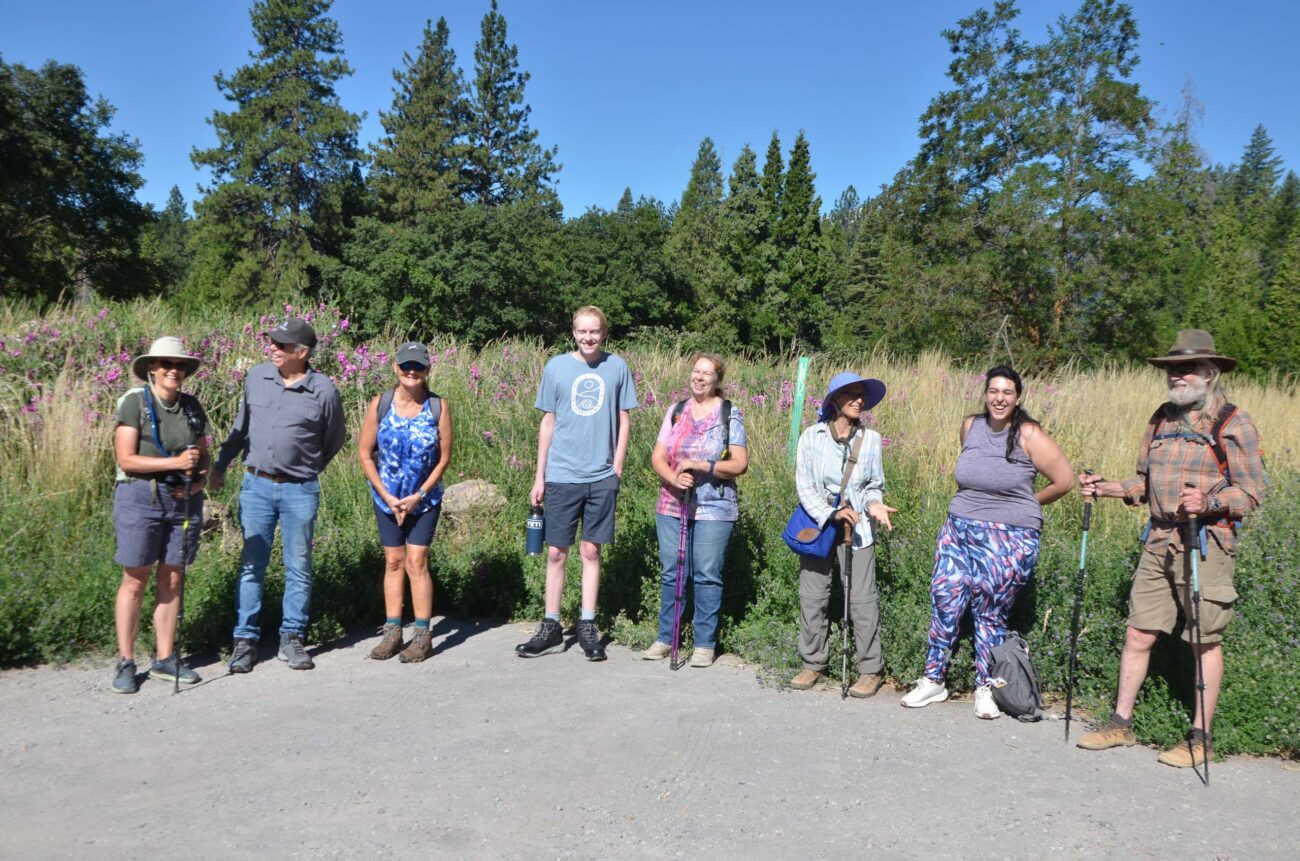
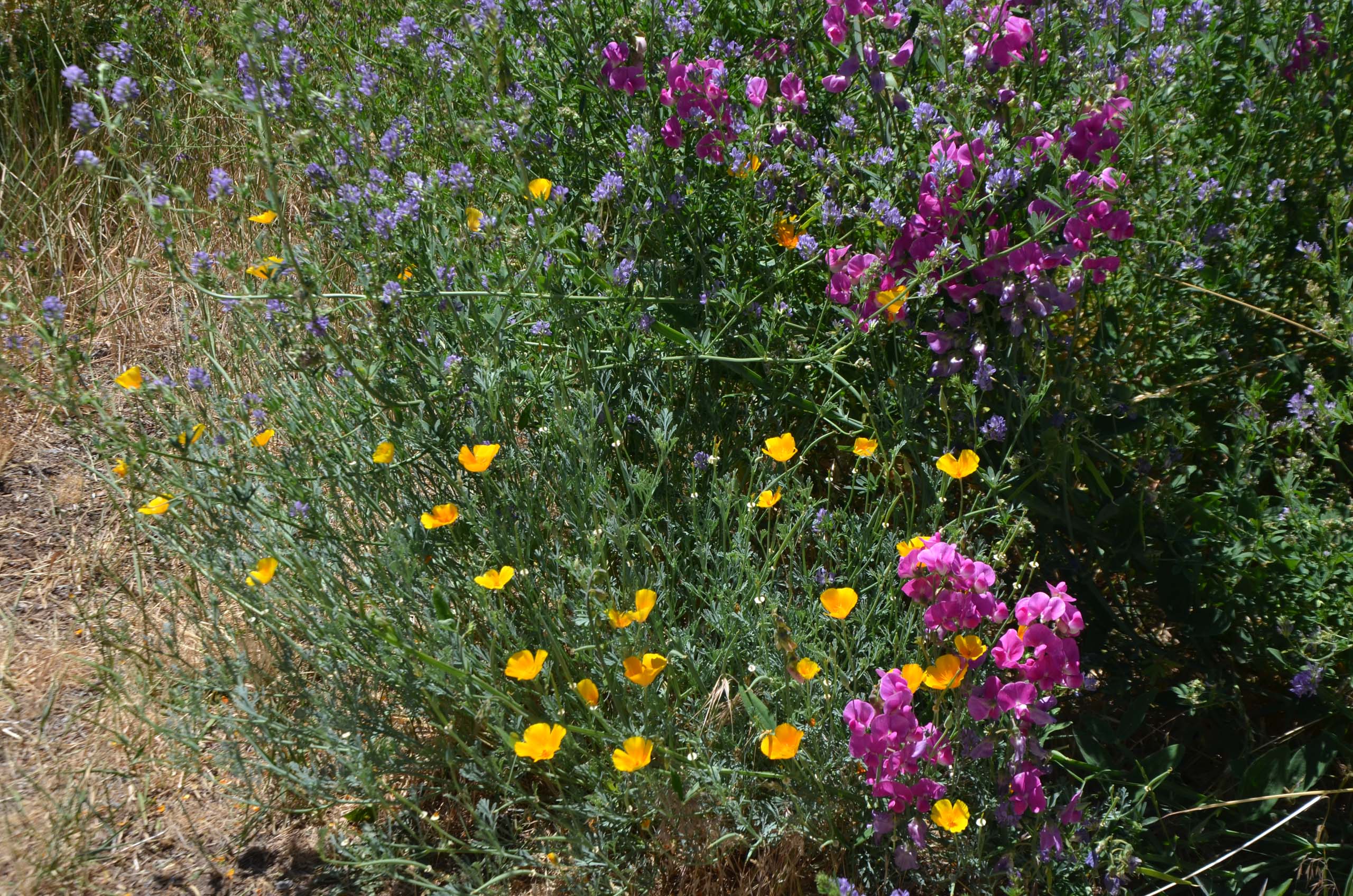
The June 29 hike up Spring Hill Trail in Mt. Shasta was a delightful escape from hot Redding temperatures. Our nine hikers were met with clear blue skies, warm sunshine, and a parking lot rimmed with sweet peas, California poppies, and abundant alfalfa covered with purple flowers – a plant easily identified by Bonnie, who grew up raising cattle. This enchanting display was buzzing with pollinators of various types.
Before heading up the hill into the cool shade of the mixed conifer forest featuring California incense-cedar, Douglas-fir, sugar pine, black oak, white fir, ponderosa pine, and canyon live oak, we took the time to introduce ourselves and share something that made us smile that morning. The responses were mixed with gratitude and humor and set a welcoming tone for a first-time Shasta Environmental Alliance hiker, Kyle, and Maria, an international guest visiting from Jordan. Maria was in Redding for a few weeks, visiting her sister, and found herself needing some local nature and social activity. While enjoying the forest and mountain scenery, she taught us about the natural environment of her home country. By the end of the hike, she had made fast friends and exchanged contact information with several other hikers.
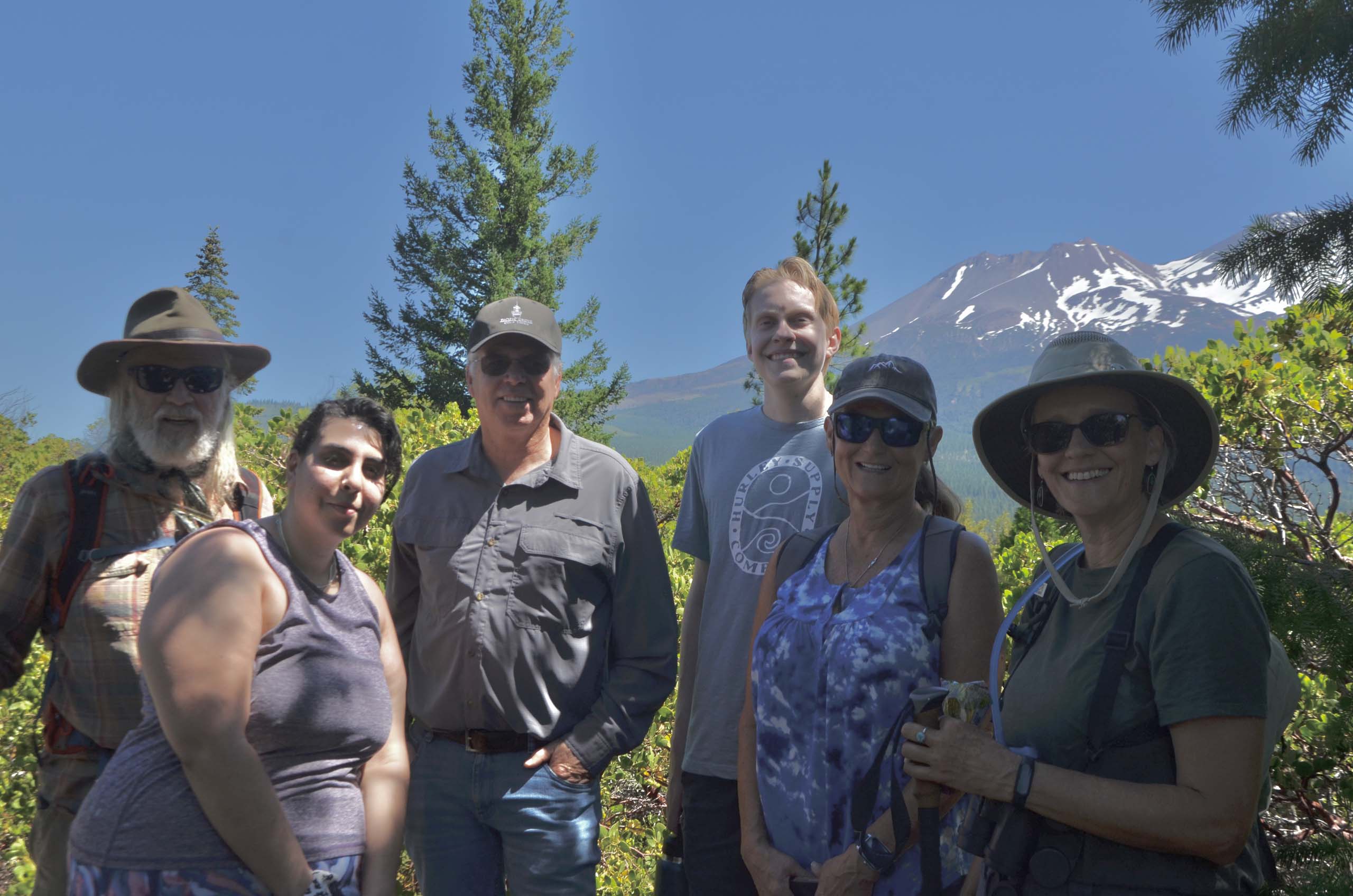
Photo by Holly White-Wolfe.
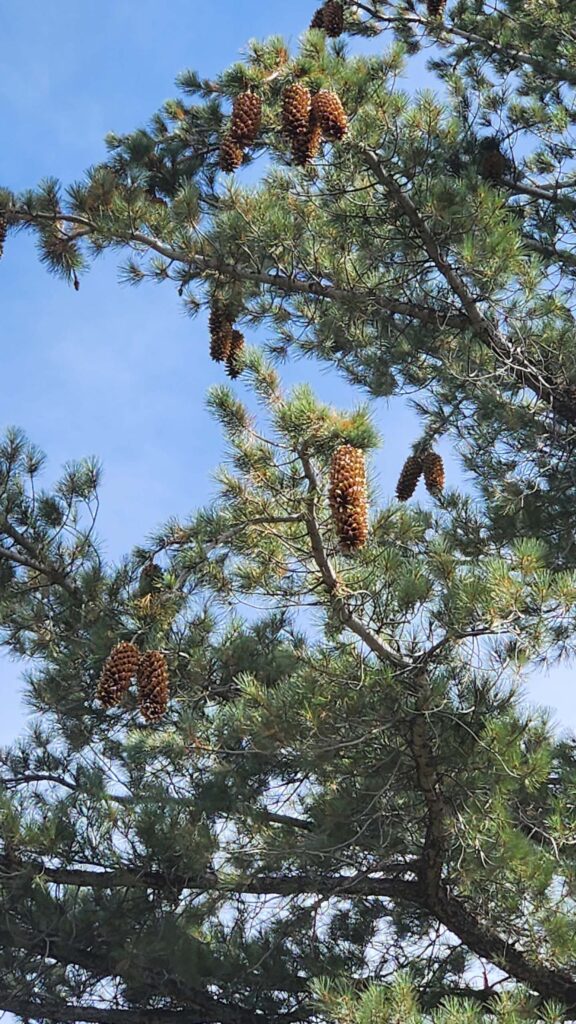
There was no particular educational theme to this hike. Instead, our focus was less about the destination and more about getting curious about our surroundings. The trail has a great deal of biodiversity, and we stopped to look at abundant antelope bitterbrush, and wondered why some berries on a green manzanita seemed exceptionally large. We admired towering sugar pines with large cones drooping from the ends of their branches like ornaments. Sugar pines are the tallest and largest pine in the pine genus and their cones can be up to two feet long. Unfortunately, there weren’t many wildflowers along the main trail, which may have been due to bulldozer activity in May to fight a small fire on the northwest side of the hill.
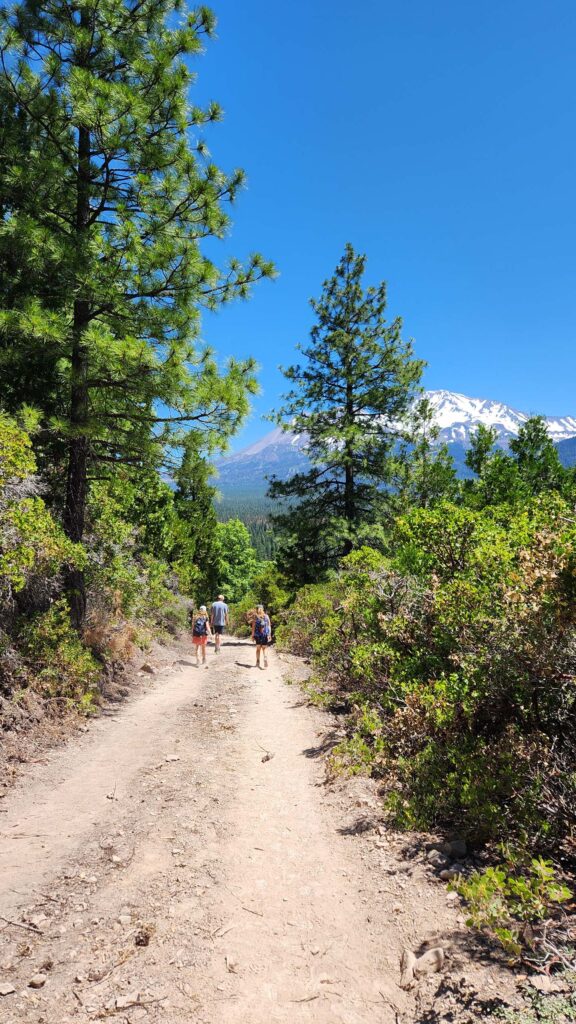
Several vista-point benches are a particularly nice feature of this trail, offering spectacular views of Mt. Shasta, and sweeping views of Strawberry Valley and the Trinity Mountains. The views are a bit obscured at the top of the hill, but we enjoyed crowding around a picnic table fully shaded by a large canyon live oak to enjoy a snack and some lively conversation. The hilltop is abundant with established bitter cherry shrubs, as well as many new seedlings emerging in the bulldozer tracks from the fire-fighting efforts – a reminder of this plant’s resiliency and value in habitat restoration.
For the return trip, we took the Rocky Point loop trail that offered a host of different plants, since it skirts around the conifers and is more open and shrubbier. We noticed abundant Hartweg’s wild ginger, western false solomon’s-seal, spreading dogbane, and tobacco-brush. MaryAnn and Holly pointed out ripe thimbleberries, which some of the group enjoyed eating.
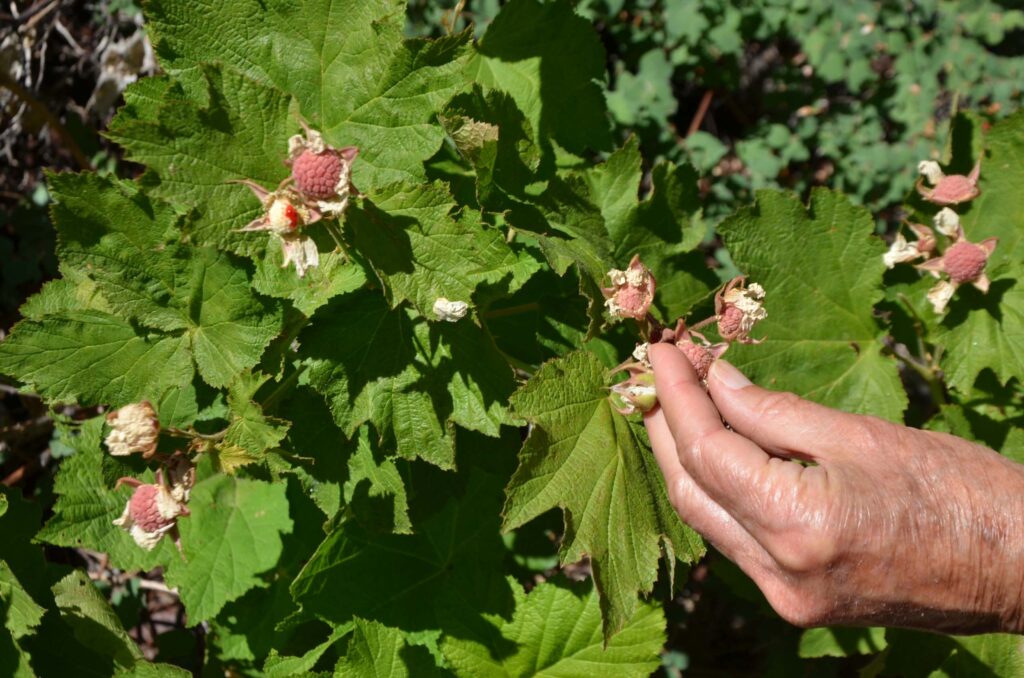
Photo by Holly White-Wolfe.
This trail reconnects to the main trail via a section through wonderful rock formations and outcroppings. We stopped to admire the view from these geological formations (some of us were brave enough to peer over the edge) and acknowledged that we were traversing a dynamic volcanic landscape that has seen many changes since the emergence of Mt. Shasta some 300,000 years ago. Spring Hill itself is the result of flank eruptions from the volcano and is referred to as either a satellite or parasitic cone.
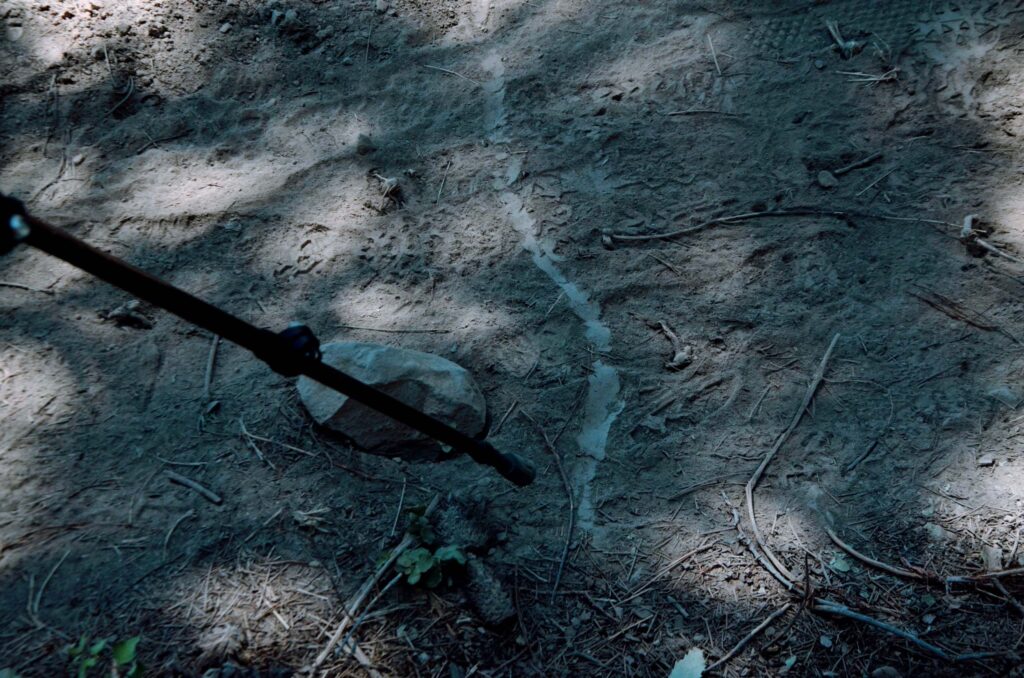
Throughout the hike, Brigitte was our humorous and intrepid scout, as she is not much for standing still too long. We usually caught up to her at the various vista points, but on the return trip, she waited for us in the middle of the trail to tell us about a large snake that crossed her path, and pointed to the track it left behind. While unable to fully identify the snake based on Brigitte’s description, we were certain it wasn’t a rattlesnake, as it lacked the crucial feature of a rattle. Some of us were jealous we missed the sighting, but the early bird gets the worm, as they say.
Everyone made it back to the parking lot with ease, a good sign of a successful outing. We said our goodbyes and departed for separate post-hike excursions – some to lunch and others to see nearby Big Springs, the headwaters of the upper Sacramento River and source of the name for Spring Hill.
Special thanks to Holly White-Wolfe for being our trip photographer. ~Juliet Malik