
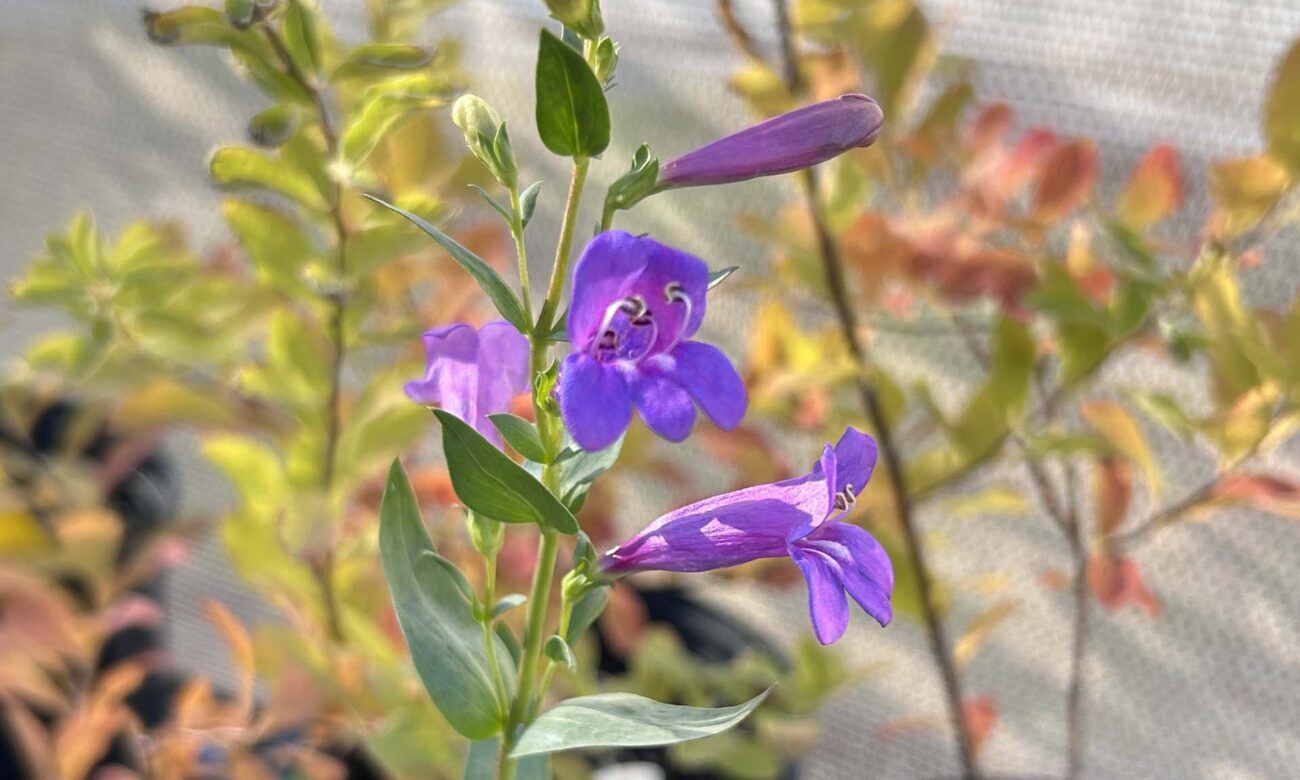
Volunteering to do horticulture with native plants for Shasta Chapter CNPS does not preclude getting out in nature! Yes, we native plant gardeners can also hike and do forest bathing, as others do. I highly recommend it. There is so much inspiration there among the autumn colors. It is so vital for our health to get out!
Speaking of fall colors, umbrella plant (AKA Indian rhubarb; Darmera peltata) was showing so much color near the McCloud River when I hiked there on October 22, 2025.
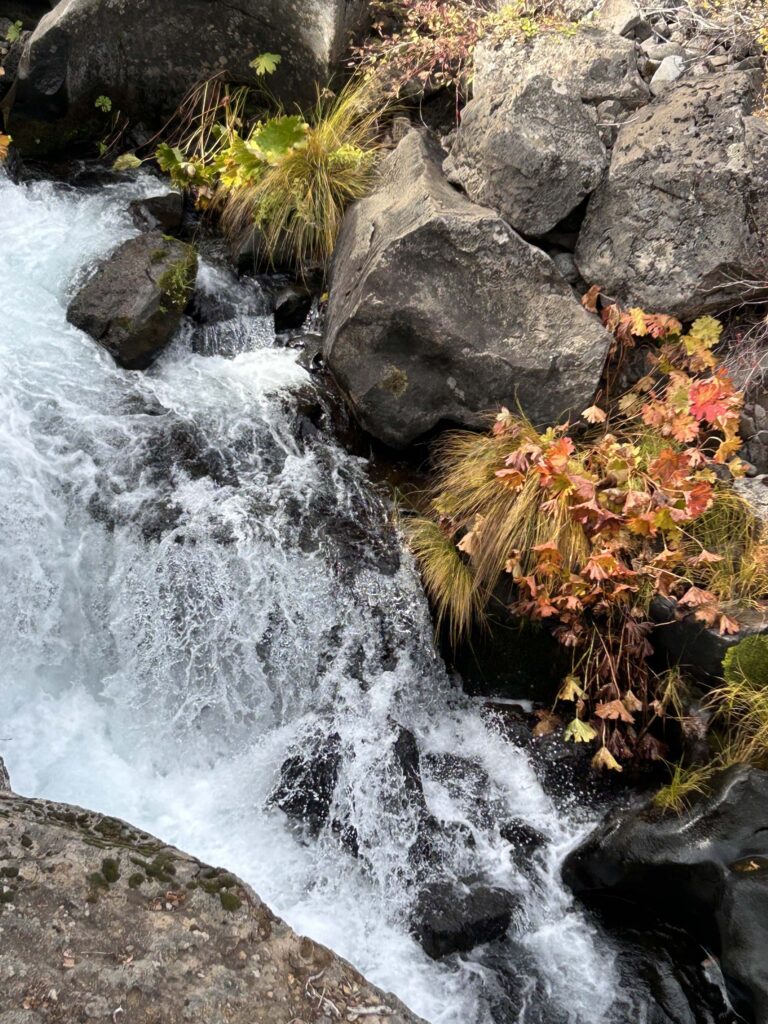
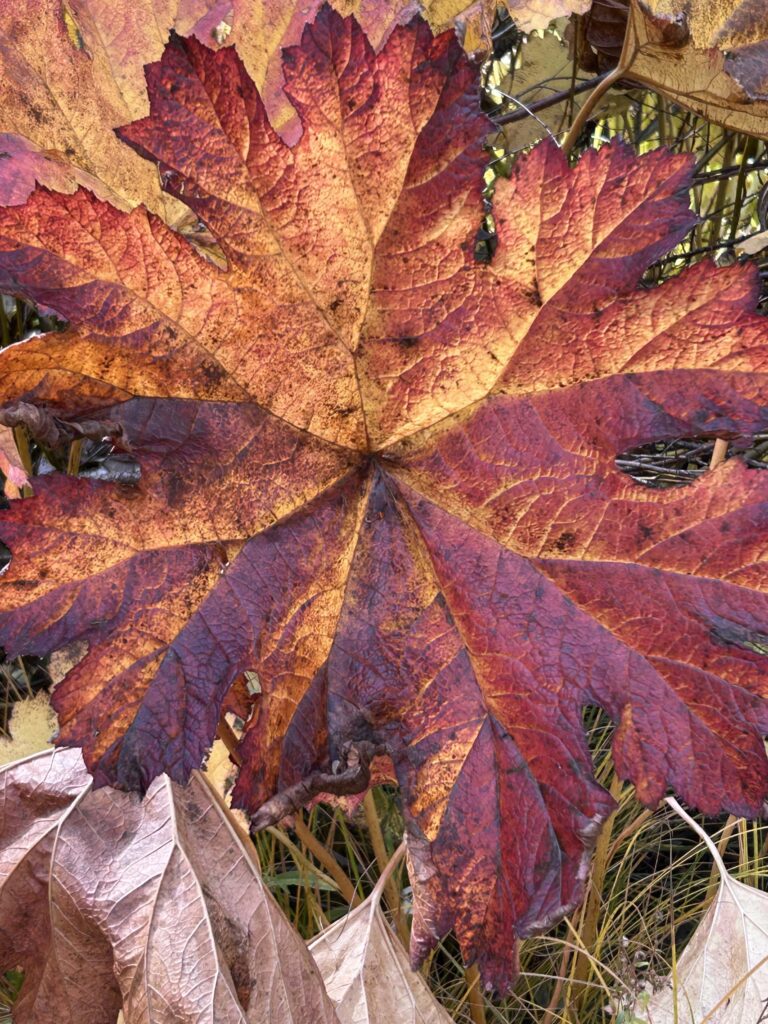
Photos by MaryAnn McCrary.
While some species are going dormant, others, especially lower elevation natives, are showing a resurgence of vitality. Among my own native plantings, the white sage (Salvia apiana) looks refreshed after autumn rain. And Kar Stoker’s hybrid form of creeping sage (Salvia sonomensis ‘Kar Stoker’) also plumped up, turned completely green, and resumed growing after the first fall rains. Tree leaves came down with the rain and the sage would do even better without them, but all in due time. Plants are forgiving, thankfully!
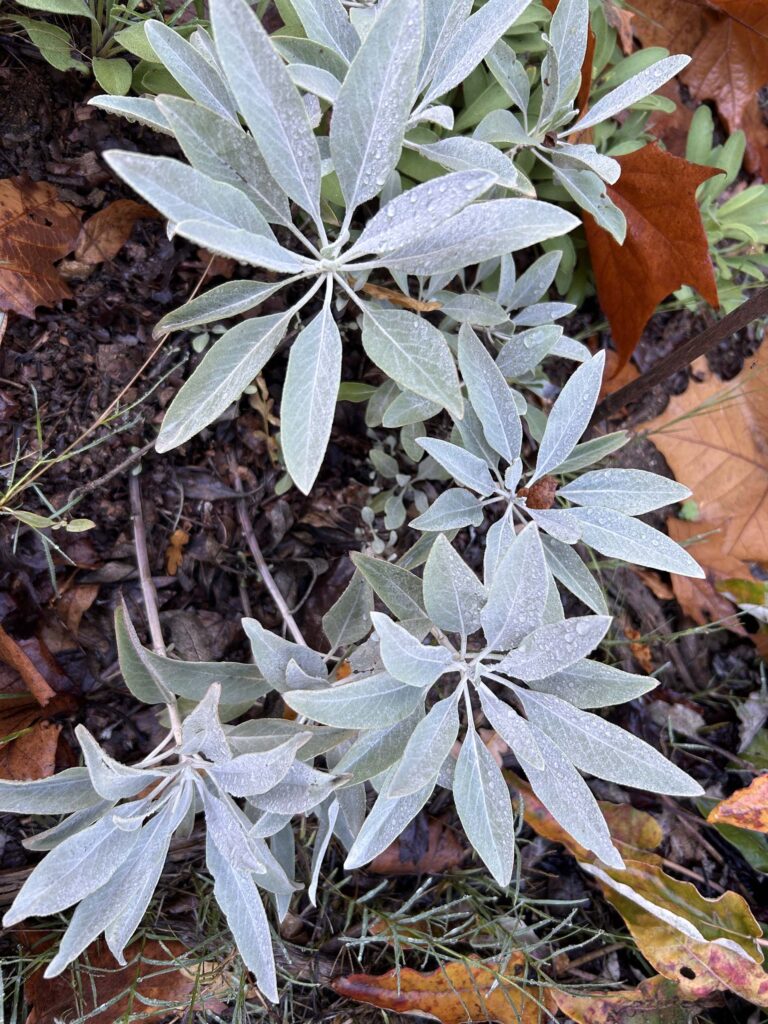
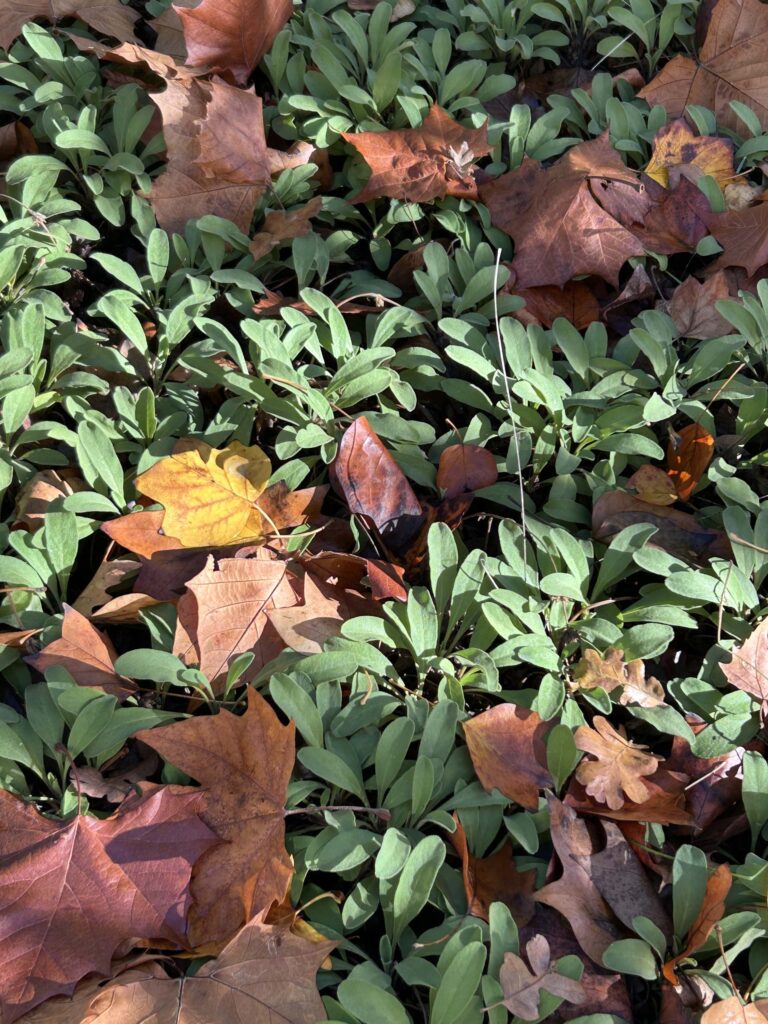
Photos taken by MaryAnn McCrary on October 27, 2025.
‘Tis the season to take hardwood and semi-hardwood cuttings, and gamble on which ones will eventually grow good roots and become our nursery stock for 2026! My native-plant-gardener neighbor, Hal Durio, trims his coffeeberry (Frangula californica ssp. tomentella; originally from the Bend area in Tehama County) as he supposes a deer would trim it in a more deer-accessible setting. He has donated the trimmings for our nursery gambling habit—or learning curve, depending on one’s point of view!
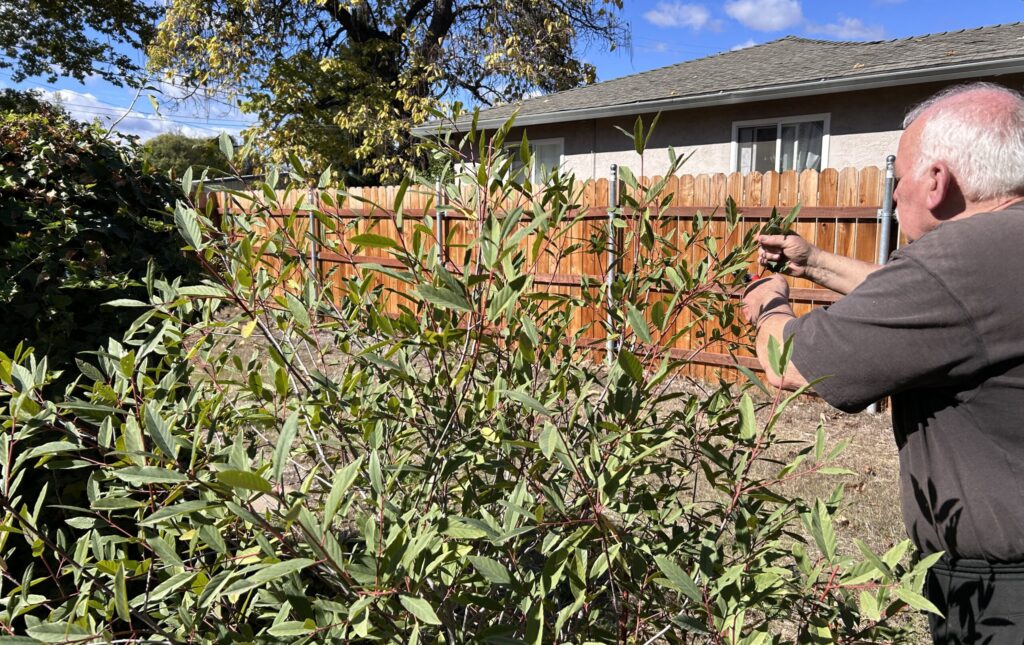
Photo taken by MaryAnn McCrary on October 10, 2025.
Propagation is one of the most enjoyable parts of supporting our chapter’s nursery. There are so many locally well-adapted native plants we can try as cuttings or to grow from seed—it is a candy store for those of us who enjoy trying and learning new things!
We propagators get to know the native plants we grow in many ways beyond the morphological descriptions used in plant keys. I’ll even venture to say that we develop relationships with our plants! If having a relationship means “listening,” observing, and responding in ways that affect the well-being of the “other,” you betcha, that’s what we do.
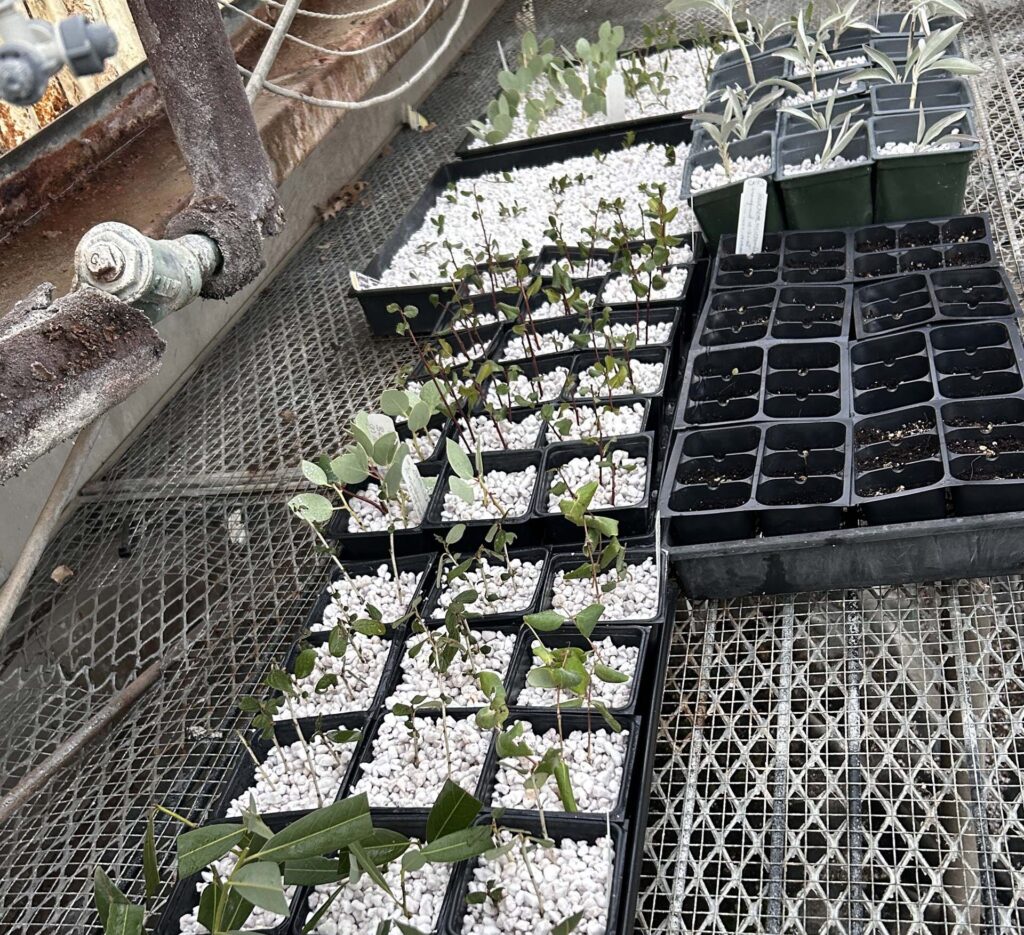
Photo taken by MaryAnn McCrary.
Soon there will be many more additions to our nursery. On Saturday, November 8, from 1 to 3 PM, we will hold a propagation session at the Shasta College greenhouses to make cuttings from CNPS plants in the horticulture garden. Some pruners are available, but if you have your own by-pass pruners, please bring them, as well as gloves, if you like. We’ll work outside on the big metal table; rain cancels. Volunteers are needed! Come learn how to make cuttings and root them, so we can fill up our allotted greenhouse space! Let us know that you are coming by sending an email to the Chapter’s address at shastacnps@gmail.com
Then, we will wait. After 8 weeks, there will be “early” results. In 12 weeks, most cuttings will have given their answer. Then there will be careful potting of those cuttings with young, delicate roots. But plants are indeed forgiving (to a point), and many will take some disturbance and recover quite well. So don’t let me intimidate you. Anyone can learn to have a green thumb. We welcome your participation!
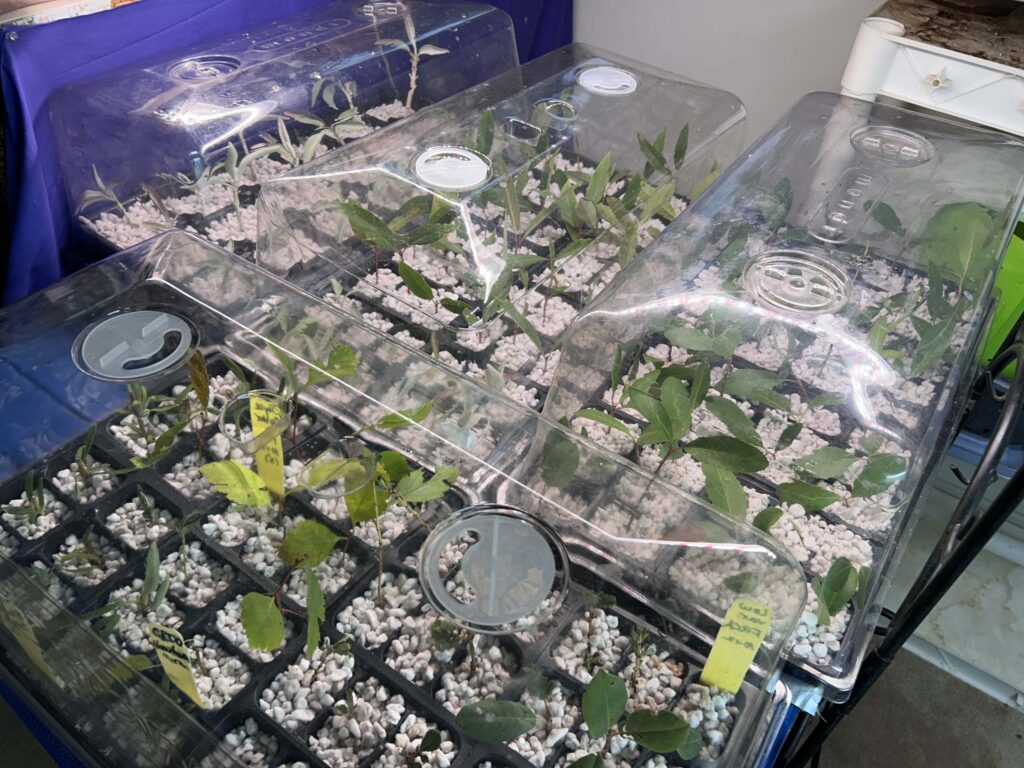
Photo taken by MaryAnn McCrary at her home on October 13, 2025.
Starting plants from seed or cuttings in our own homes is a practical way we can expand the capacity of our nursery, though perhaps it’s not for everyone. Nonetheless, there have been propagation volunteers who have done this for us in the past, and it’s also happening right now! In numbers, there is safety, right? I am hedging our bets so that there will be plenty of native plants for everyone this spring.
I am looking forward to seeing you on Saturday afternoon! ~MaryAnn McCrary, Nursery Manager