
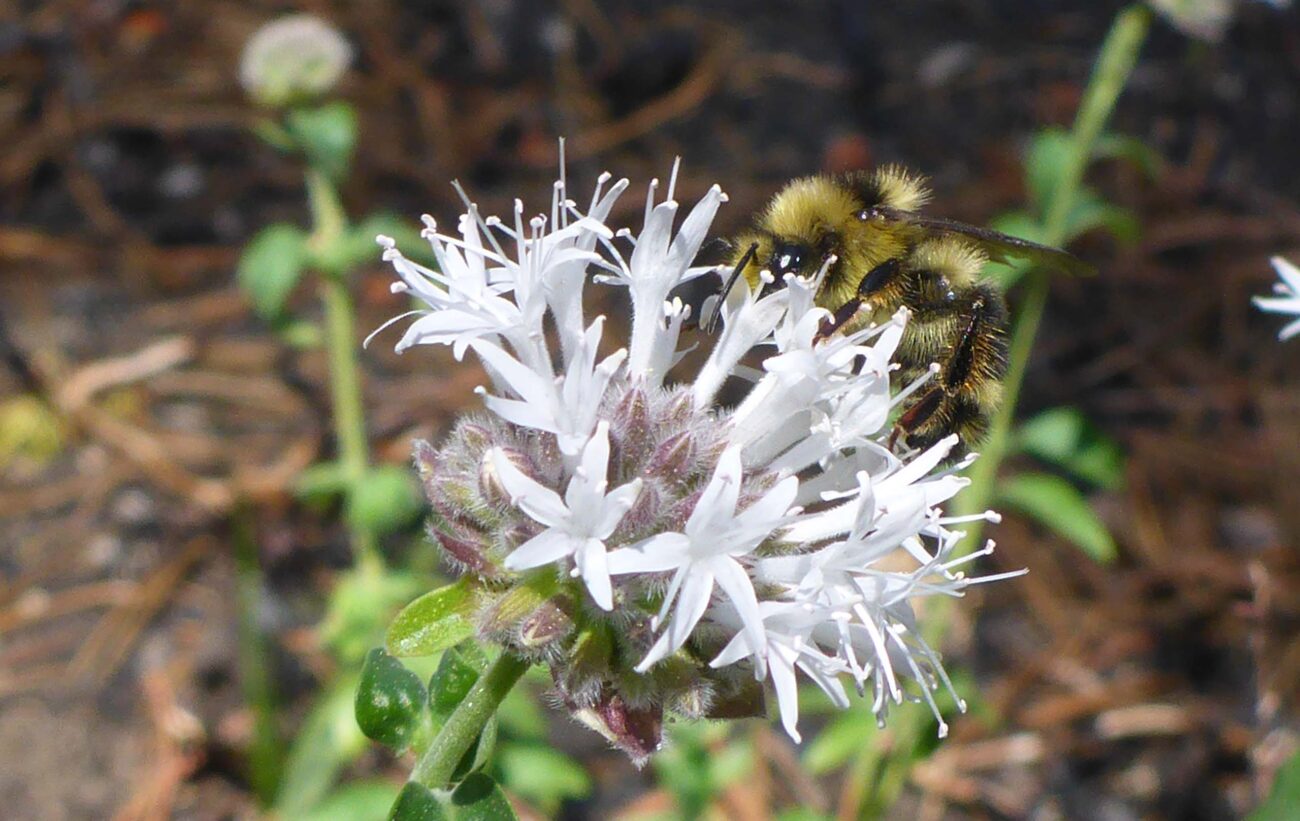
Bringing Nature Home
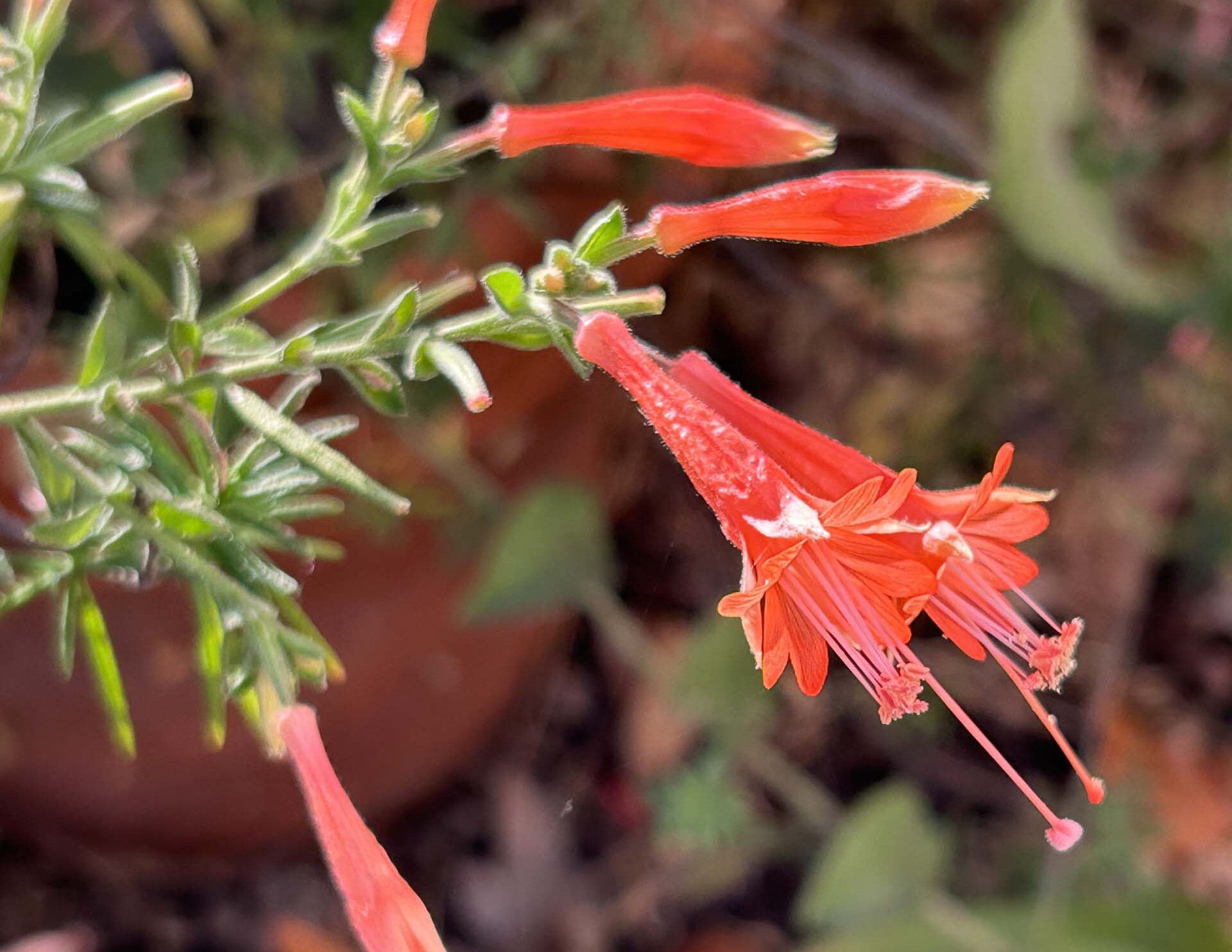
Recently, at the September 18 meeting, Shasta Chapter member and president of Ghost Pine Native Plant Nursery, Doug Mandel, gave us a presentation about growing native plants for pollinators in your own backyard. It was a broad overview, but it inspired me to order three California fuchsias for fall pollinators, and to collect some coyote mint and yarrow seeds to plant under oak trees in my backyard.
There has been a growing movement over the last few decades to use your yard for native plants and the pollinators and other animals that can use them. Doug Tallamy, with his book Bringing Nature Home and numerous lectures on YouTube, has accelerated this movement. Scientists have been warning us for many years that we are now facing an insect apocalypse from habitat loss, pesticides, and climate change. Insect populations have dropped roughly 30% in the last 40 years. In Germany in 2017, researchers found an insect biomass decline of 76% over a 27-year period. This population decline doesn’t just affect insects, but all animals in the food web.
This insect decline is also seen in the “windshield phenomenon.” Anyone who drove from Stockton to Redding 40 years ago will remember that you had to stop at a gas station once or twice to clean off your windshield to safely drive, especially at night. Now, that is not the case.
Homegrown National Parks
One way to counteract insect decline is to start your own nature preserve in your own backyard to increase the population of pollinators. Tallamy’s Homegrown National Parks organization now includes members and contributors who have over 109,000 acres of land in the United States, solely from backyard gardens.
Many people in the U.S. who have native plant gardens are not a part of his program. You can start your own Homegrown National Park in your backyard this fall by going to Shasta Chapter’s native plant sale at Shasta College this Friday and Saturday, October 3 and 4, from 9 AM to 4 PM both days, at Shasta College Farm greenhouses. There is a members-only sale on Thursday from 4 to 6 PM, and you can join on the spot. ~David Ledger, Conservation Chair