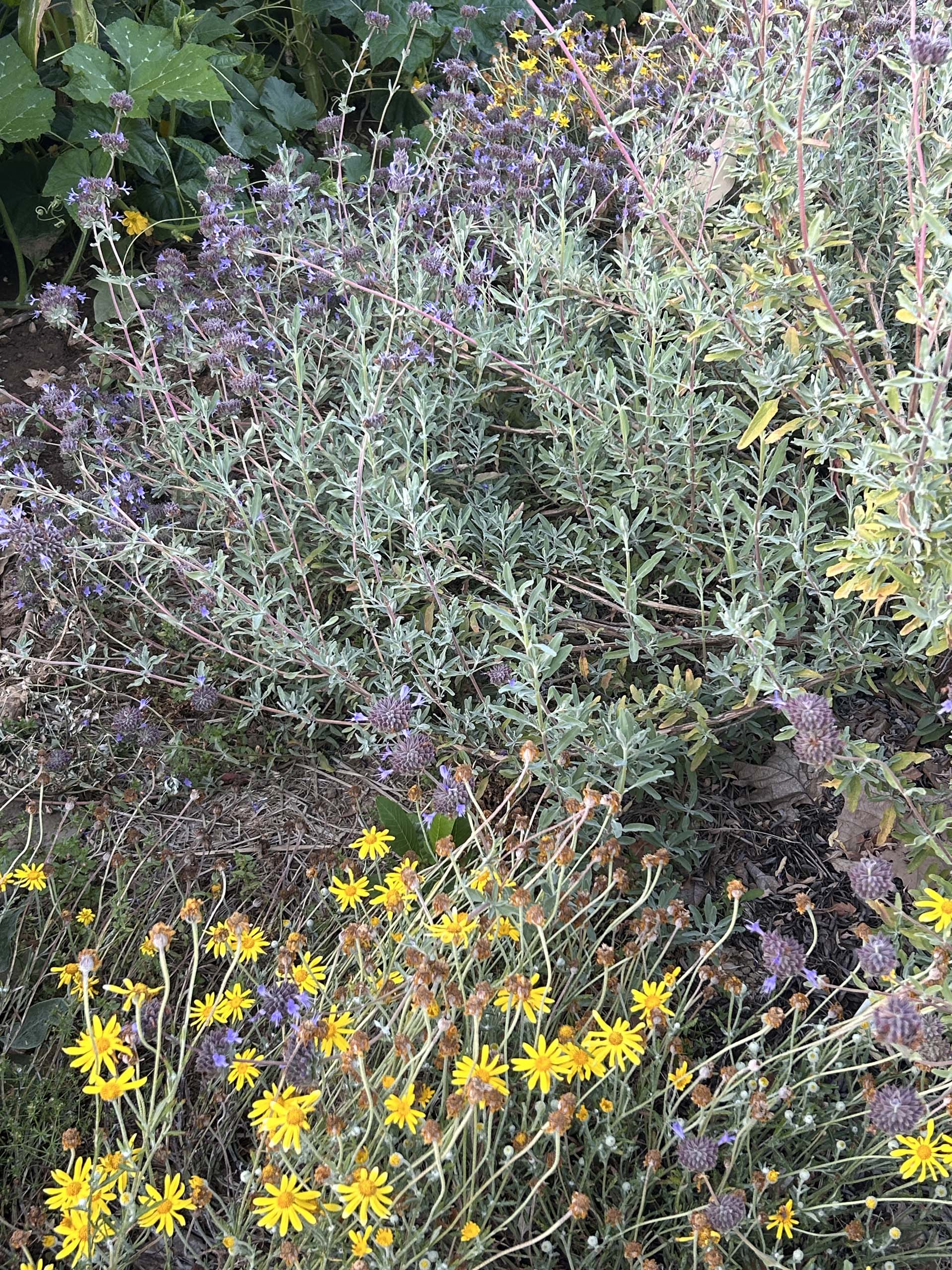
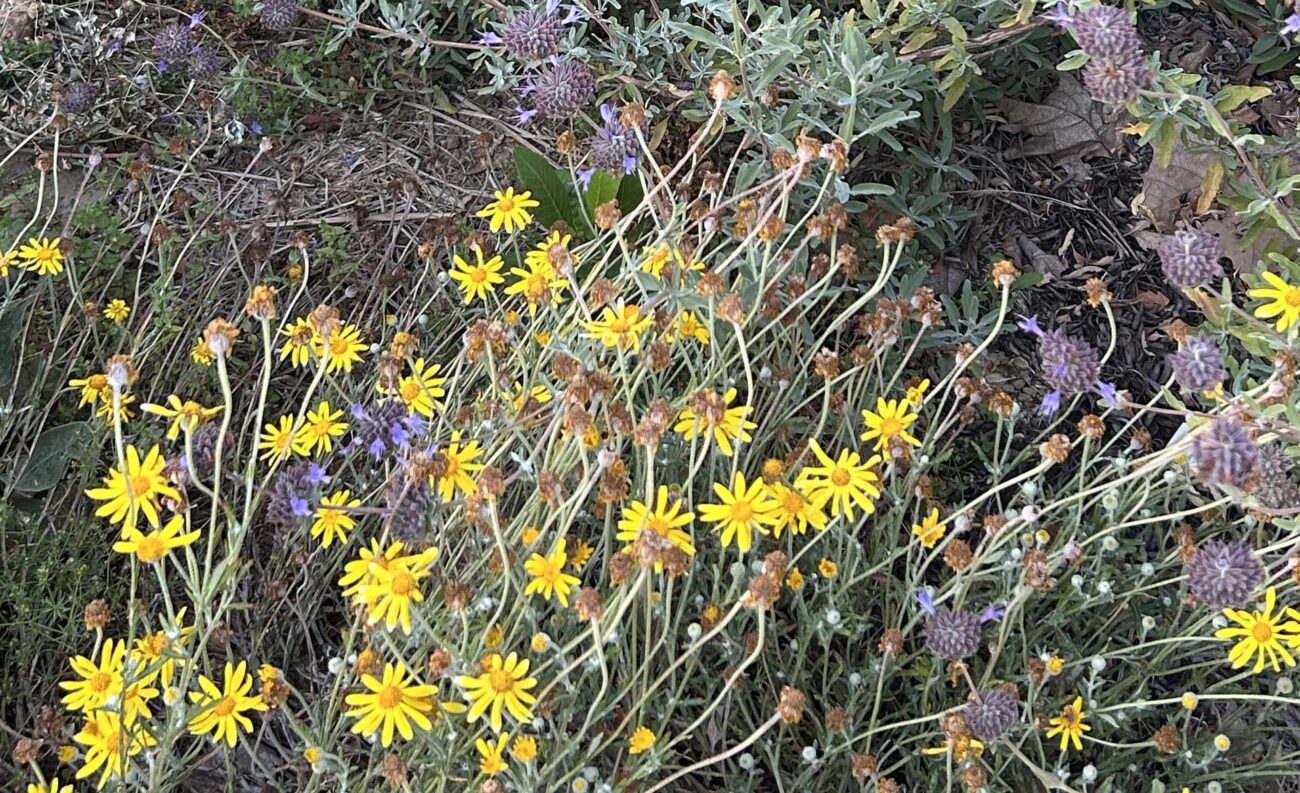
“What’s Happening in the Nursery” always has a retrospective part and a forward-looking part. Right now, however, is always what’s really happening and getting drawn into the present is exactly what most plant people truly, sometimes secretly, like the most about interacting with plants. I have noticed that I can’t really do anything well with plants without having my attention squarely in the present. How refreshing it is! All the things we do, such as transferring rooted cuttings or young seedlings to larger containers or even watering, goes best with full attention on exactly what our senses are telling us about the plant in our hands.
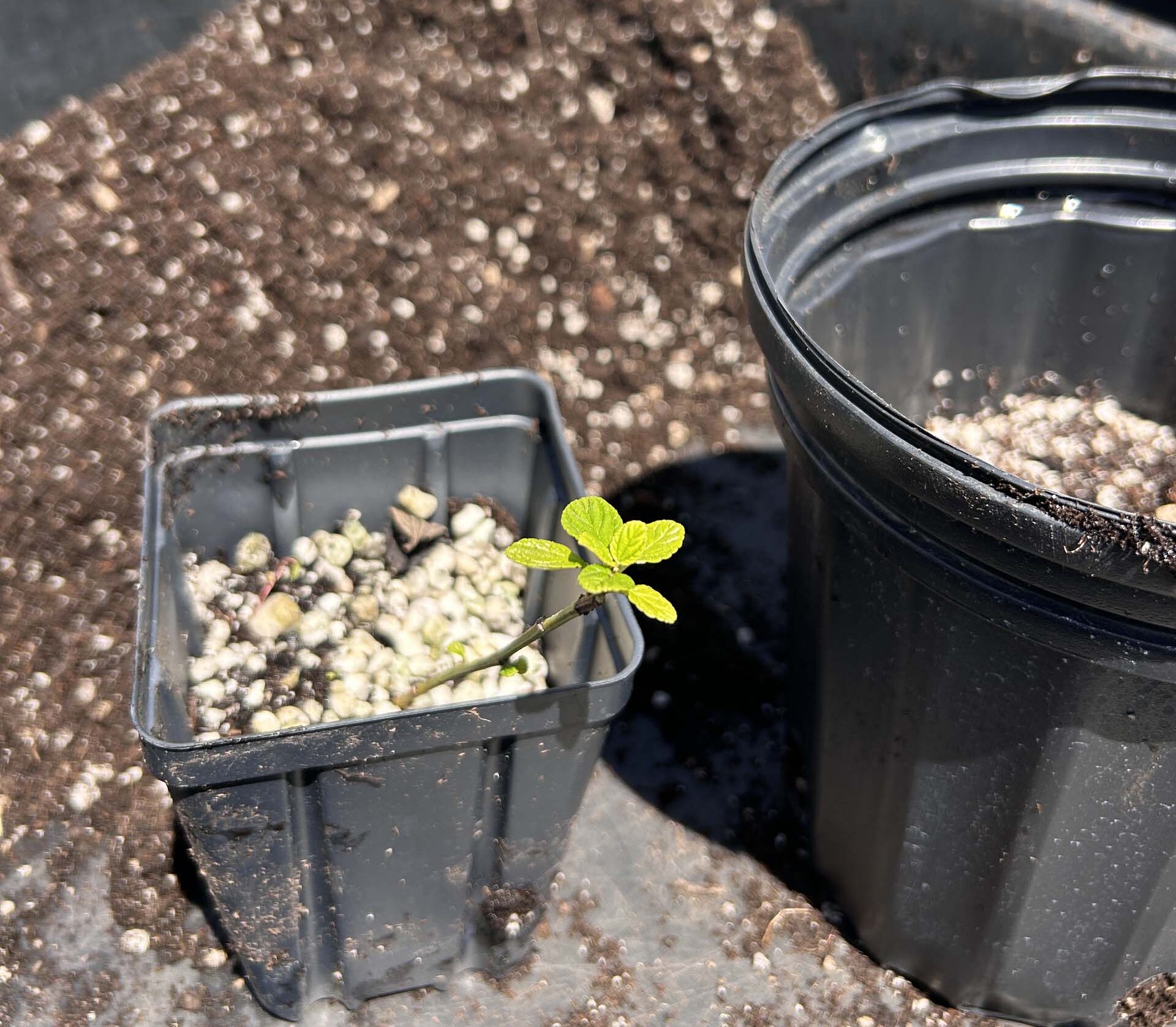
Photo taken June 23, 2026, by MaryAnn McCrary.
It is as if we are meditation students and the plants are gentle, patient teachers. After all, it is the plants that are most likely to lose parts, such as visible roots or invisible root hairs, in the process of transplanting. And hey, they really don’t ever “complain.” They just might cease showing up though, depending on how resilient they are. So, there is always learning going on in the nursery for anyone paying attention, right now and over time, to how the many different species we grow respond to what we do to them and to their location on the nursery tables.
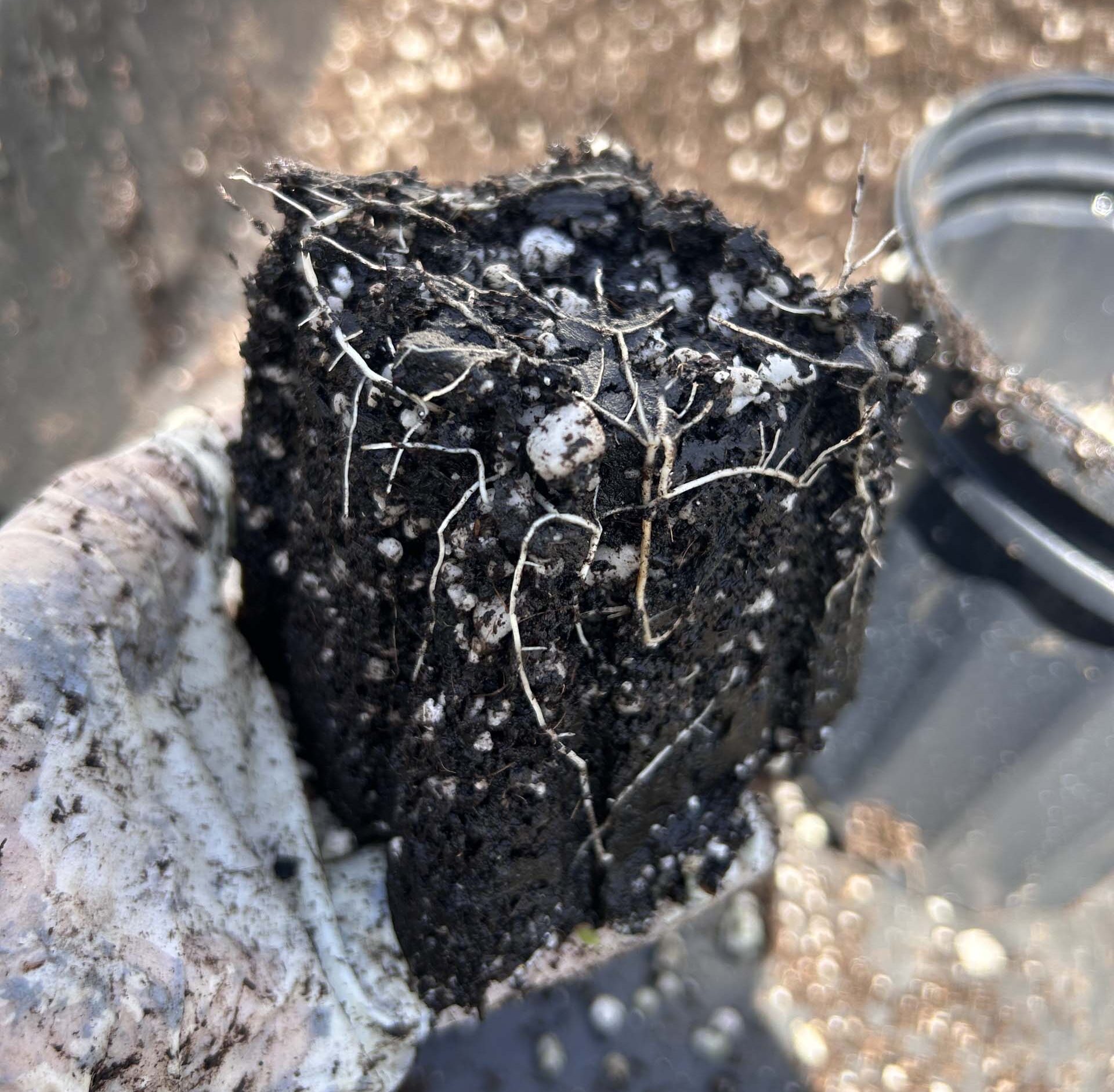
Photo by MaryAnn McCrary.
Yes, in nursery real estate, location matters. We have everything from desert to rain forest, light mist to hydraulic mining water delivery. That is the irrigation system such as it is. And make no mistake, I am very grateful for automatic irrigation. Without it, we’d need to have a crew of early risers to cover hydration. And with the irrigation as it is and will continue to be, plants need to move around in substantial numbers rather often. Of course, I’m the one moving them to hopefully reach a balance between what each species needs and how much water they get in the early morning, the very best time for watering.
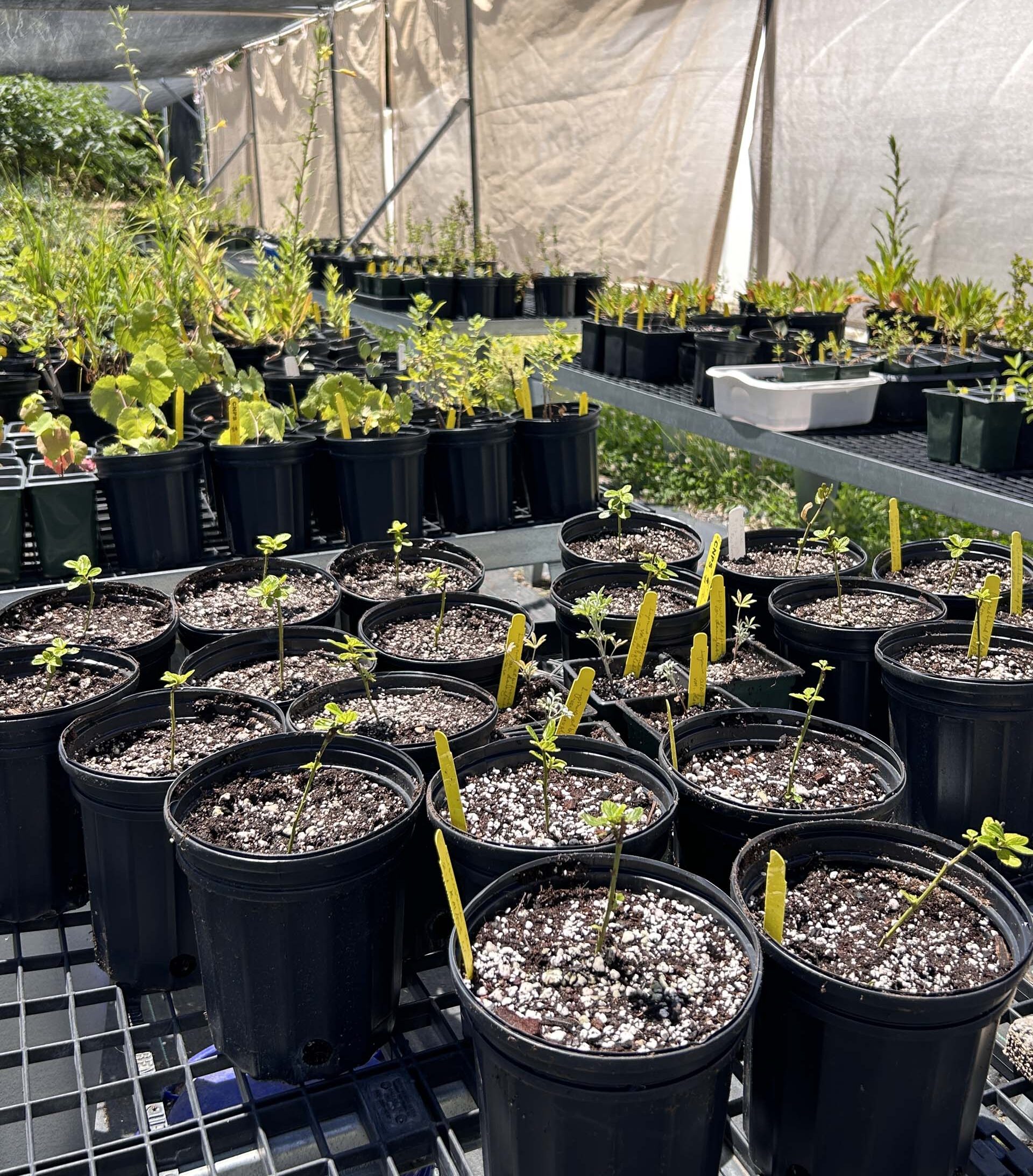
Photo taken June 23, 2026, by MaryAnn McCrary.
Also, when soil sometimes gets drilled by a faulty sprinkler head, roots get exposed and that soil needs to be replaced. Someone must be paying attention to even notice the missing soil, refill it, and move the pot. Sometimes just a few inches this way or that is all that’s needed.
Well, this essay is turning into “a day in the life” of your volunteer nursery manager. Disculpe, por favor. But these present-oriented days are rewarding as I get the many memos our nursery stock sends so quietly to anyone who is there paying attention to them. I get to see how they respond to little adjustments done just in time (with some luck) to allow them to survive and even thrive through this hot summer.
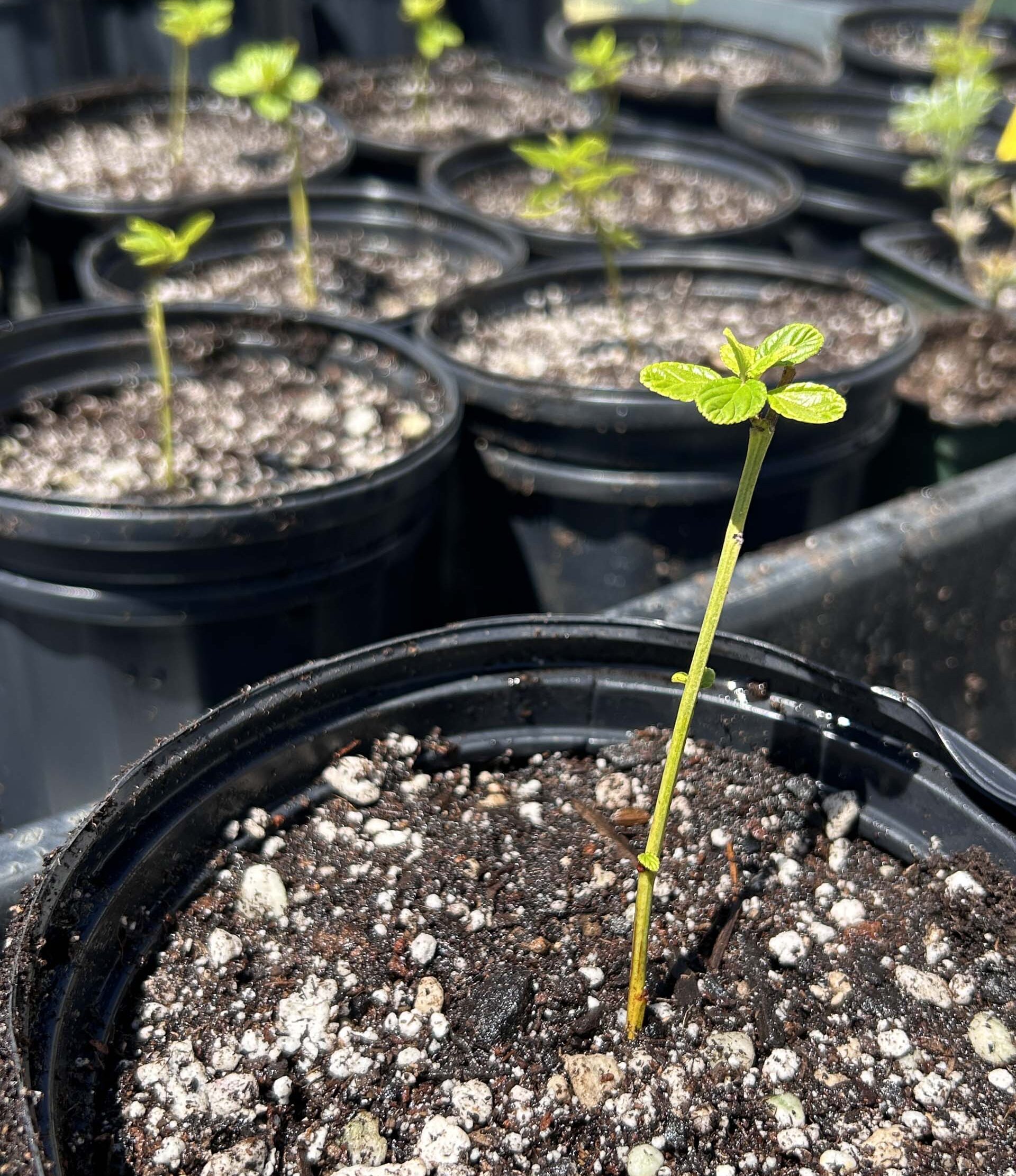
I want to thank our June helpers who both were delightful to spend some relatively cool morning hours with: Christine Karim who completed her volunteering requirement for Master Gardeners with us (congrats!) and most recently, Connie Hunziker, who is a new Chapter member and is especially interested and experienced in growing succulents. Welcome Connie! I am looking forward to growing native succulents with Connie’s help. (happy emoticon!).
Although I am usually at the Shasta College Farm Nursery area on Tuesday and Thursday mornings, 9 to 11 AM, everything goes better when I know on Monday or Wednesday to expect volunteers. Setting up and the agenda itself will vary depending on whether I have additional volunteers. The other reason to get in touch prior to coming is that I might leave town for a vacation this summer, as circumstances permit. Since I can’t predict when that would be, play it safe and text me, or if you don’t have my number, email the Chapter at shastachaptercnps@gmail.com to say you are coming.
The cherry on top for June was to see plants Shasta Chapter CNPS donated a little over a year ago to a local elementary school pollinator garden. They have grown beautifully! ~MaryAnn McCrary, Nursery Manager