
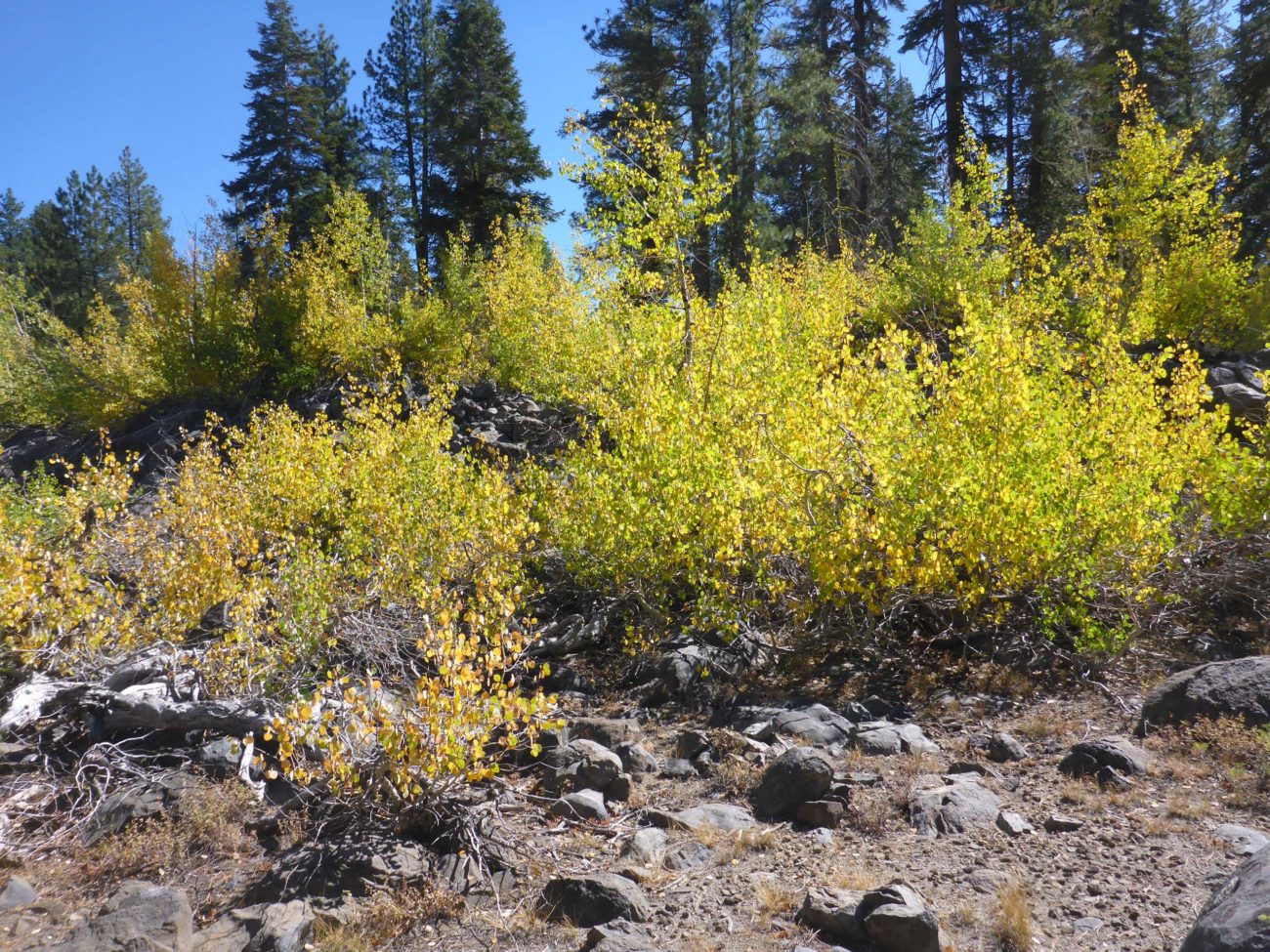
The Macrosystems Ecology Laboratory at UC Berkeley is launching a statewide initiative to safeguard the future of California’s most iconic and ecologically vital trees, quaking aspen (Populus tremuloides). Aspen is currently facing a significant population decline across California. While many restoration efforts rely on existing roots (clonal regrowth), we recognize that long-term resilience also requires seedling-based restoration. This approach is essential for reintroducing aspen to lands where they have been lost and for ensuring the genetic diversity necessary to persist in a changing climate.
Currently, there are no commercial aspen seedling production programs in the region. To restore these forests, we cannot rely solely on natural regrowth; we must develop a seedling-based restoration approach. To do this, our research team needs to bridge critical knowledge gaps regarding where seeds can be reliably collected and whether those seeds are genetically viable for future forests. We have permits in place for BLM and USFS land thanks to generous support from each agency. If you are able to work in either area please consider volunteering.
Supported by the Bureau of Land Management (BLM) and our partners, our project aims to create a foundation for commercial seedling production. We are seeking partners—schools, local businesses, land managers, and residents—located near aspen stands to assist us during the Spring 2026 season.
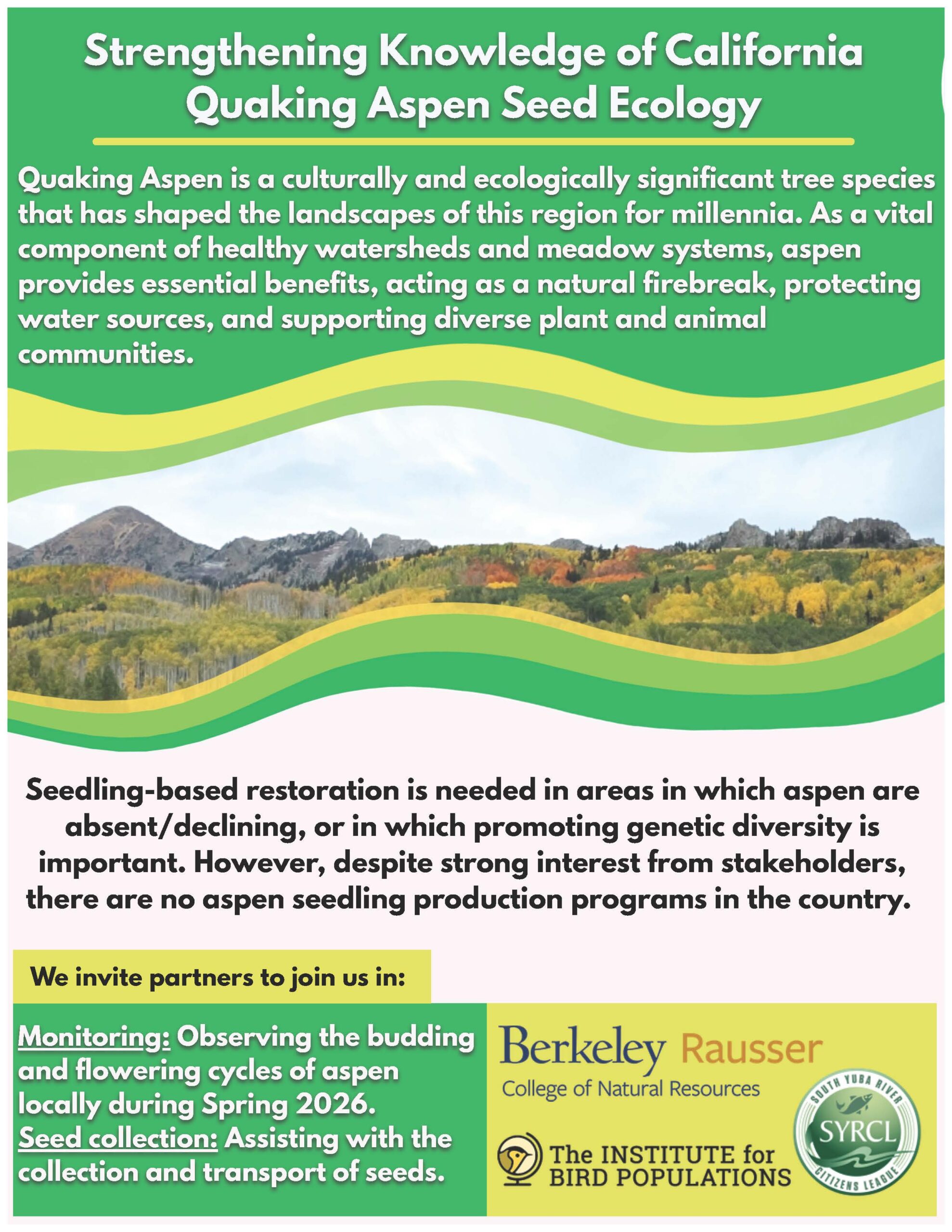
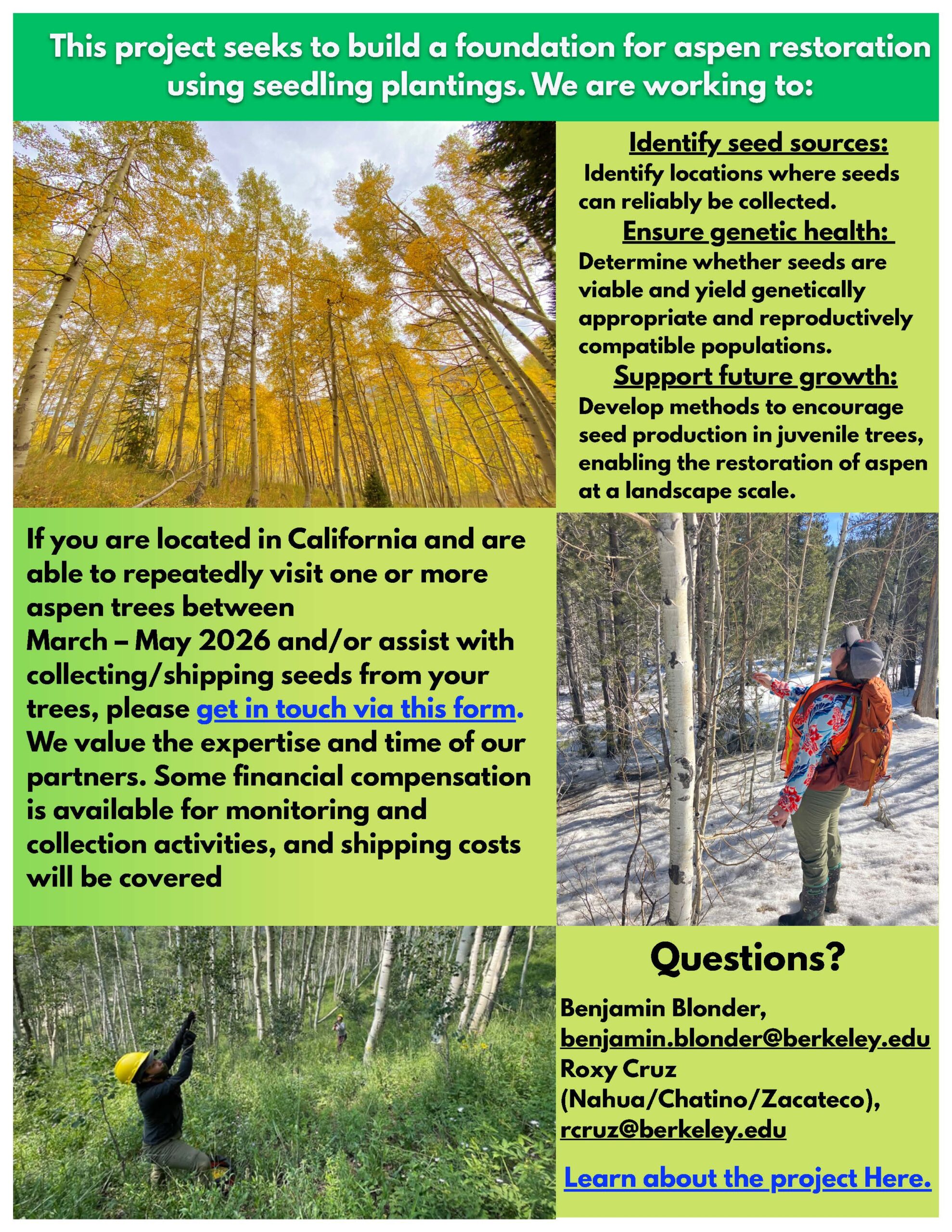
Here are the live links in the above images—“get in touch via this form” is here: Aspen seedling ecology volunteer intake 2026 form; and “Learn about the project Here is here: BLM project: strengthening knowledge of California quaking aspen seed ecology
Please don’t hesitate to reach out to Benjamin Blonder (bejamin.blonder@berkeley.edu) or Roxy Cruz (rcruz@berkeley.edu) with any questions. If you know others who might be interested in participating, please feel free to share this information. Thank you for contributing to California’s forest health! ~Hector Madrigal, Outreach Assistant at The Macrosystems Ecology Lab