
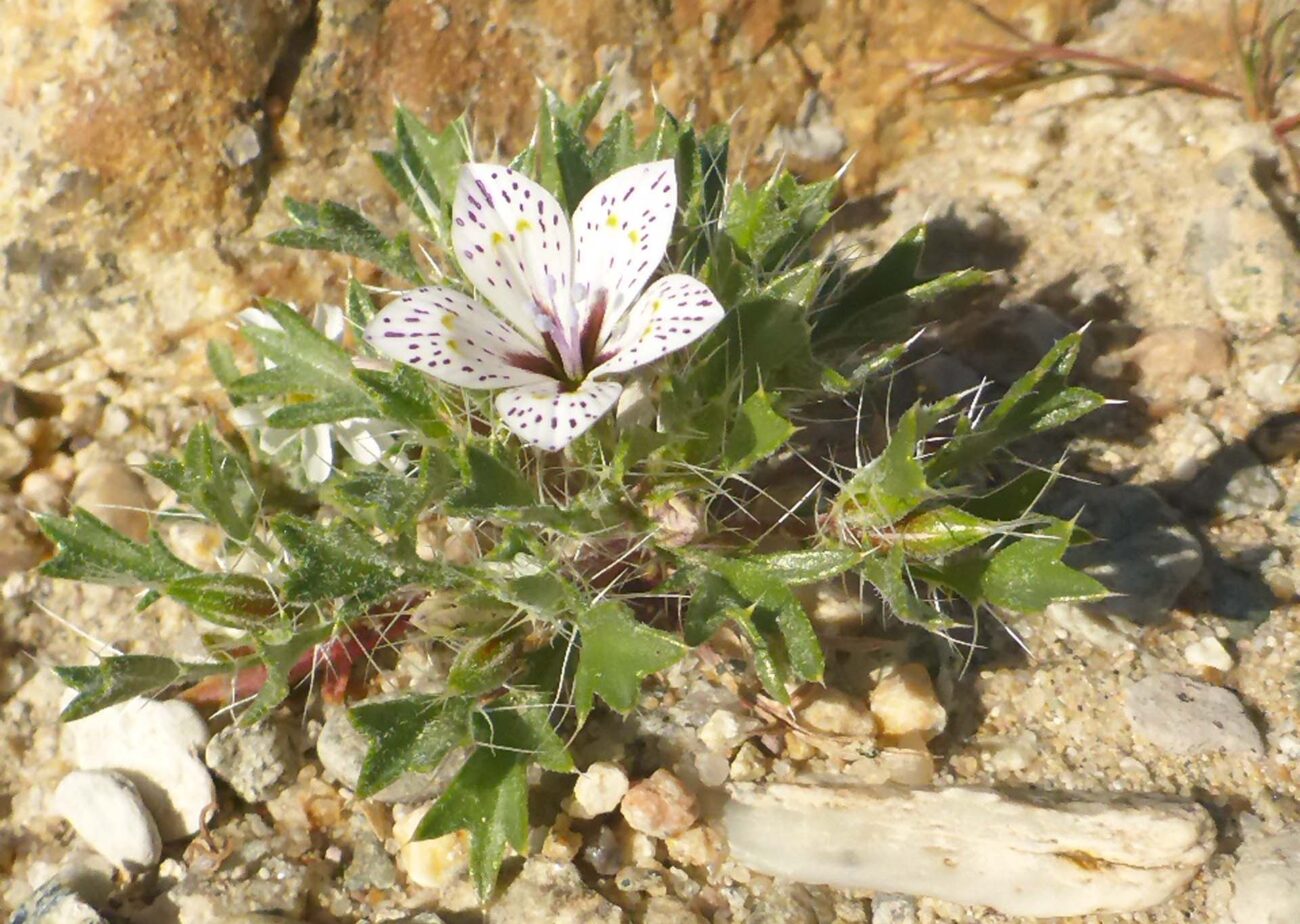
Spring has sprung! It’s time to be free of the indoors and be out among the surge of tender new leaves and early spring blooms. Already the super early bloomers are making seed. Milkmaids (Cardamine californica) have already been here. Did you blink?
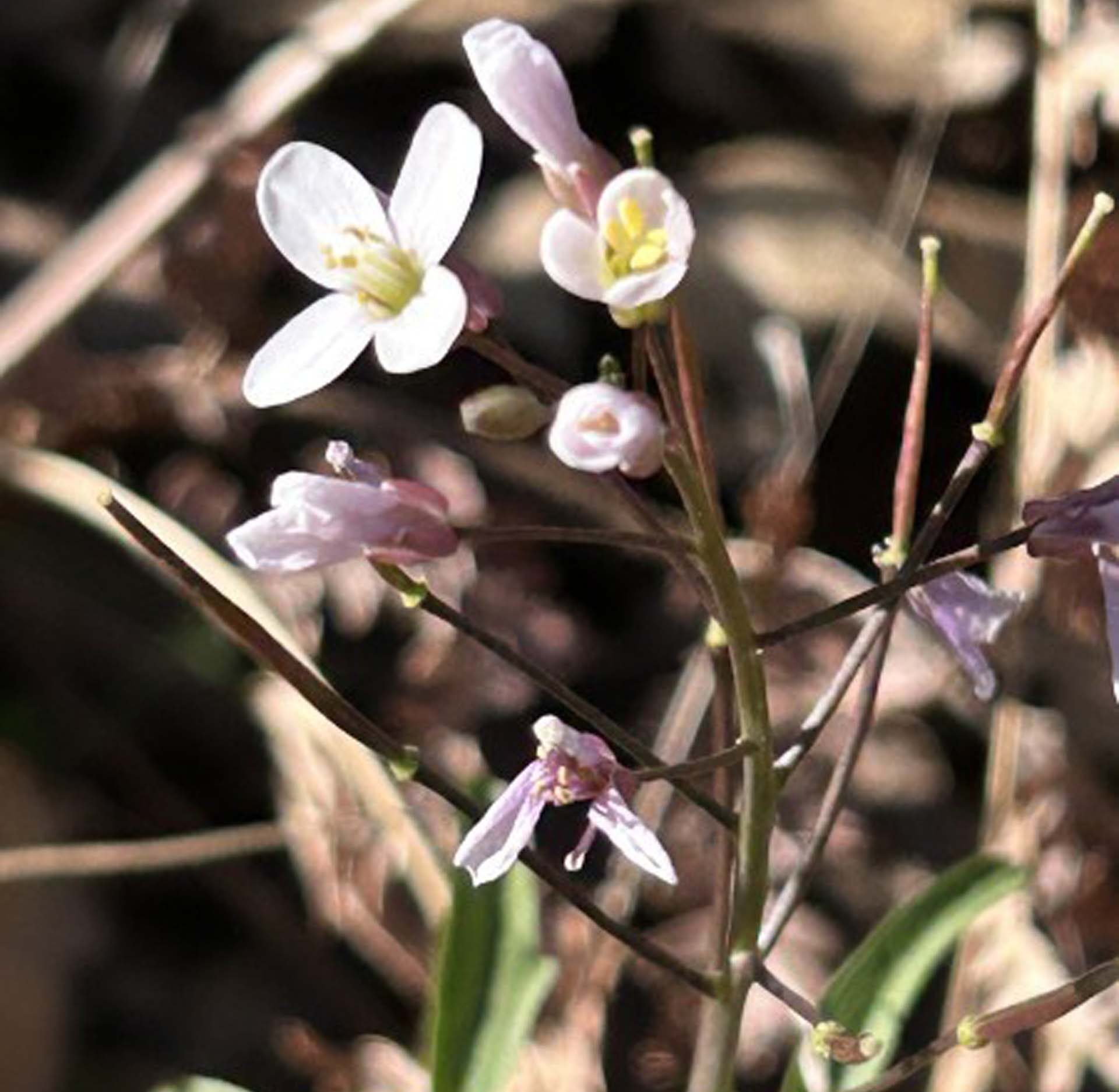
Photo by MaryAnn McCrary.
Like Jeremey, I’ve been waiting eagerly for the shooting-stars to begin their bloom. They bloom longer than the here-and-gone milkmaids, but they can be missed, too, because they also reach their peak well before most people expect. Shooting-stars are in beautiful bloom right now. Here is the first one I encountered, on February 13, a sweet note for Valentine’s Day.
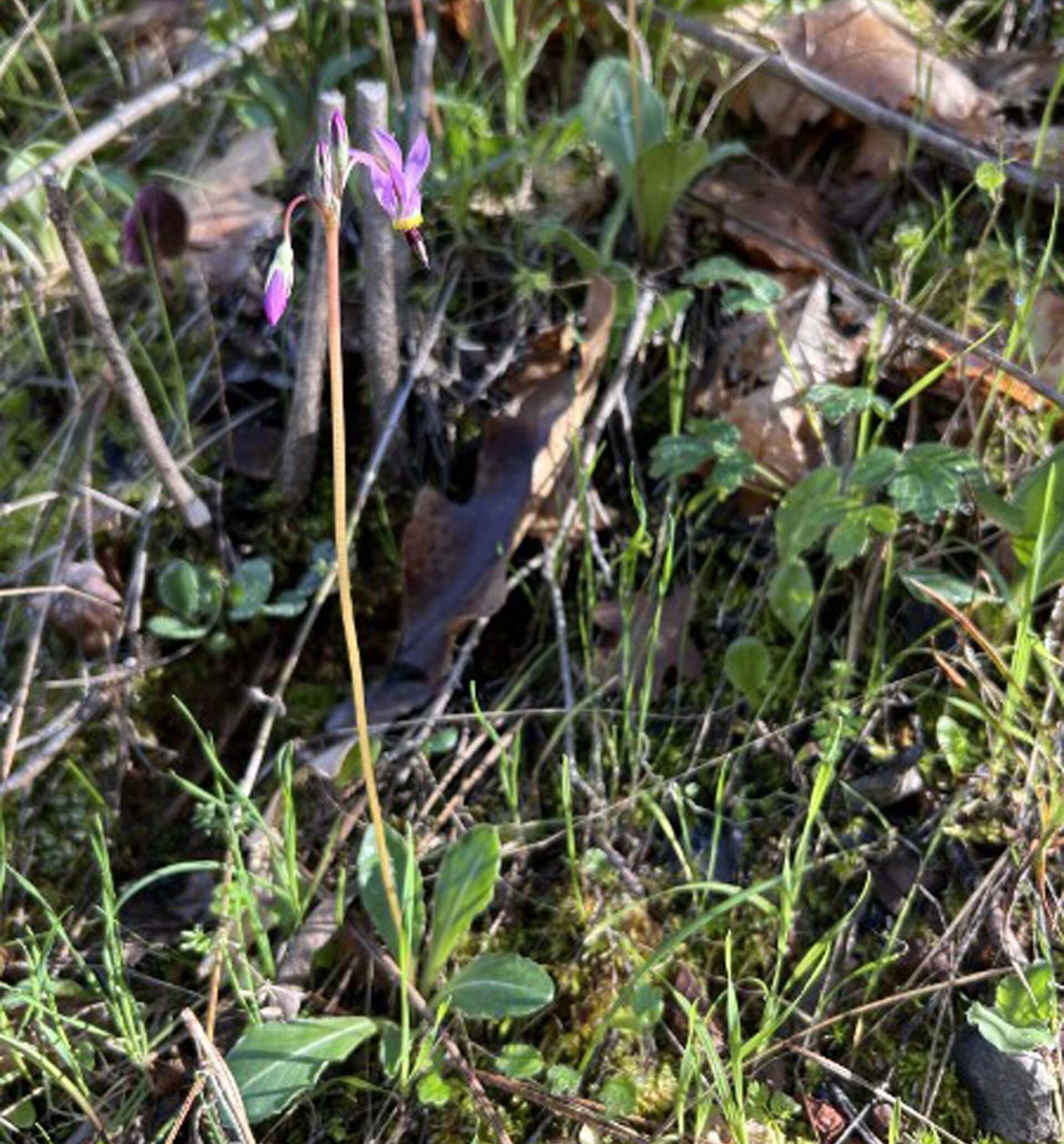
Photo by MaryAnn McCrary.
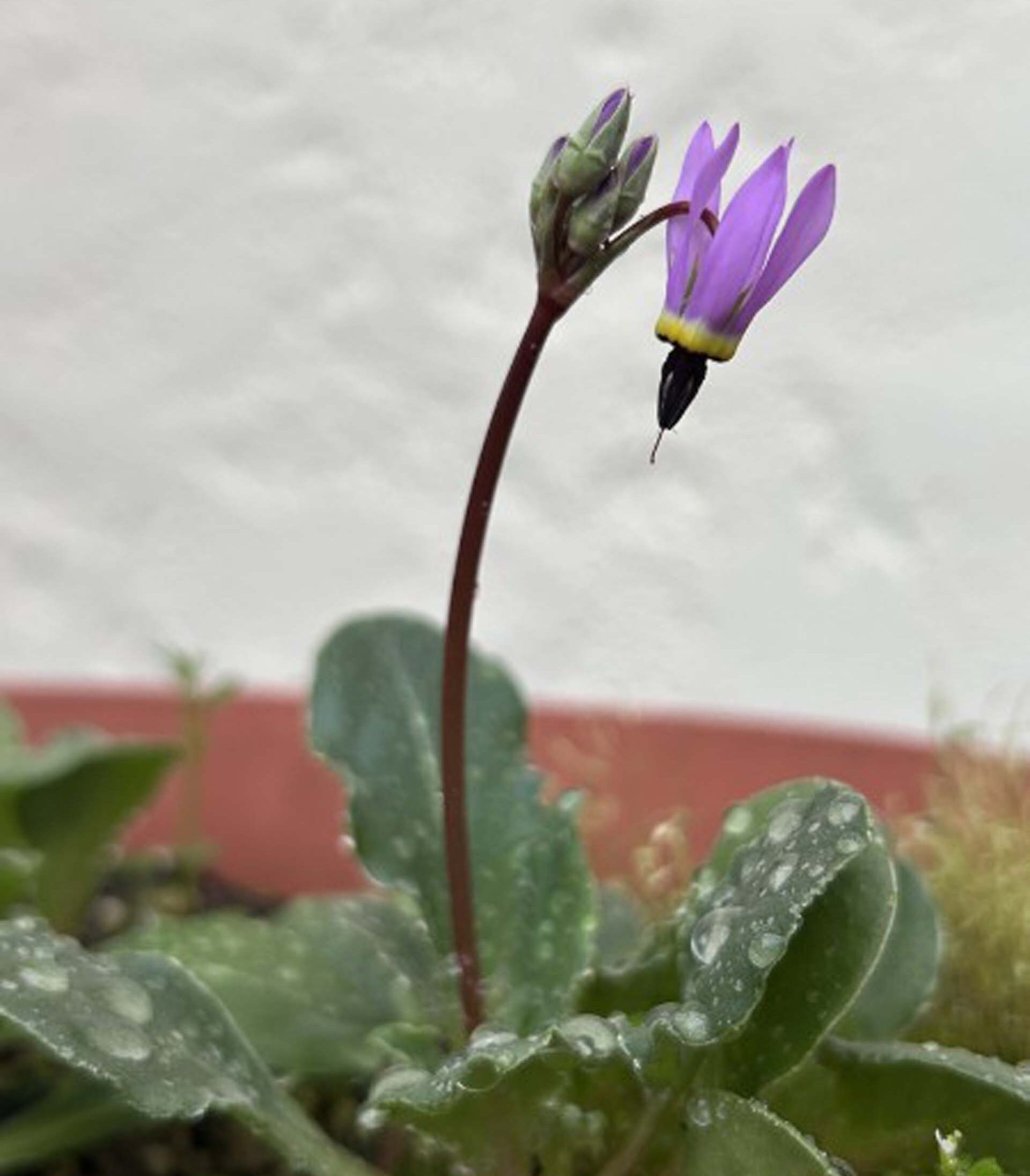
And at home, Primula hendersonii started its bloom later, on March 1.
So many trails provide so many opportunities to luxuriate in the bounty of spring! The lily family bestows California with incredibly beautiful spring bloomers. The locally abundant pussy ears, or Tolmie’s star-tulip, Calochortus tolmiei, always blows me away the first time I see it in spring. They’re just starting.
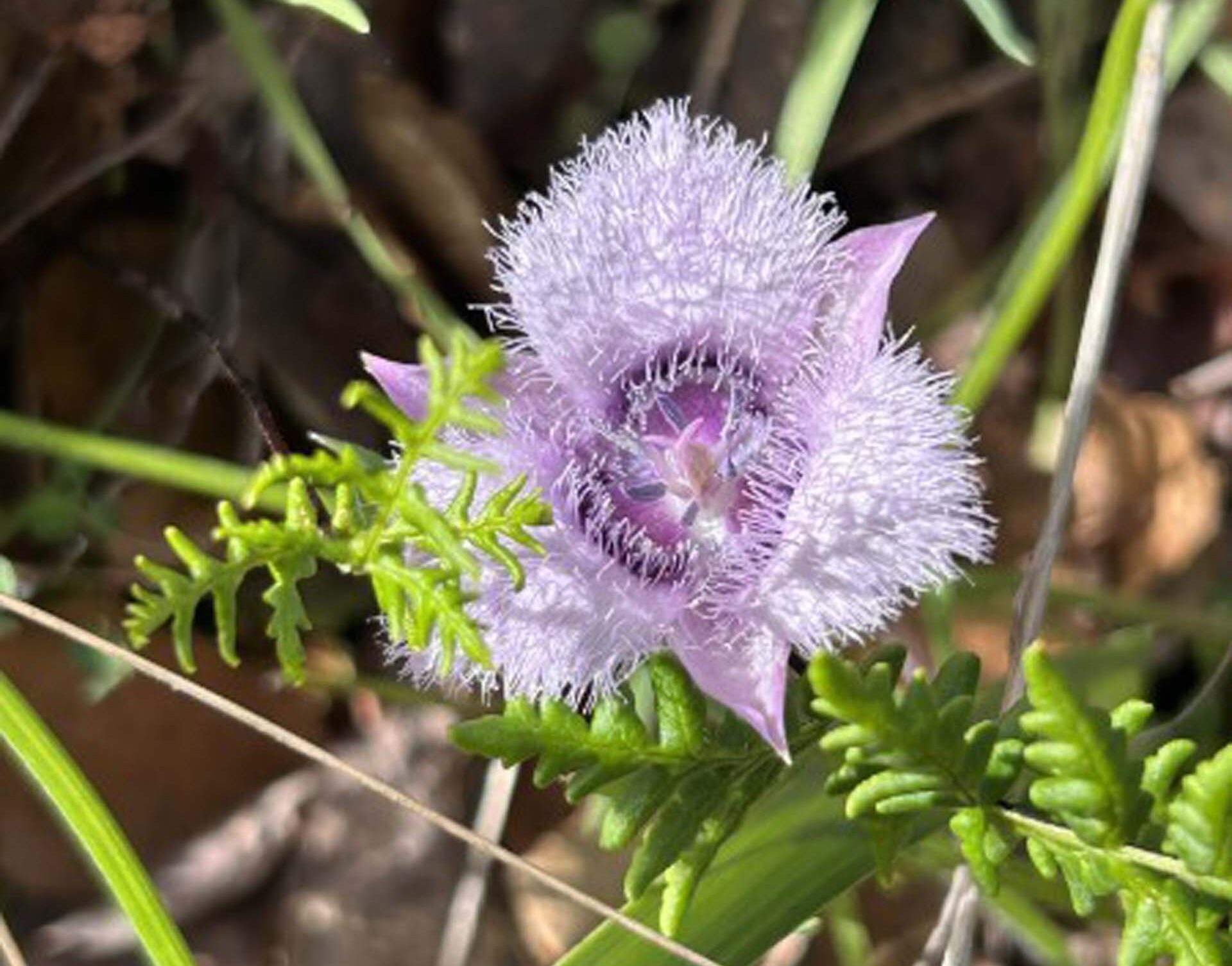
Spring can’t be put off—it’s now! And just like in the Chapter’s nursery that I’ve volunteered most of my time to manage, spring growth is here like a large swell of an incoming wave along the coast. Spring is building up and up for the peak bloom in April, when we also have our native plant sale and as many hiking opportunities as possible.
April is, in a way, like a breaking wave as the energy of spring radiates in all directions. But right now, experience that rising wave with us in March, as we hike together and, yes, pot-up young plants together for the many who like to bring some of nature home where young and old alike can enjoy native plants and their compadres in the ecosystem interacting throughout the year.
~MaryAnn McCrary, Vice-President and Nursery Manager