
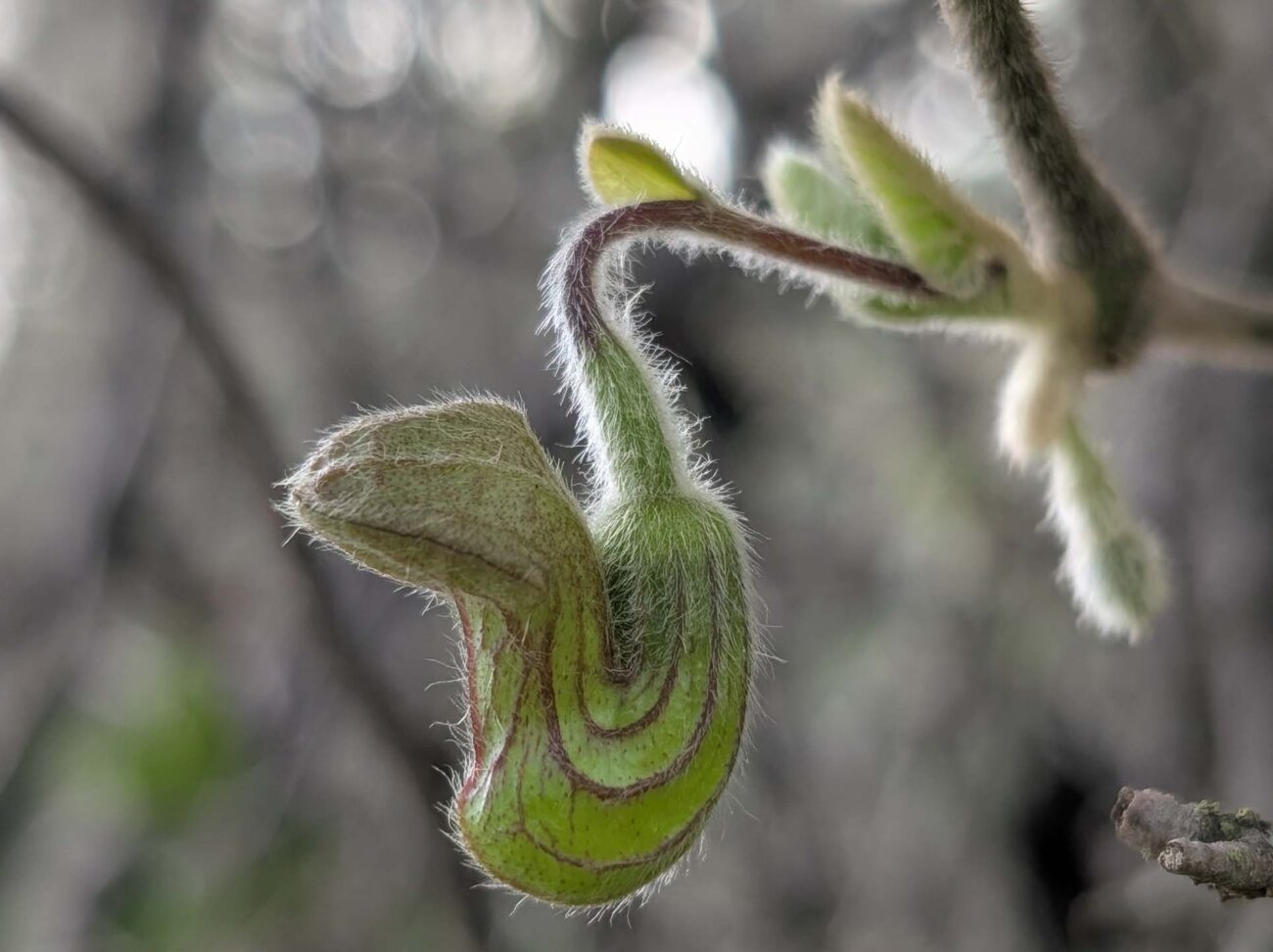
California pipevine blooms very early every year here in Shasta County, in riparian and oak woodland habitats. This year, even by mid-January some pipevine flowers were open.
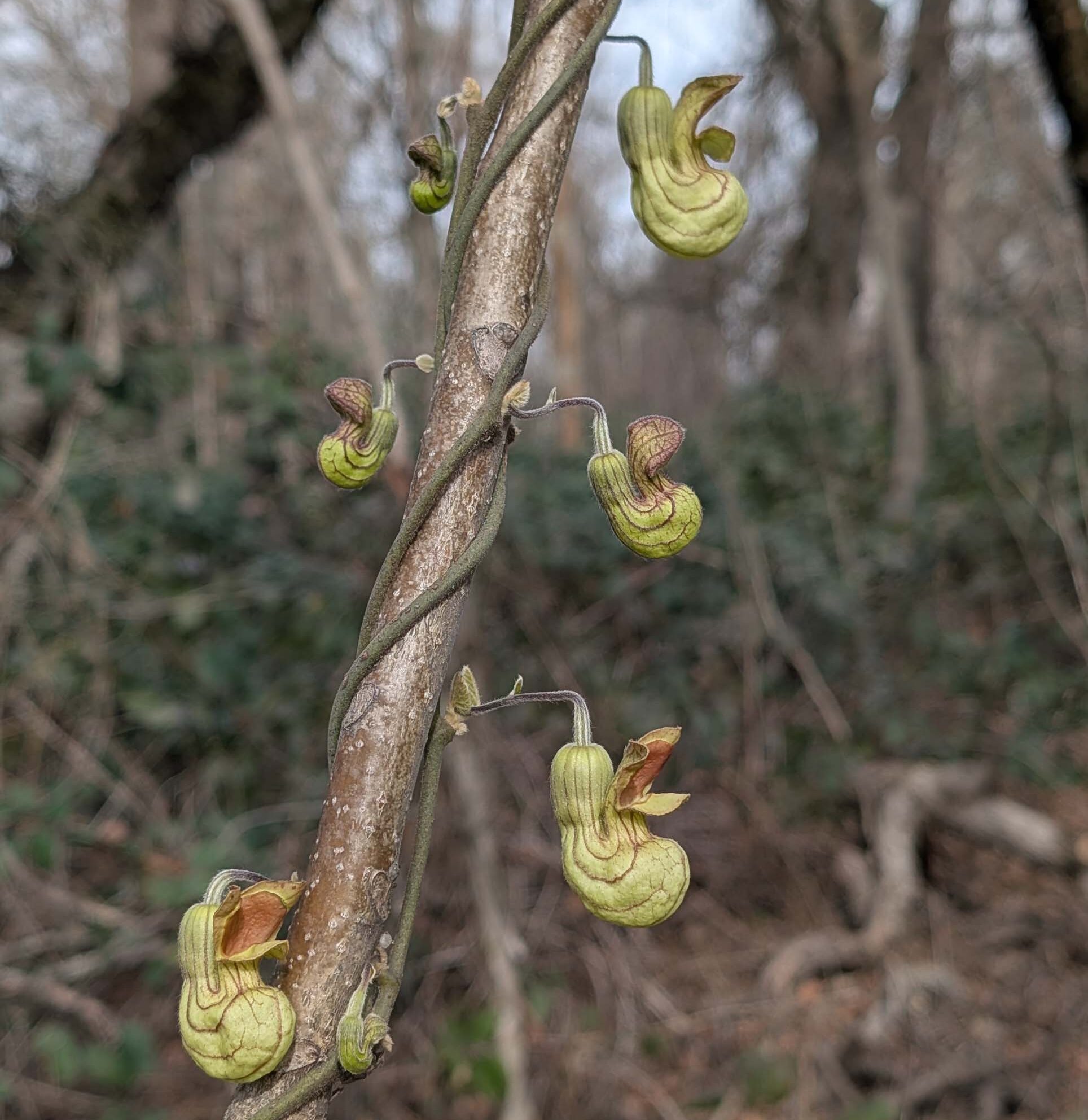
Photo taken January 31, 2026, by Ren Redlich.
I thought I already knew plenty of interesting tales of this species and its genus, Aristolochia, but immediately upon finding a Wikipedia article my treasure trove of pipevine intrigue practically doubled! I highly recommend going there and seeing for yourself. But here’s my take.
Numero uno . . . none of the Aristolochia genus has any edible parts for us humans. Recent science has identified kidney toxicity and even carcinogenic properties of aristolochic acid, a chemical that all members of this worldwide genus produce.
On the other hand (numero dos), the caterpillars of the pipevine swallowtail butterfly, Battus philenor hirsuta (the endemic California subspecies of the butterfly), must have plenty of young tender pipevine to live and grow into adults.
With Aristolochia californica climbing in a valley oak just outside my living room window, I’ve observed that the butterflies tend to deposit their eggs on the growing tendrils of the vine and under the youngest leaves.
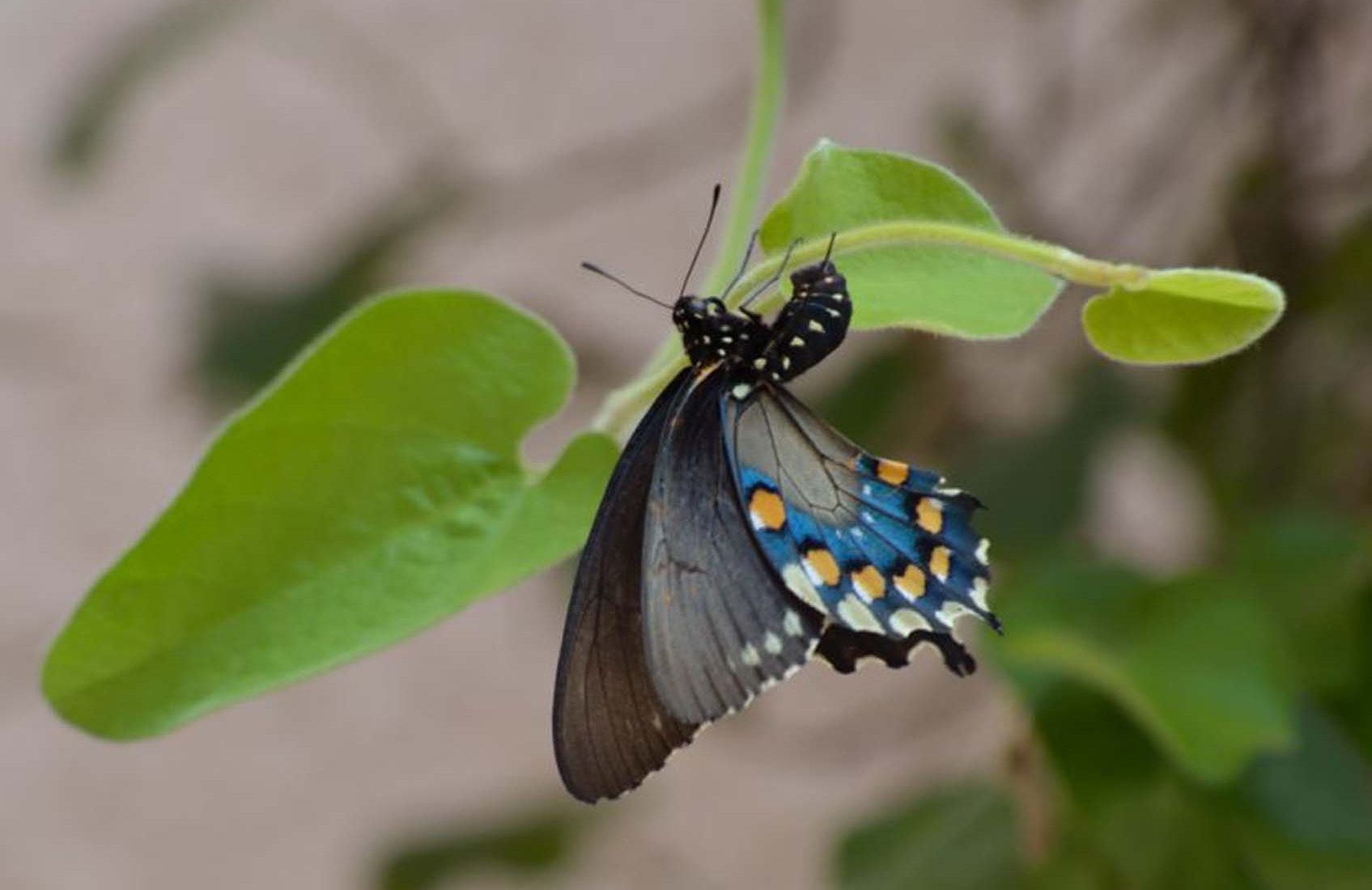
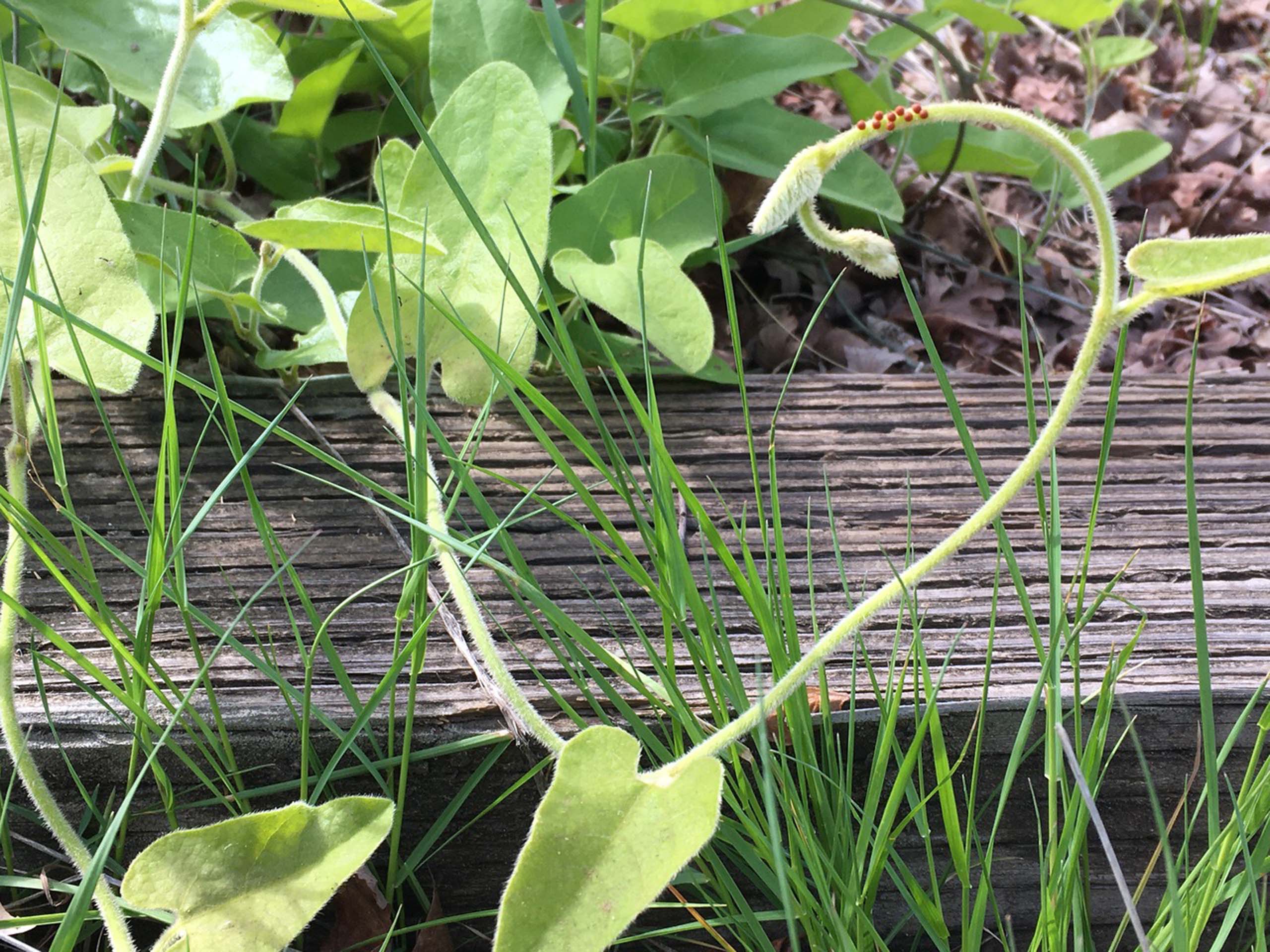
Photo by MaryAnn McCrary.
As the caterpillars grow, they move onto more mature parts of the vine . . . naturally . . . they must, since they’ve eaten the younger foliage. But, as later-stage caterpillars, they’re also capable of eating tougher material. How caterpillar development is matched perfectly with the spring growth of the vine is beautiful to contemplate. When caterpillars are fully mature they are velvety black with many red-orange papillae, or fleshy spikes. That’s a signal to birds . . . do not eat me or pay the price. By that last instar stage, the caterpillars are even capable of munching into freshly formed pipevine seed capsules, which might have more concentrated aristolochic acid than the “baby food” tendrils. That’s an unproven conjecture, but one that could be testable by a graduate biology student, if it hasn’t been already. In any case, at that last instar stage, the caterpillars are the most visible and certainly in need of protection from nesting birds, who focus on collecting soft-bodied caterpillars to feed their young in the spring.
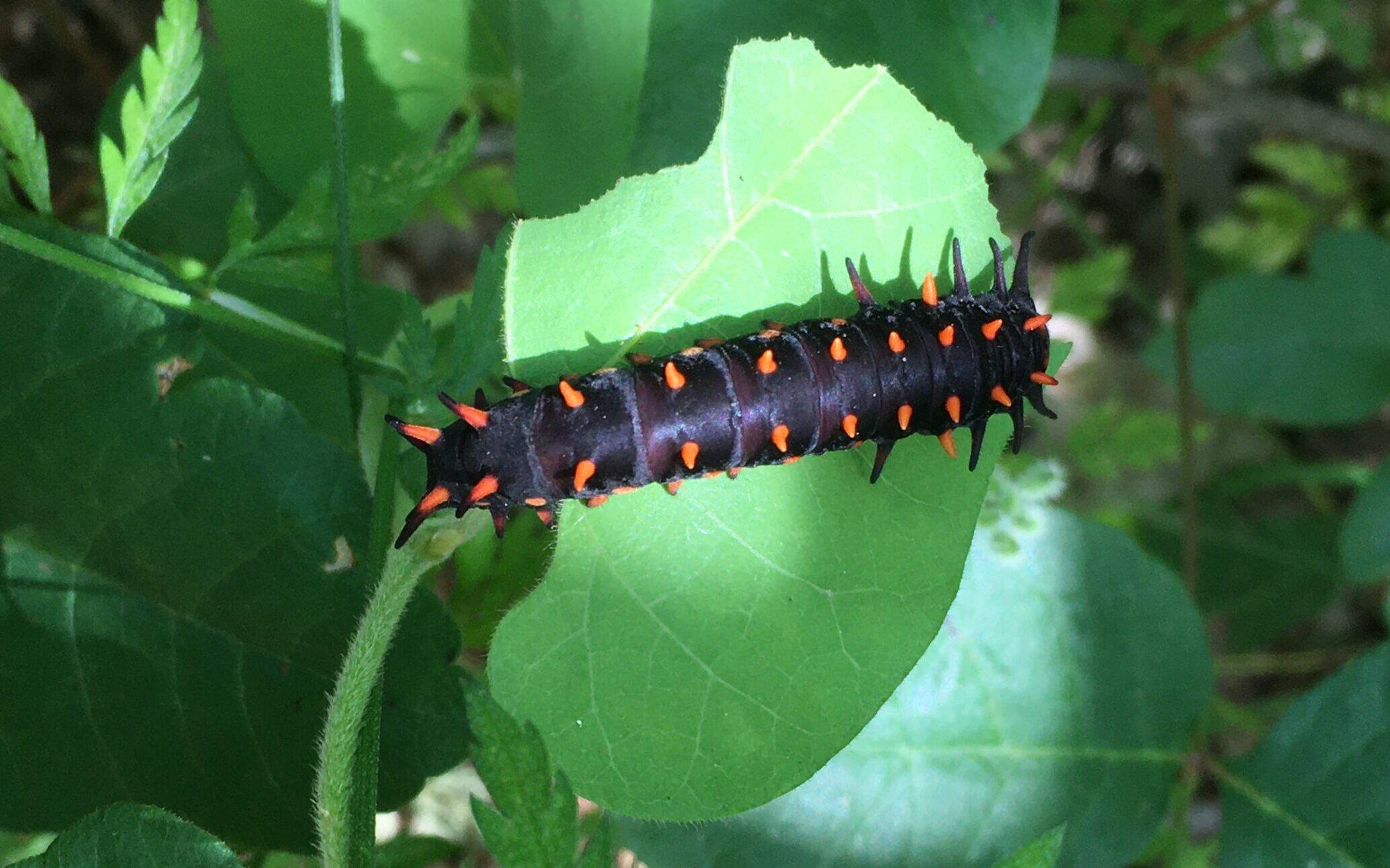
The poison-laced caterpillars are not immune to all predators. Paper wasps and hornets hunt for caterpillars and I’ve even seen them munching on pipevine seed pods. My anecdotal conclusion is that the wasps are as immune to aristolochic acid as the butterfly. But against birds (and presumably lizards, rodents, coyotes, and people), the aristolochic acid defense is a good one.
My favorite ethnobotany book (The Ethnobotany of the California Indians, 2nd edition, by George R. Meade) notes that Aristolochia californica flowers were used by the Miwok to treat snakebite. In Wikipedia today, I learned that one of several origin stories for the genus name Aristolochia came from Cicero, the Roman-era orator, who claimed that the name is from an otherwise unknown Greek person, Aristolochos, who learned from a dream that the vine is an antidote for snakebites. Holy synchrony, Batman!
Comments? Questions? Join the conversation on our new Facebook Group, Naturescapers! There are so many more fascinating facts unique to this genus and our California endemic pipevine species. I’m looking forward to a lively discussion!
~MaryAnn McCrary, Volunteer Nursery Manager for Shasta Chapter CNPS