
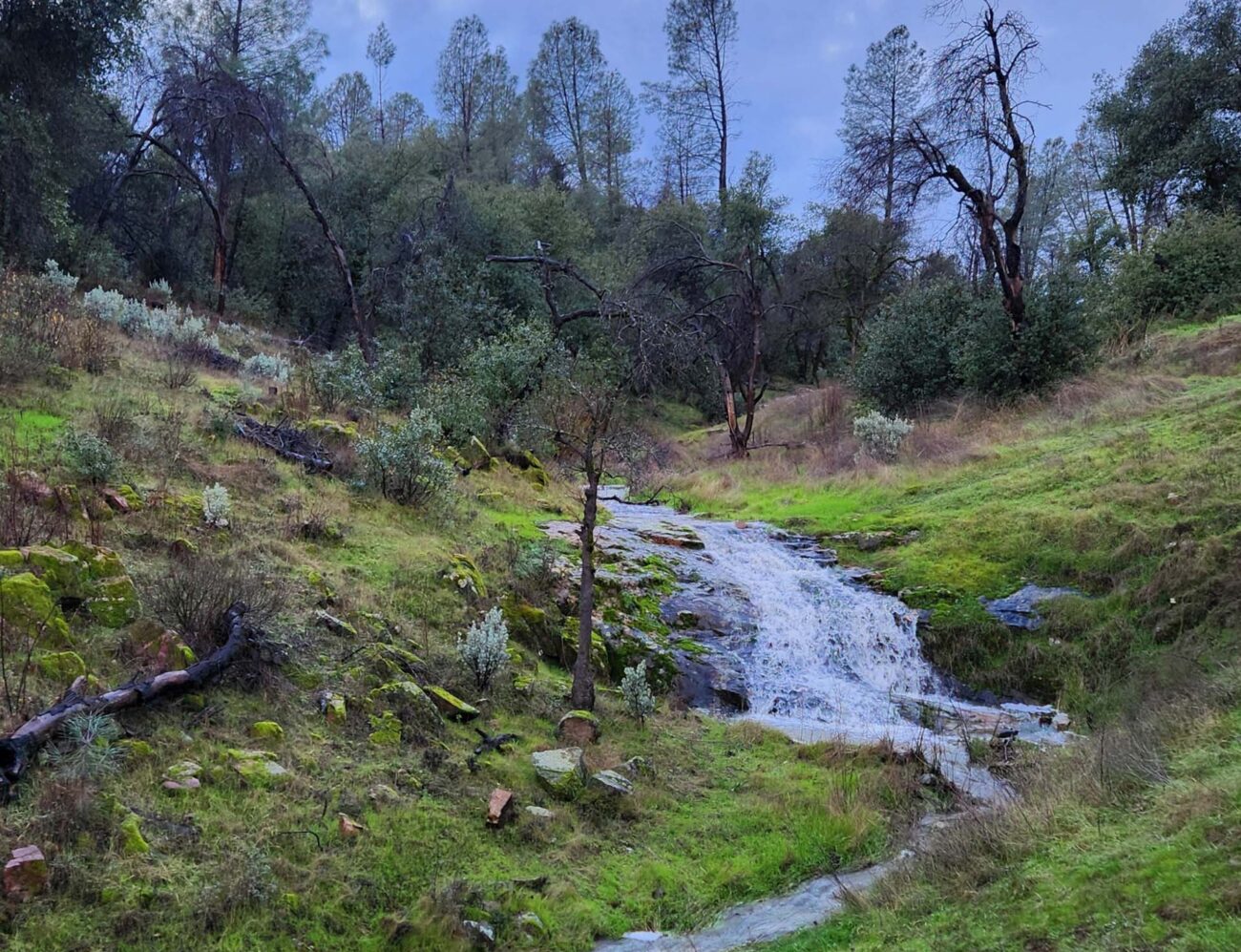
On January 4, a steady rain greeted Shasta Environmental Alliance’s first hike of 2026, but this was of little concern for the small group that joined naturalist Juliet Malik for a 1.7-mile hike that featured a seasonal creek, an overlook of Clear Creek, and abundant evidence of recovery from the 2018 Carr Fire.
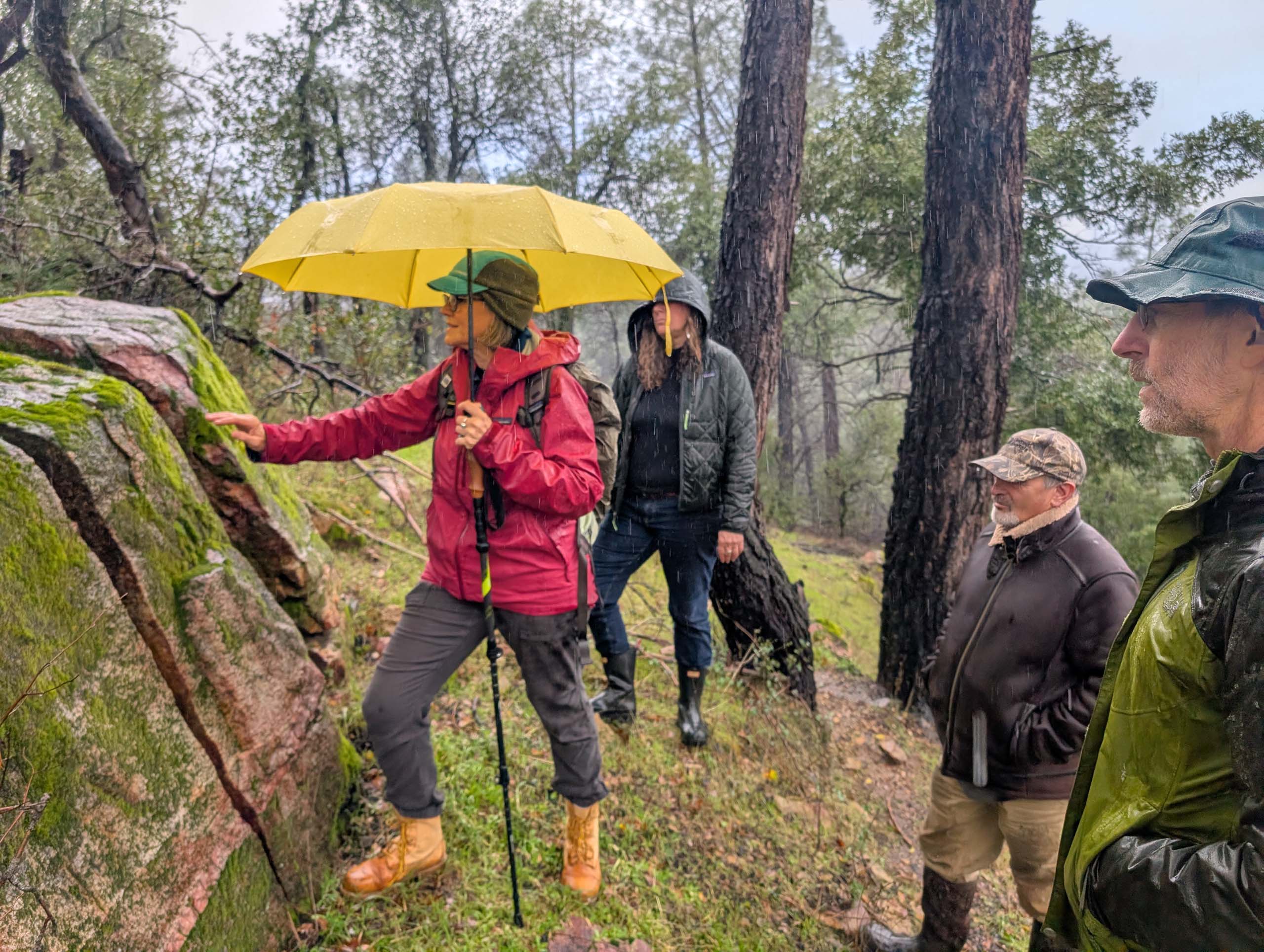
While the muddy trail squelched beneath our group’s boots, the evergreen foliage of whitelef manzanita (Arctostaphylos viscida), common manzanita (Arctostaphylos manzanita), gray pine (Pinus sabiniana), yerba santa (Eriodictyon californicum), and live oak (Quercus wislizeni) glistened in the falling rain. The landscape was verdant with grasses, amongst which could be seen the early foliage of some spring bloomers such as lupine (Lupinus sp.), woolly sunflower (Eriophyllum lanatum), wavy-leafed soap plant (Chlorogalum pomeridianum), and phacelia (Phacelia sp.)
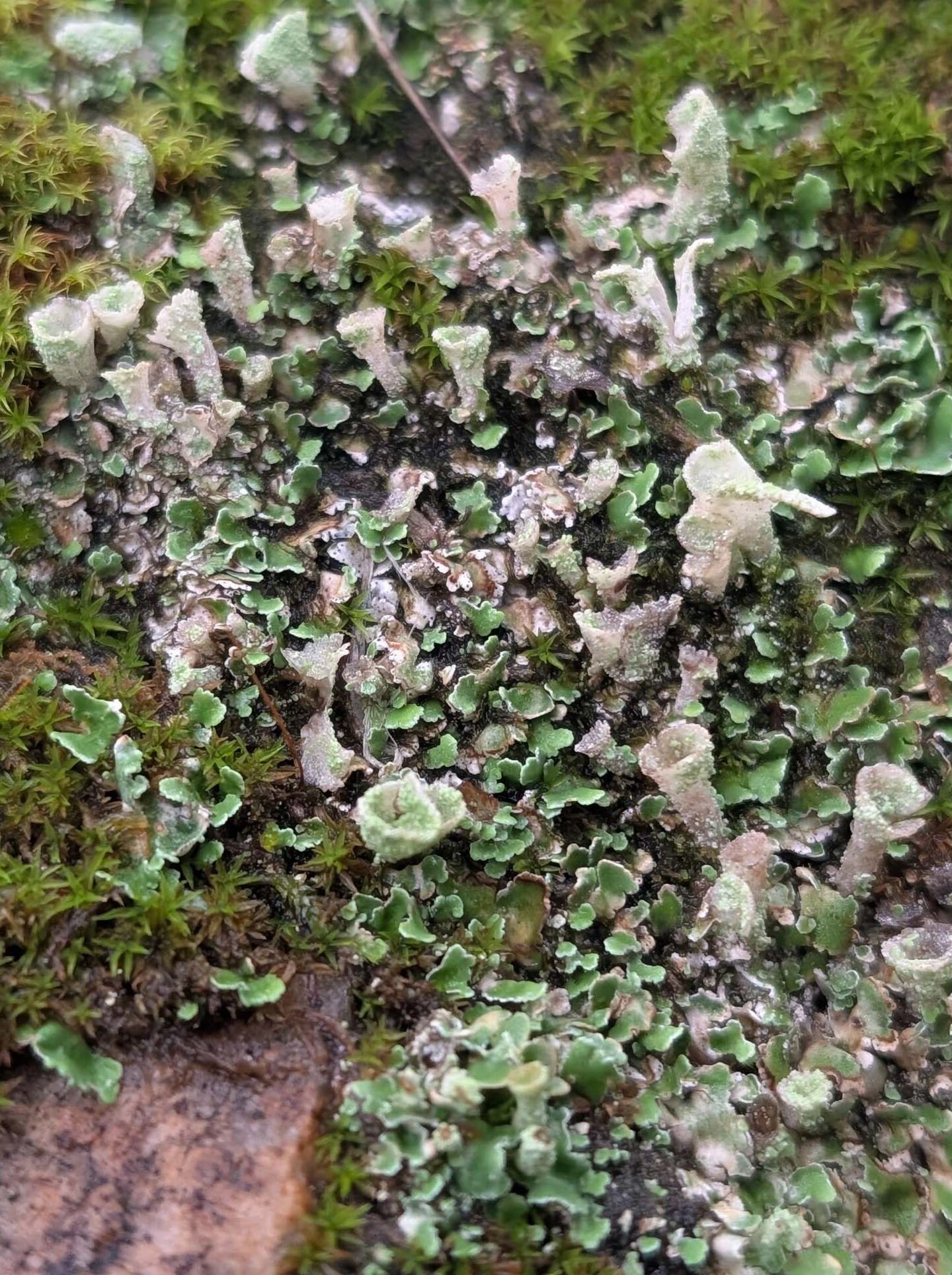
Photo by Ren Redlich.
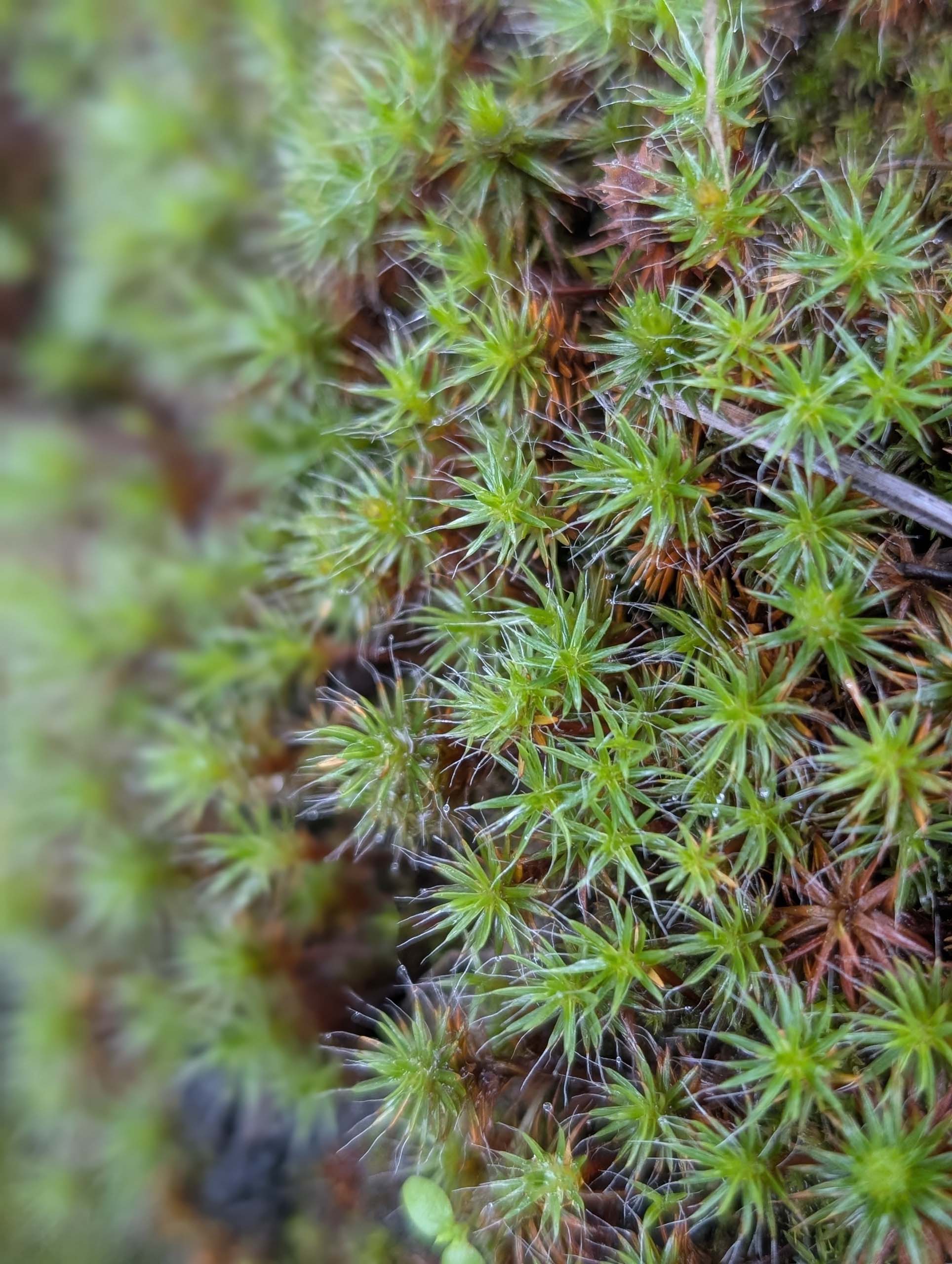
Photo by Ren Redlich.
The real stars of this rainy-day walk, however, were the fungi, mosses, and lichens! Using their collective knowledge, and apps like Seek and iNaturalist, our group identified hairy curtain crust, deceivers, turkey tails, western jack-o-lantern, haircap moss, pixie cup lichen, jellyskin lichen, and rock shield lichen. At the overlook, we took a moment to appreciate and discuss the unique characteristics and services of these organisms.
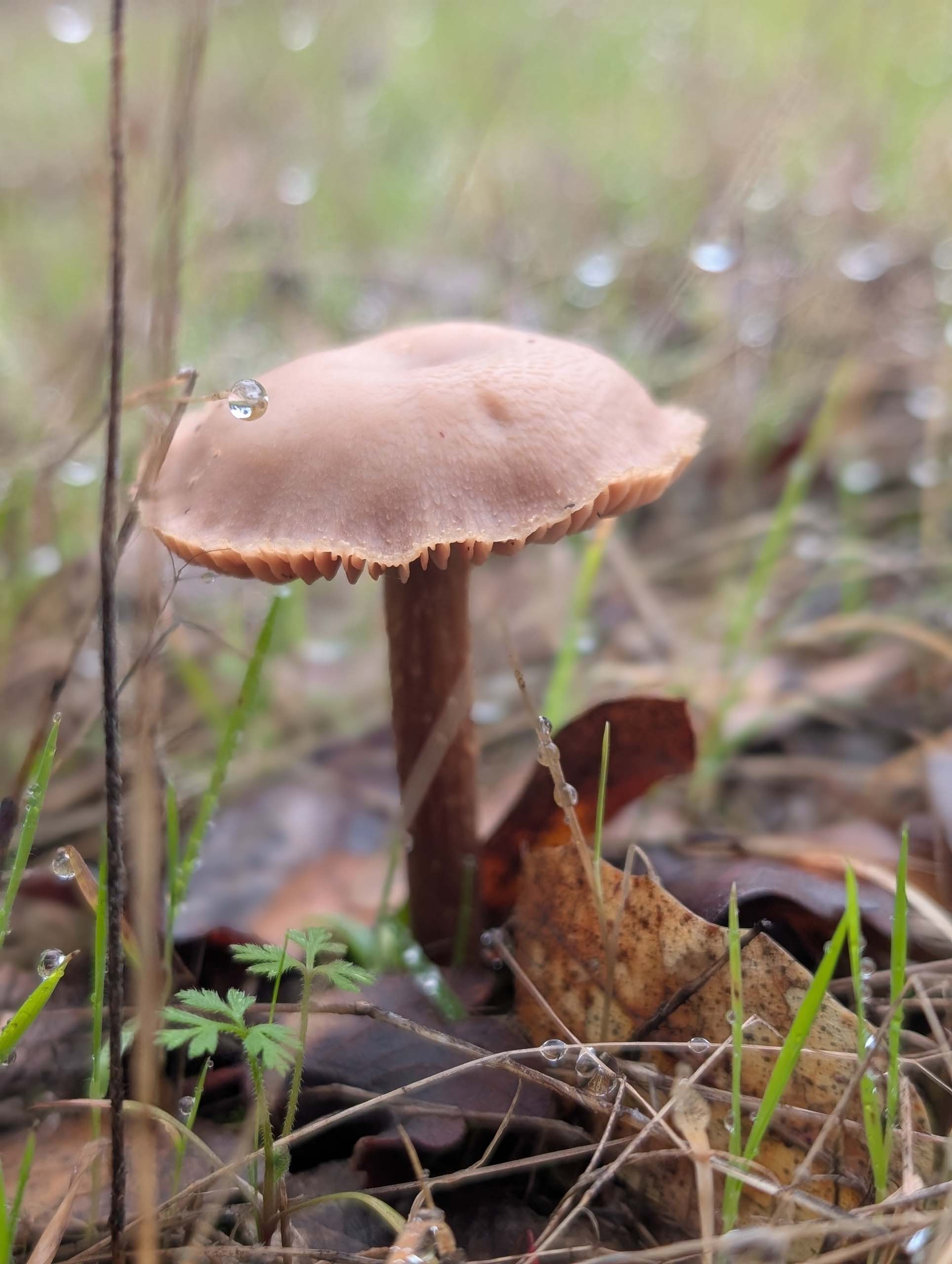
Photo by Ren Redlich.
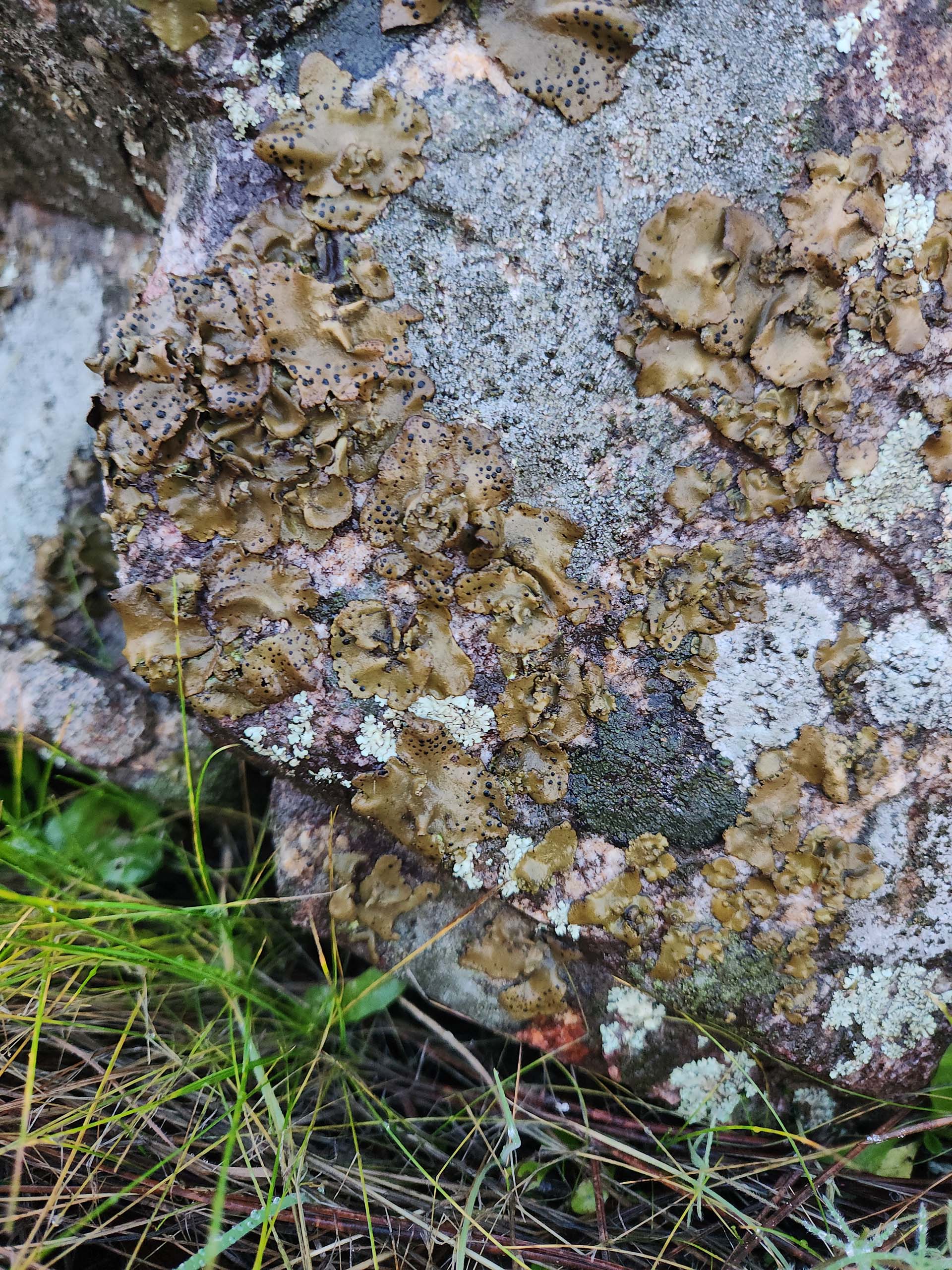
For instance, mushrooms, the fruiting bodies of certain fungi, do not emerge until the wet months, after the trees have set their spring leaf buds and go dormant. Thus, the trees are not deprived of needed resources. Mosses provide important services such as water retention, temperature regulation, and erosion control by inhabiting a microenvironment known as the boundary layer—the liminal space between the atmosphere and earth—taking advantage of water and nutrients that are inaccessible to most other plants. And lichens? Lichens literally embody the concept of mutual aid. Lichens are, after all, not a single species, but a “marriage” of two or more species, namely fungi and algae, often accompanied by bacteria. The algae provide food and the fungi provide protection and minerals. This symbiotic relationship allows lichens to inhabit the harshest environments on Earth, from deserts to the Arctic tundra. Nature is certainly full of instruction on ways of being!
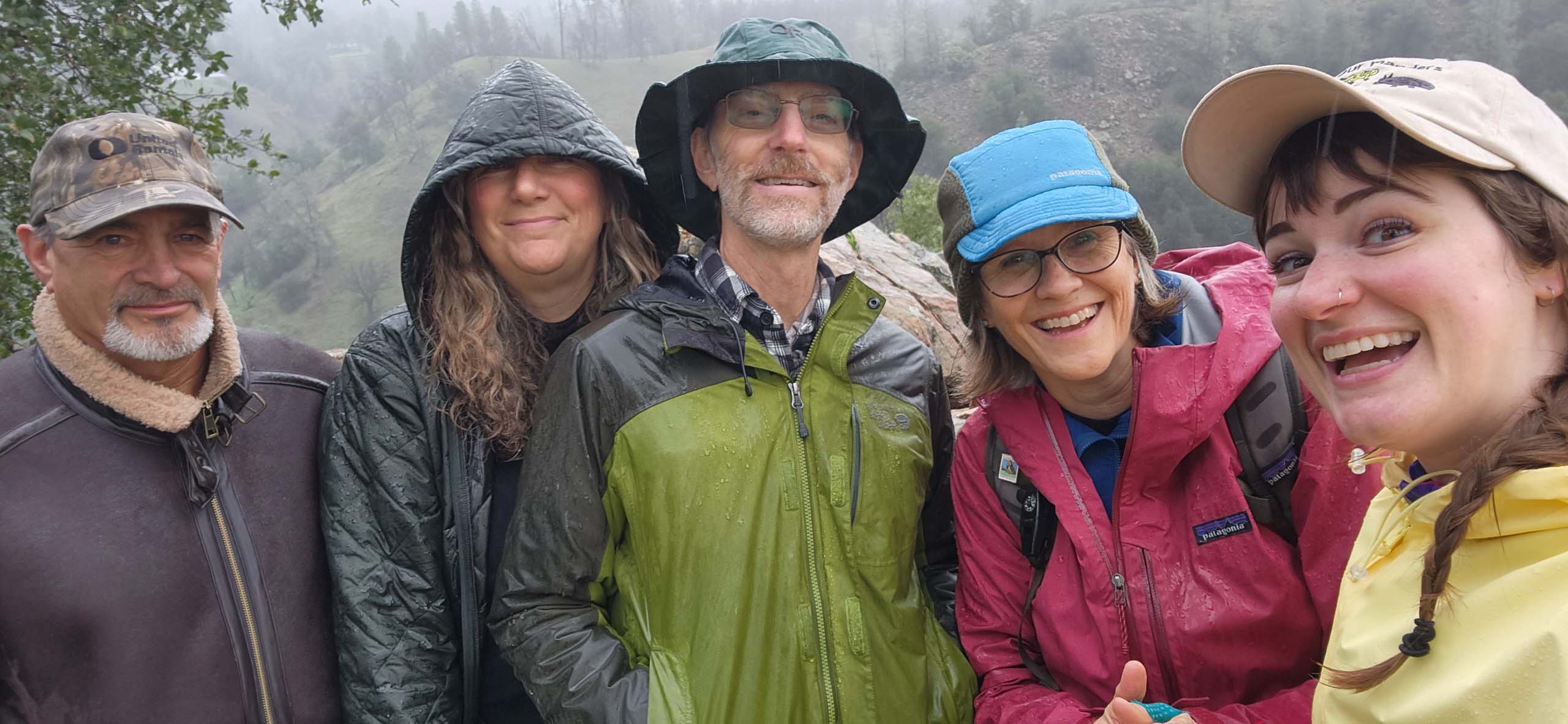
Back in the parking lot, our group said their goodbyes just as the rain let up! Mother Nature in all her wisdom has a sense of humor after all. ~ Juliet Malik
To stay in the loop with future Shasta Environmental Alliance outings, be sure to follow us on Facebook, Instagram, and Meetup, and subscribe to our newsletter at ecoshasta.org.