
January Propagation Session!
Sunday, January 11
From 10 AM to noon
At the Shasta College Horticulture Greenhouses
(on the Farm at the NE corner of campus)
We will be starting cuttings from a variety of native perennial shrubs. Dress for warmth and bring your favorite clippers. We have a few to share. Learn with us and practice how to make cuttings that will form roots! Please let us know if you intend to come by e-mailing us at shastacnps@gmail.com
‘Tis the Season of Berries, Birds, and Growing Roots
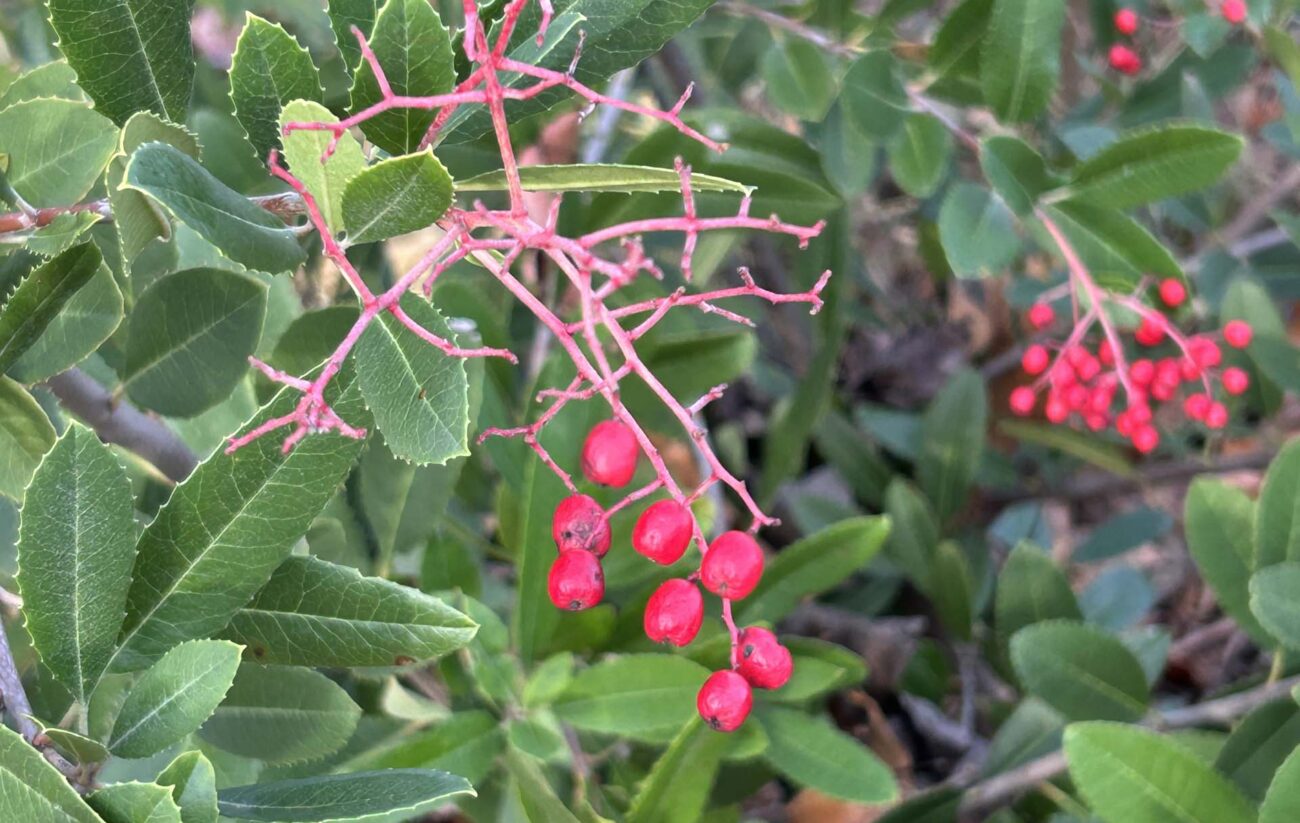
Top of the Year to One and All! This is the quiet season when Robins, Cedar Waxwings, and a host of their winged compadres dine on wild berries. The berries of toyon, Heteromeles arbutifolia, are a prime example. This native shrub, which inspired the naming of Hollywood, grows in abundance in our Shasta County foothills and is perhaps the most popular evergreen shrub that we have in our nursery. Little wonder, because the bright cherry-red berries and large evergreen leaves are at their most beautiful in time for December holiday decorations. Can there be better front yard ornaments than red and green toyons and their winged visitors? I can’t think of any. Trimmings are an old favorite in homemade wreaths too.
Fortunately, toyon can be grown from either seed or cuttings. The young shrubs are adaptable to many soil types. They tolerate direct sun well, making toyon one of the easiest natives to grow and one of the most beneficial for local birds and bees. The creamy white clusters of flowers in May attract both wild and naturalized bees.
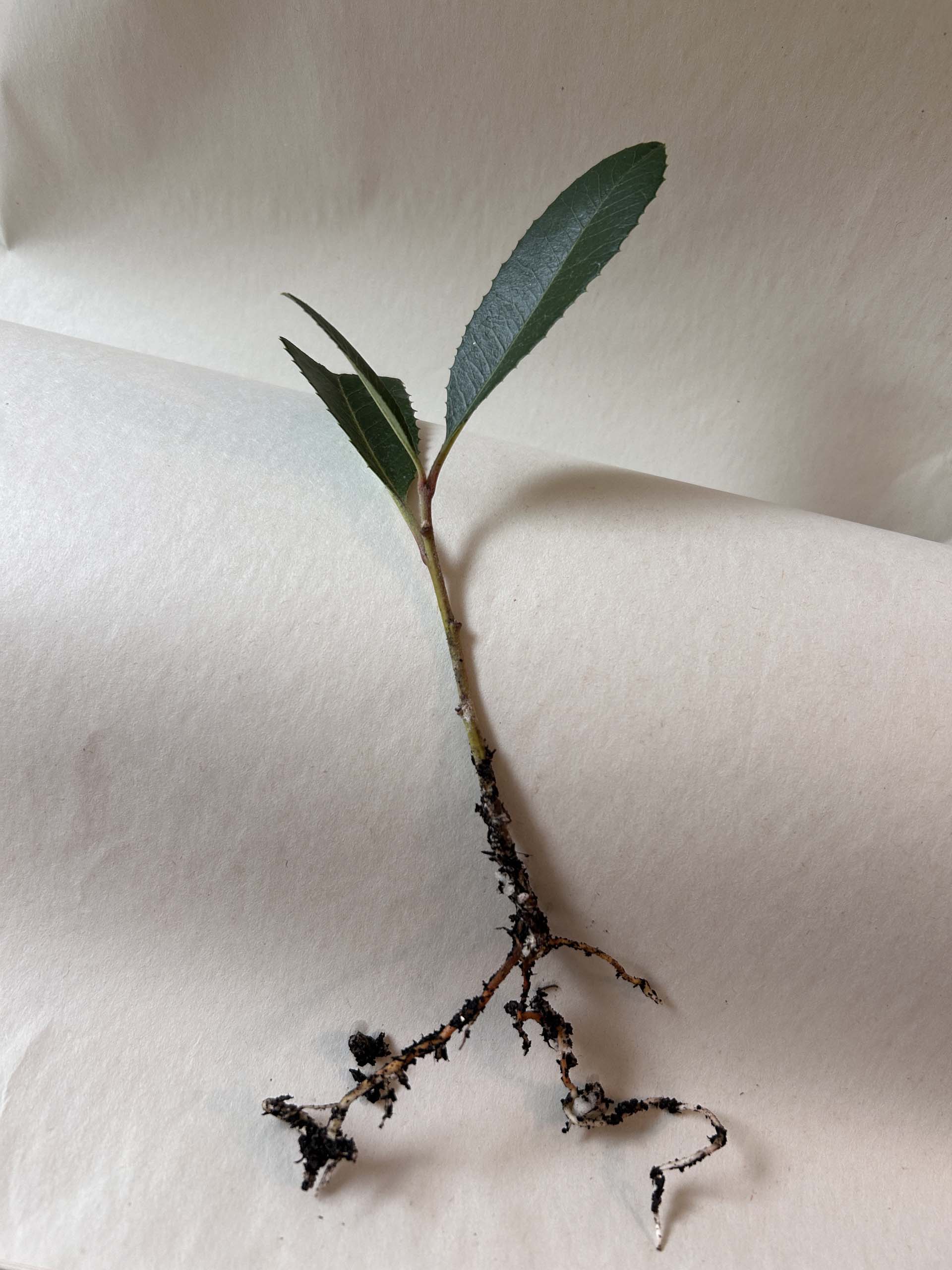
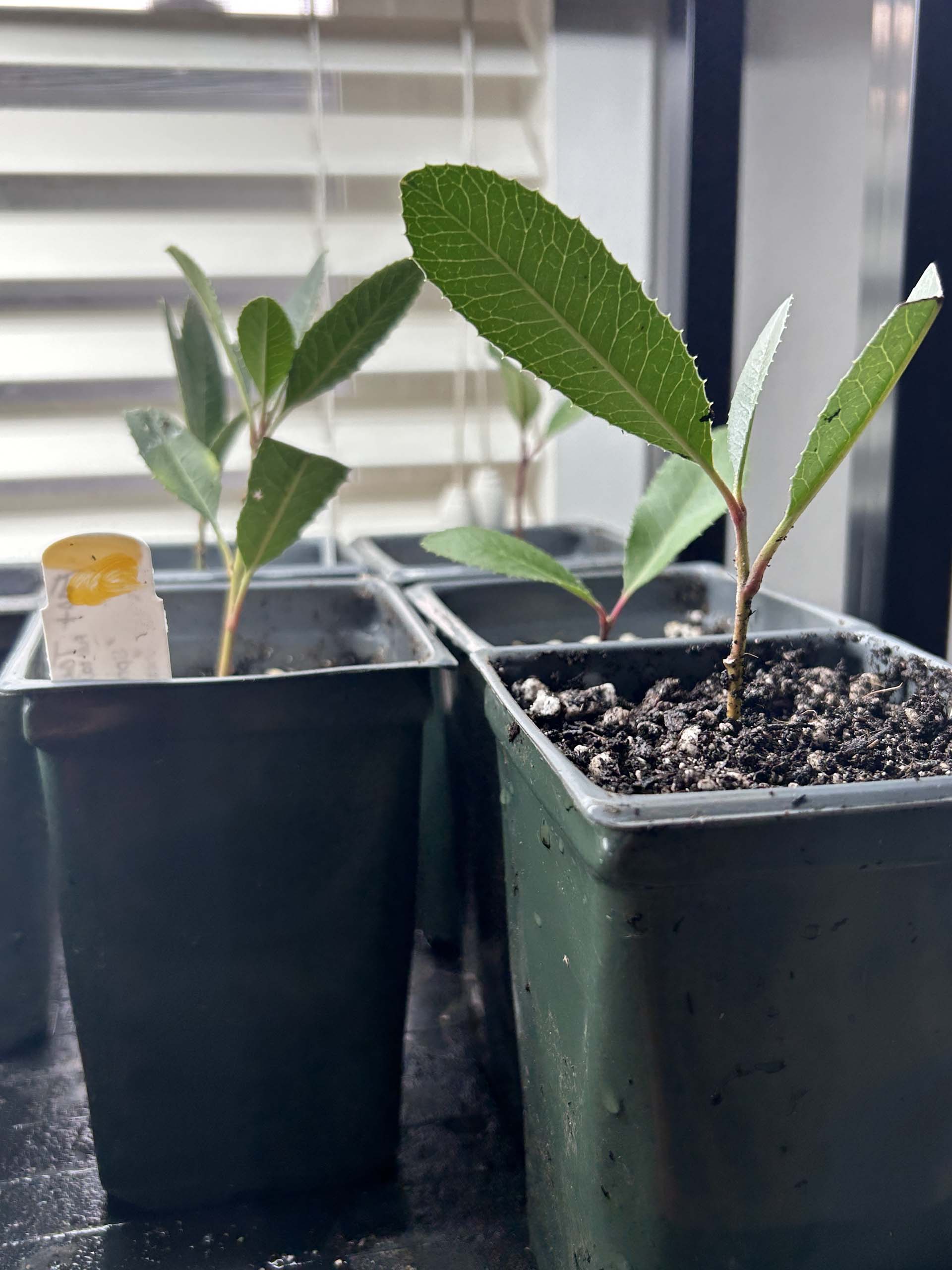
I’ve grown toyon from seed with success and two years of patience. This year I took cuttings from my front yard shrubs in mid October to see whether that might make larger plants faster. Unwrapping the cuttings from their coarse perlite rooting medium on the day after Christmas, I was thrilled to find some had developed excellent roots. These go into an airy combination of perlite and a nutritious potting mix to support further growth of both roots and leaves. I’m keeping them between 65 and 73 °F in a south-facing room to encourage root growth. Indirect lighting is best.
Home-based experimentation in growing native plants from the natives in our own yards is a potential way to support our Chapter’s nursery on our own schedule. We’ll explore the possibilities available to interested home gardeners in another article, coming soon. Stay tuned!
New Facebook Page for Nursery News
Coming in 2026, there will be a new Facebook page and Instagram thread dedicated to Everything and Anything about our Shasta Chapter CNPS Native Plant Nursery. Look for it, please! There will be a link on the Chapter’s Facebook page and an article will be posted on our blog in February. Through better communication, we can build a thriving club of us “plant people” who can enjoy getting together from time to time for events to support the nursery and our passion for native plants! ~MaryAnn McCrary, Nursery Manager