
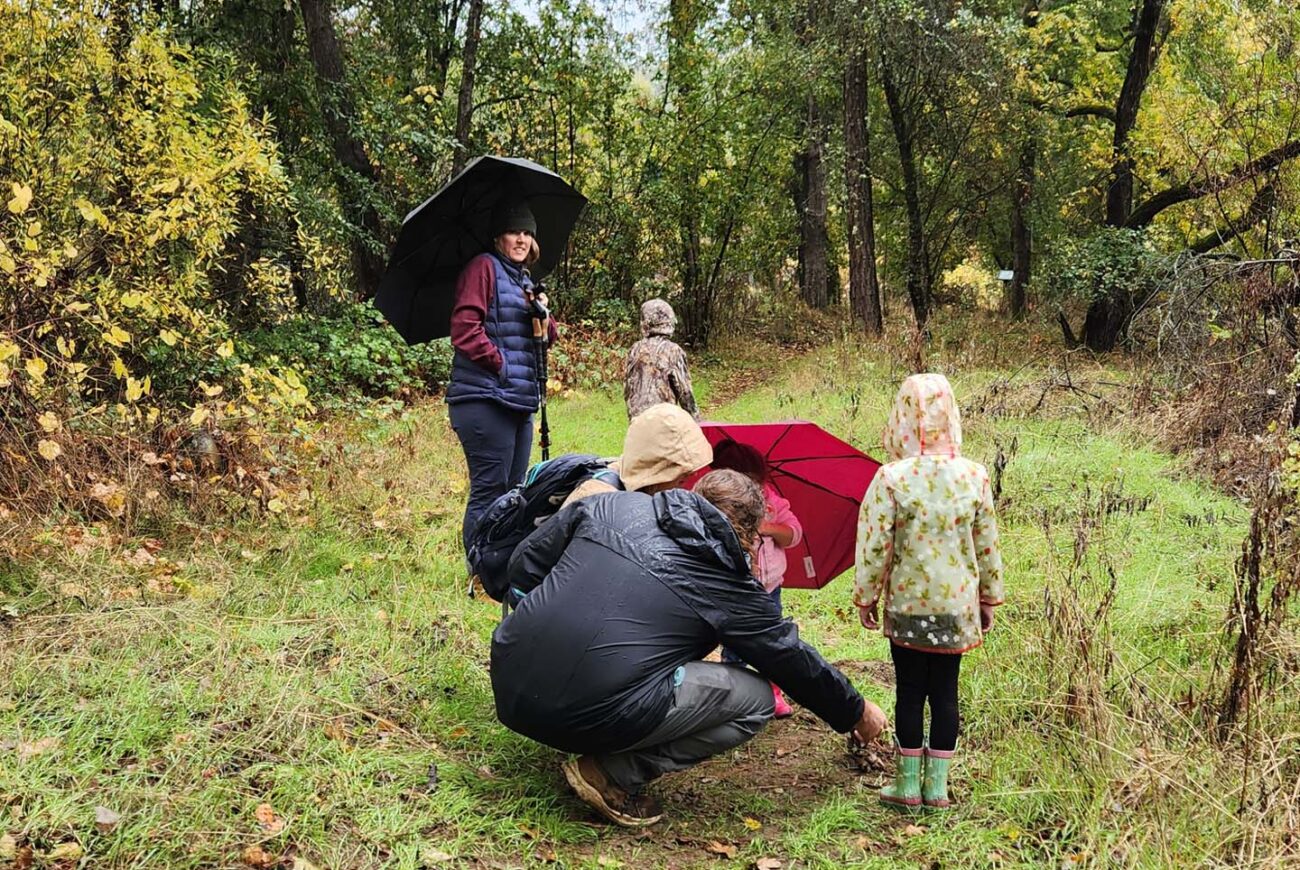
On Sunday, October 26, Shasta Environmental Alliance (SEA) volunteers Holly White-Wolfe and Juliet Malik led a joyful Families in the Forest outing along Clear Creek in Redding. Despite the rain, two families—three children and four adults—bundled up and shared umbrellas while exploring Horsetown-Clear Creek Preserve.
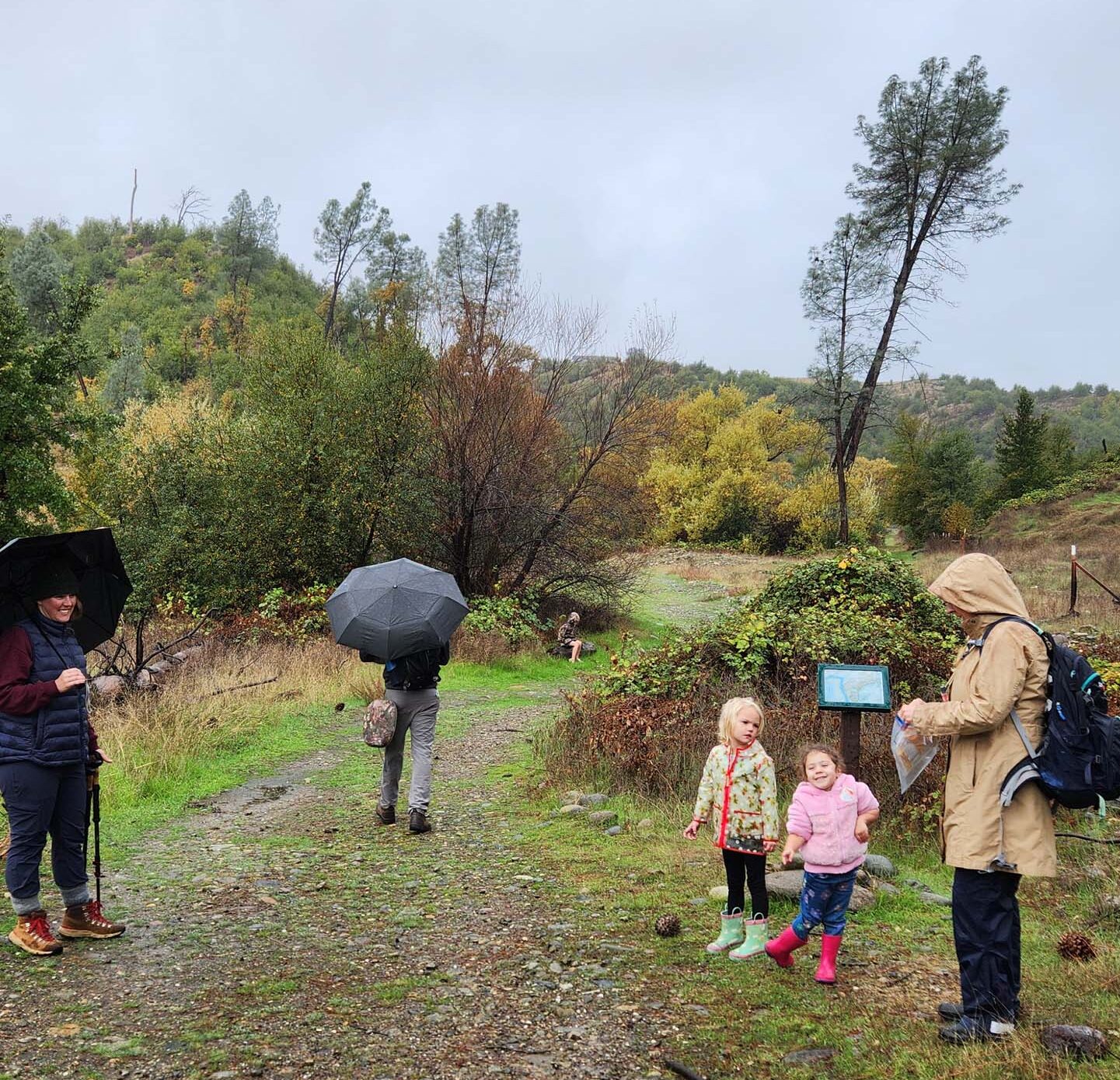
Children eagerly trotted down the trails, identifying pine nuts, blackberries, and grapes. A three-year-old surprised the group by spotting earth star mushrooms nestled in the leaf litter. One dad guided the group in examining two trees for signs of beaver activity, helping distinguish between tooth marks and axe cuts. A pile of squirrel-munched pinecones sparked curiosity and a pine nut tasting break, prompting wonder at the effort squirrels invest for such tiny rewards.
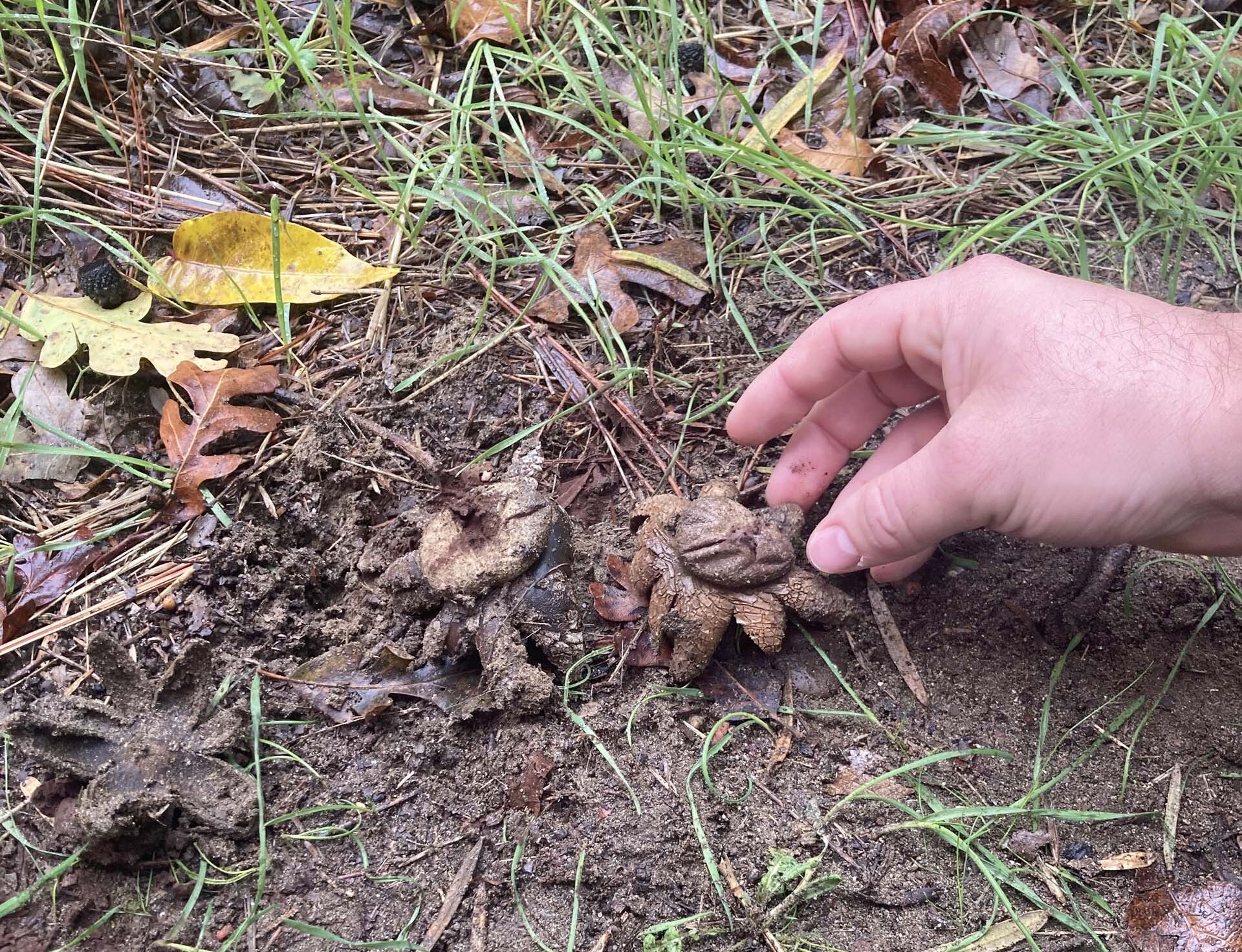
Photo taken by Holly White-Wolfe, on October 26, 2025.
After hiking the short loop near Clear Creek, the group gathered in the outdoor classroom to compare pinecones—like the pokey ponderosa and the gentle Jeffrey pines—by rolling them between their palms. A whimsical forest gnome joined the adventure, helping children build their sense of place by identifying Mount Shasta (the tall one with snow) and the Sacramento River (the wide one we walk beside).
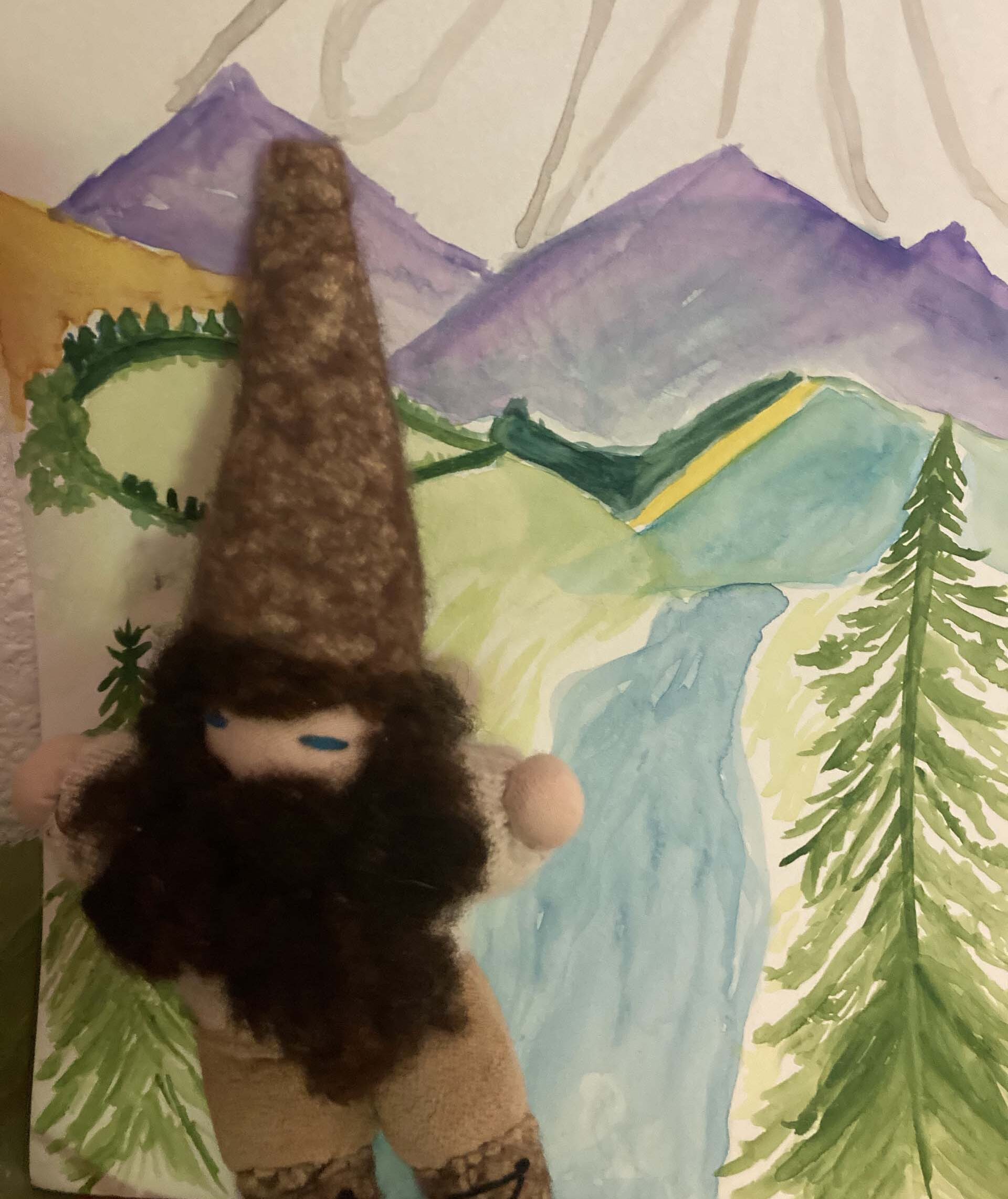
Photo taken by Holly White-Wolfe, taken on October 26, 2025.
This event was designed to support family flourishing through nature immersion. Research shows that just two hours per week in nature can improve health, reduce stress, and enhance mental clarity (Grinde and Patil 2009, American Psychological Association 2025). Families left with muddy boots, full hearts, and a deeper connection to the ecosystem they call home.
Learn more or register for future outings at ecoshasta.org/events.
~Holly White-Wolfe
American Psychological Association. (2025). Nurtured by nature. Monitor on Psychology 51(3). https://www.apa.org/monitor/2020/04/nurtured-nature
Grinde, B., and G.G. Patil. (2009). Biophilia: does visual contact with nature impact on health and well-being? International Journal of Environmental Research and Public Health 6(9): 2332–2343. https://doi.org/10.3390/ijerph6092332