
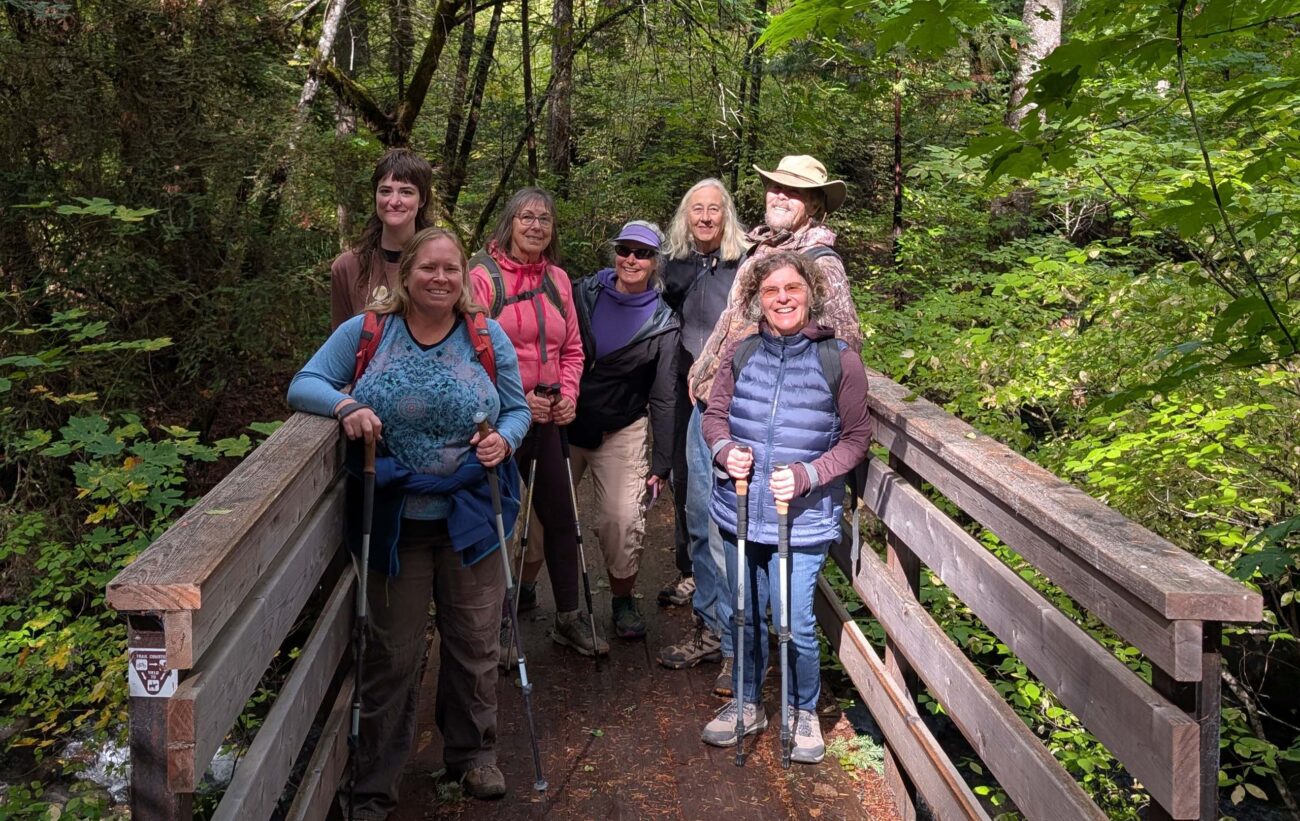
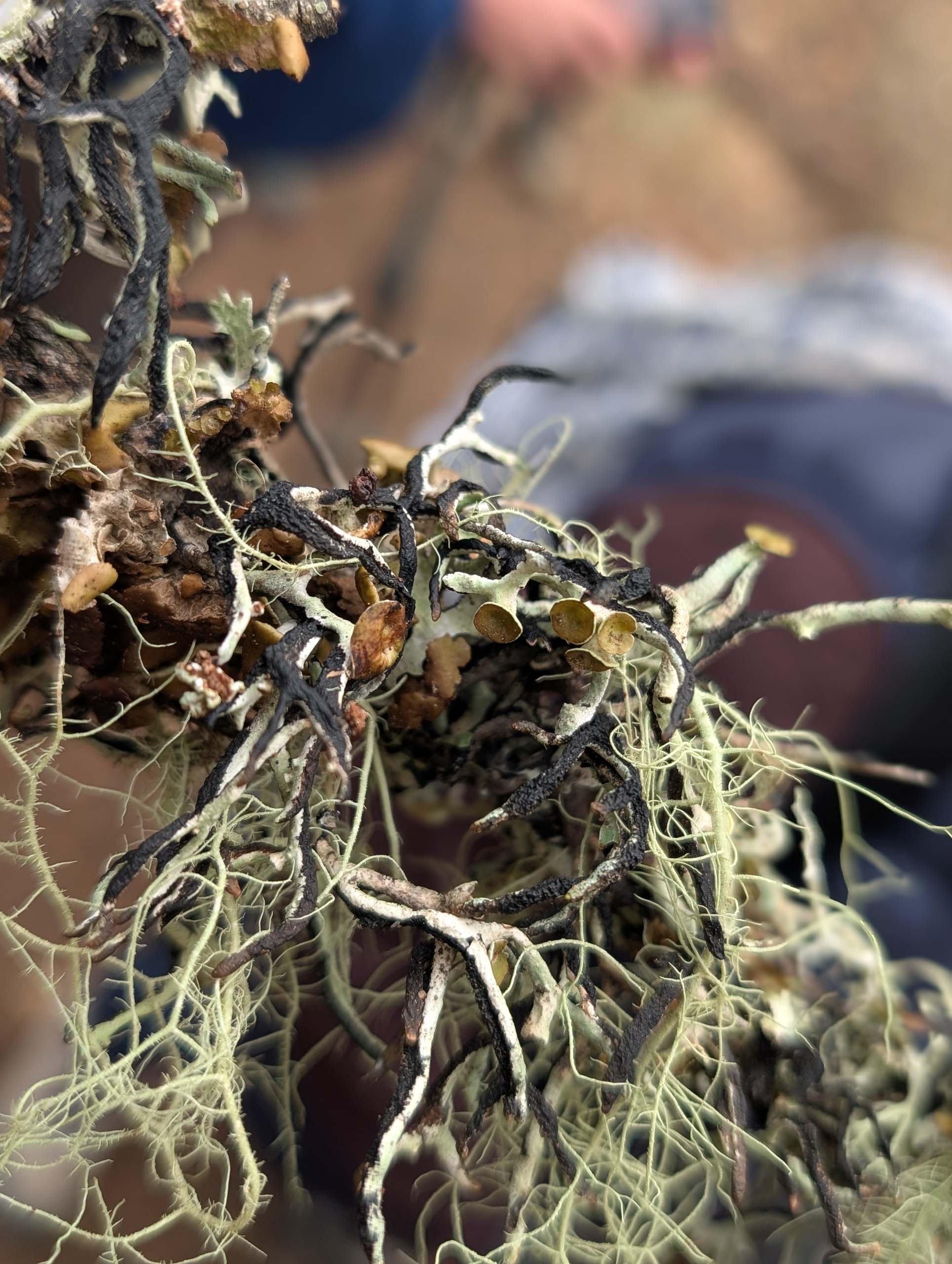
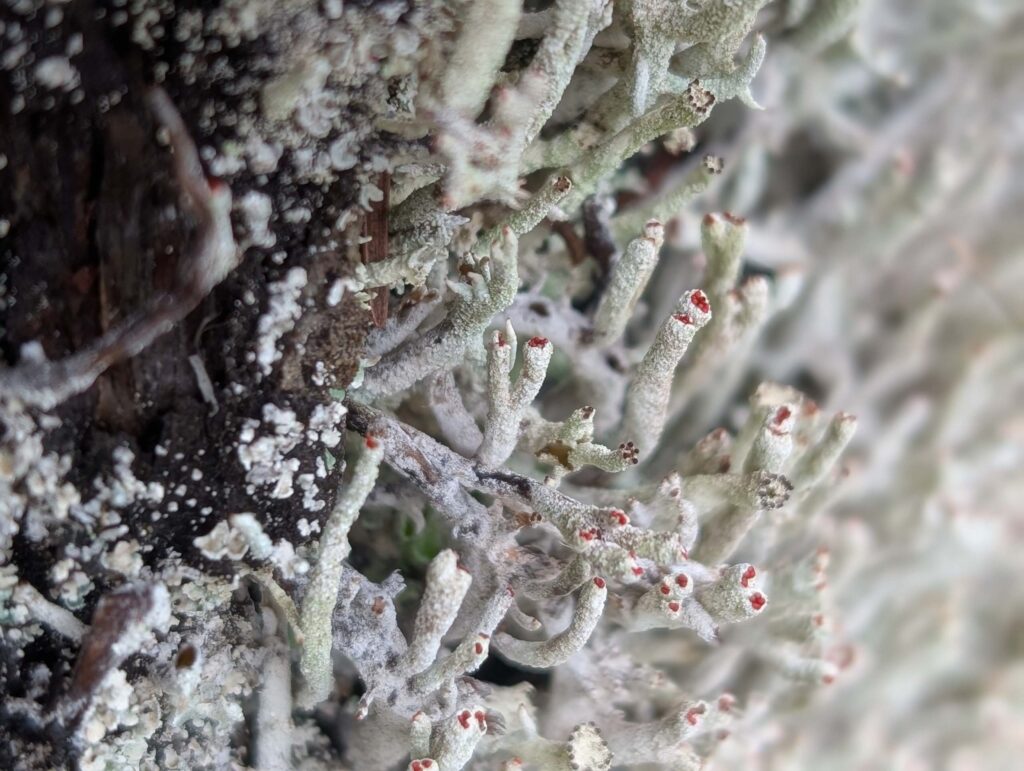
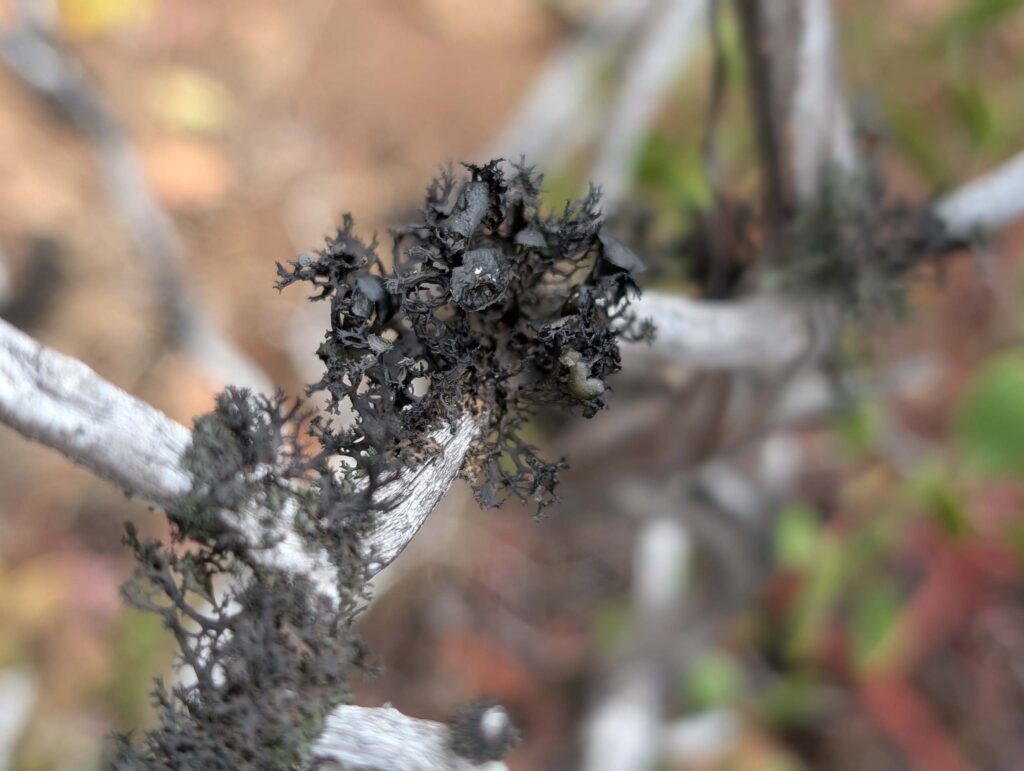
On a crisp autumn day in Weaverville, seven people packed up their gear and headed out to the East Weaver Creek trailhead to observe and I.D. lichens and plants. The hike started out with a basic summary by trip leader, David Ledger, explaining what lichens actually are. Lichens are plant-like, but are actually composite organisms that exist as a partnership between fungi and a photosynthesizing organism like algae or cyanobacteria. The fungus provides structure and absorbs water and minerals, while the alga or cyanobacterium uses photosynthesis to provide food. The first lichen we identified was a fruticose type called fishbone beard lichen (Usnea filipendula), which can be identified by its stretchy inner core. Next we found a foliose type called Imshaug’s tube lichen (Hypogymnia imshaugii), which displayed the reproductive structures of the fungal partner, called fruiting bodies.
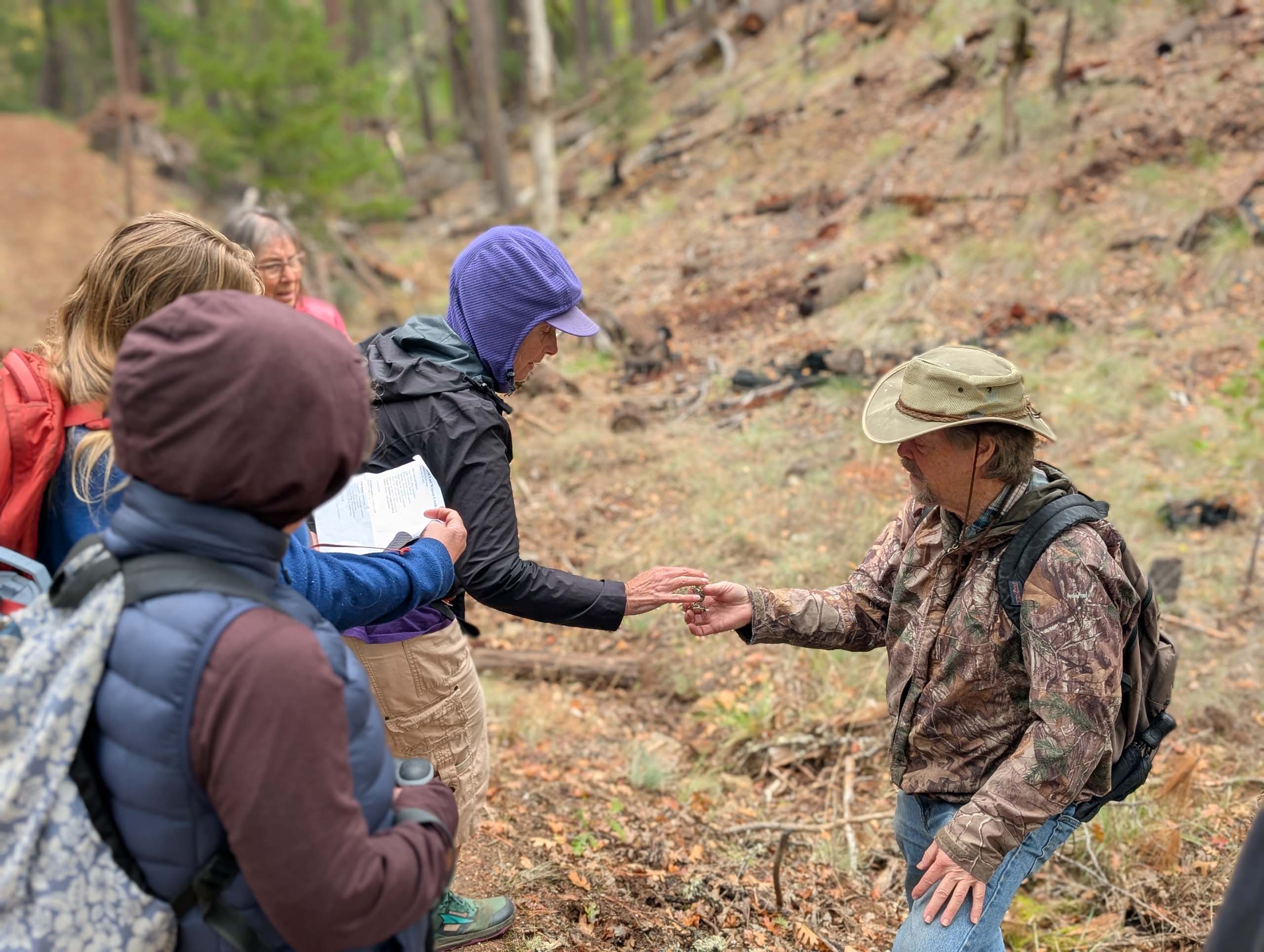
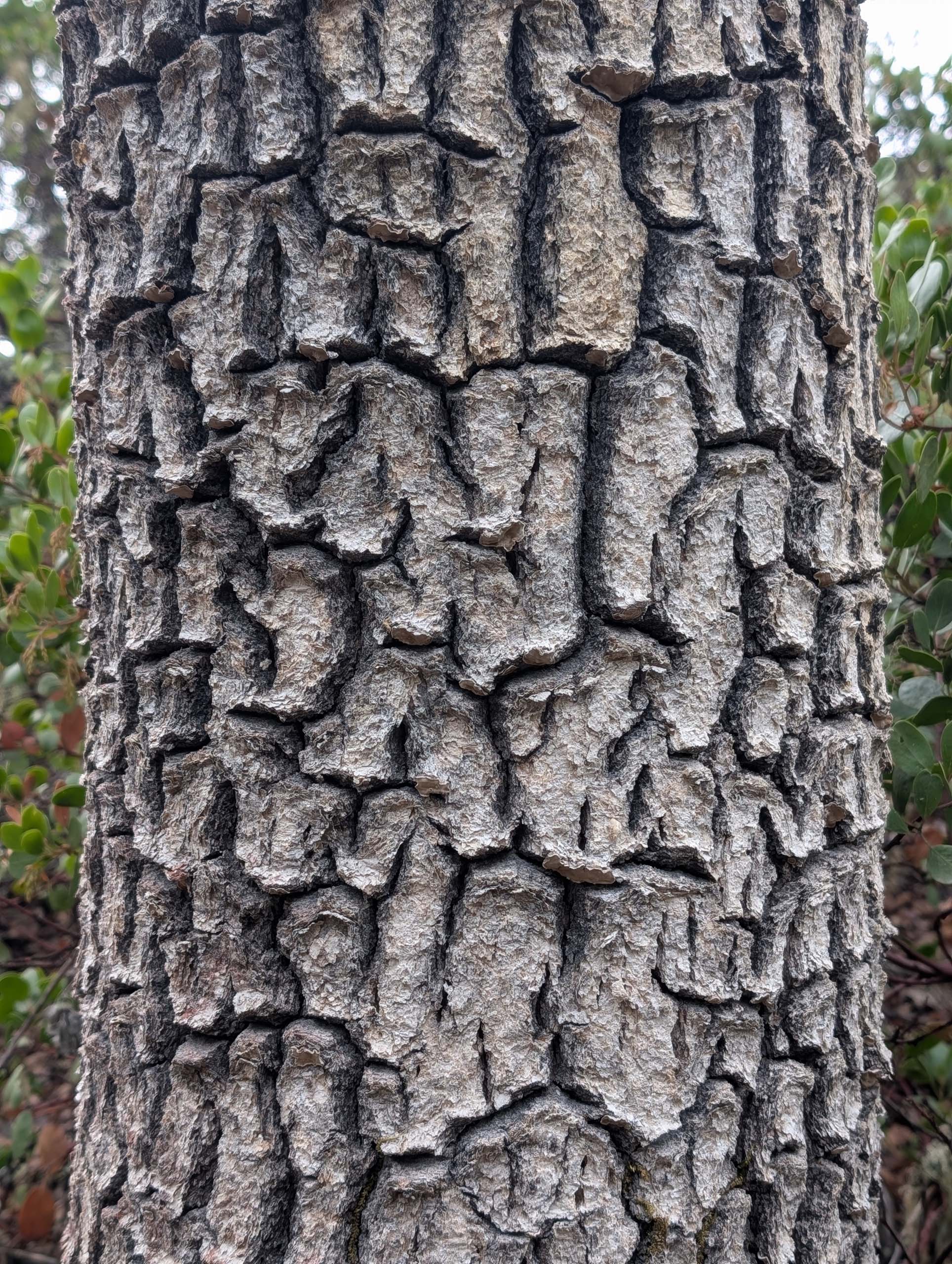
Trees are common holds for lichens. While passing through an oak woodland, we used different identifying markers to distinguish Oregon white oak, Quercus garryana, from California black oak, Quercus kelloggii. Oregon white oak has deeply furrowed bark; and California black oak has bristle-tipped leaf lobes and a thatched cap that covers almost half of its acorn.
Continuing along the creek, a number of shrubs, ferns, trees, and fungi. We identified trees such as blackfruit dogwood (Cornus sessilis), Pacific madrone (Arbutus menziesii), and Pacific yew (Taxus brevifolia); shrubs such as birchleaf mountain mahogany (Cercocarpus betuloides), baldhip rose (Rosa gymnocarpa), Fremont’s silktassel (Garrya fremontii), and California yerba santa (Eriodictyon californicum); ferns such as bracken (Pteridium aquilinum); and fungi such as hare’s foot inkcap (Coprinopsis lagopus), and fir-cone mushroom (Strobilurus trullisatus).
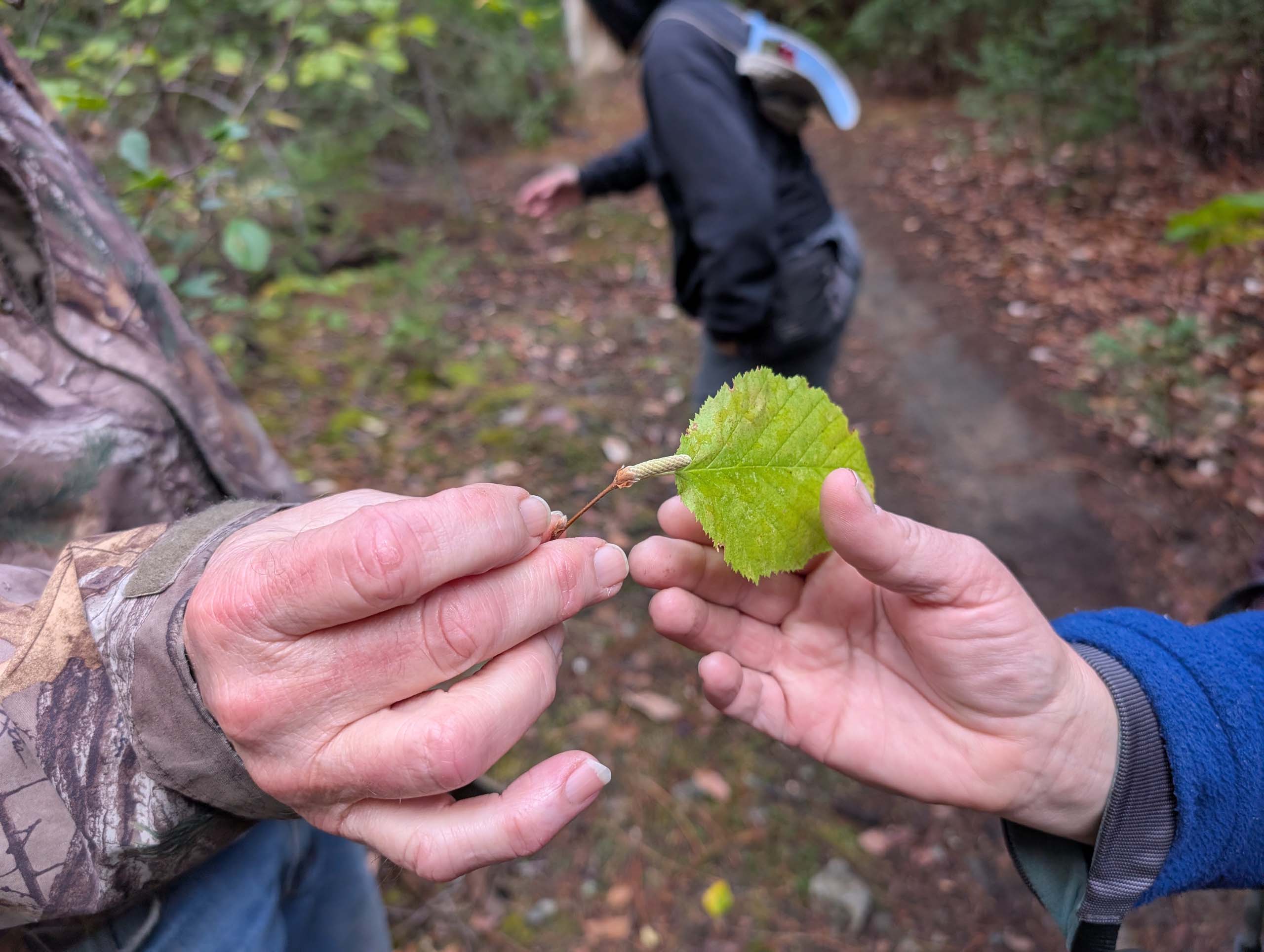
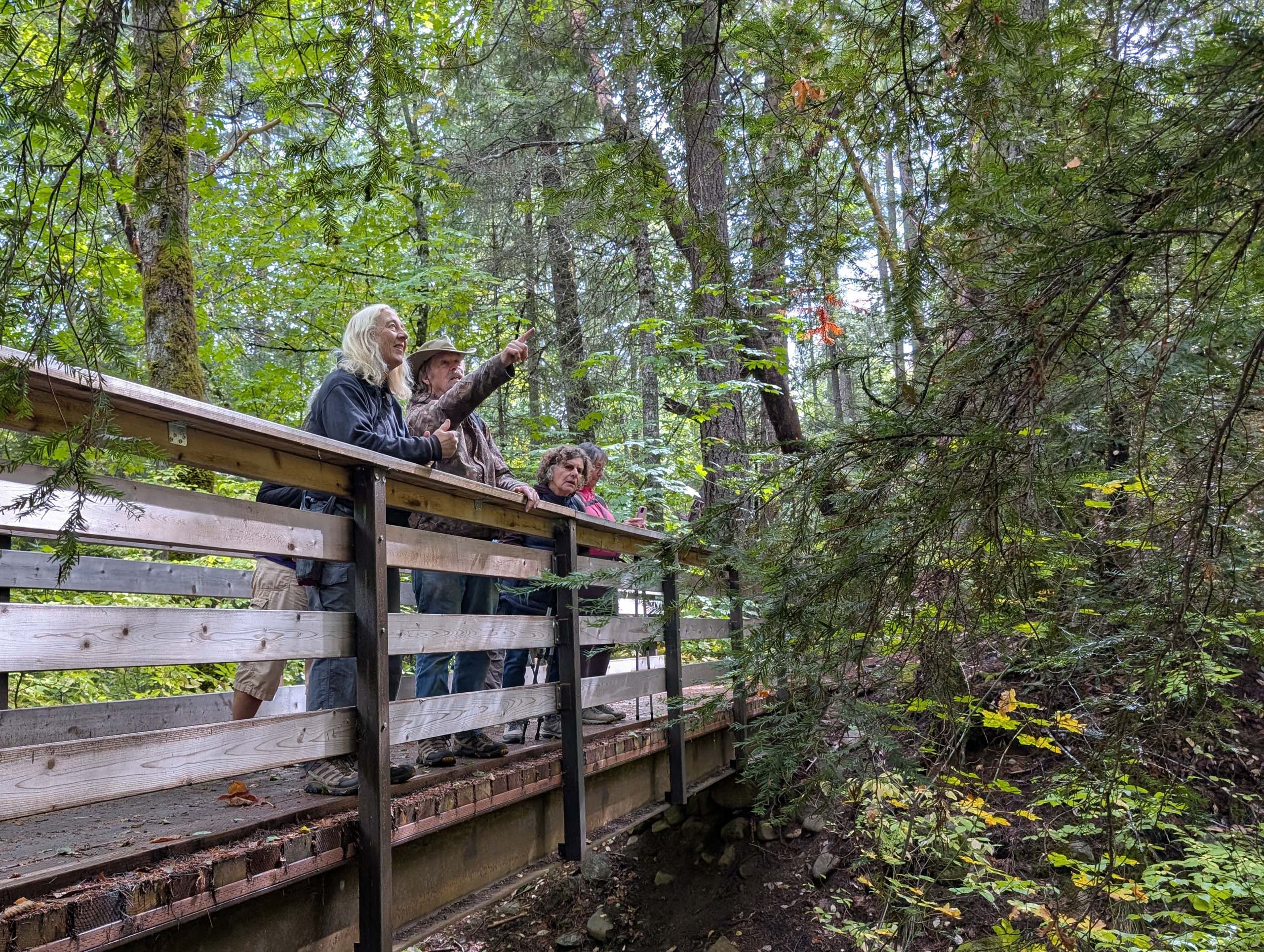
It was a beautiful day to explore one of the many trails that this area has to offer. While fall is not known as a “showy” season with fields of flowers, there is still a lot to see! Particularly the often overlooked lichen, mosses, and fungi that do their part in the larger ecosystem. Here are some examples of what we saw (all photos and IDs by Ren Redlich):
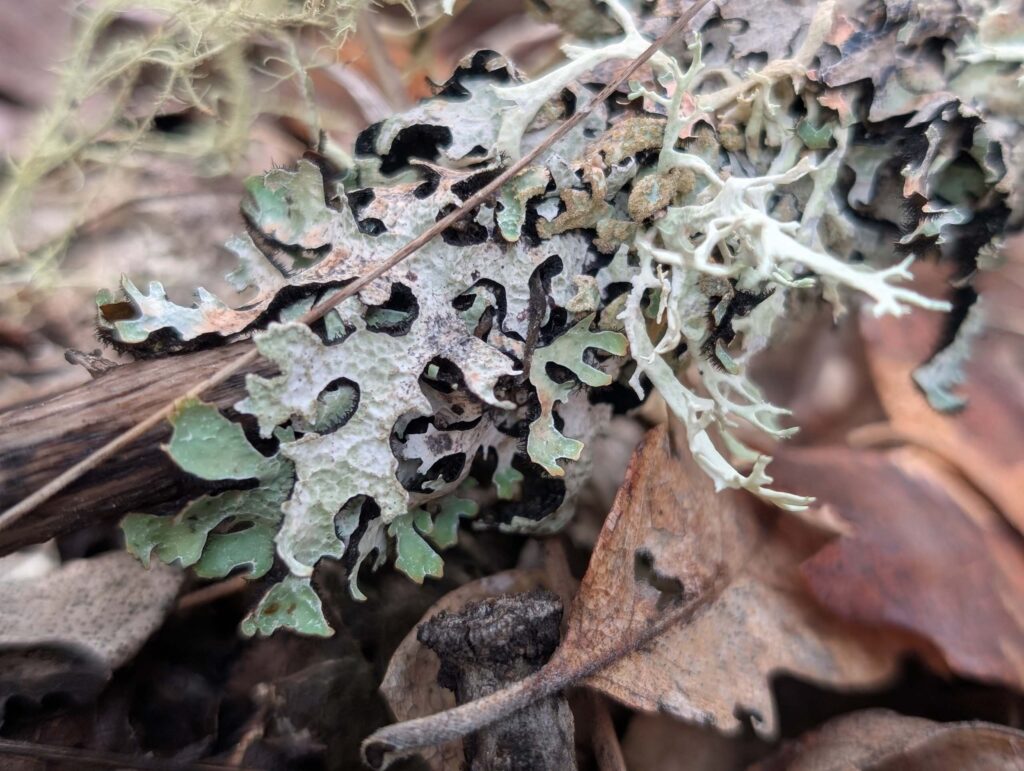
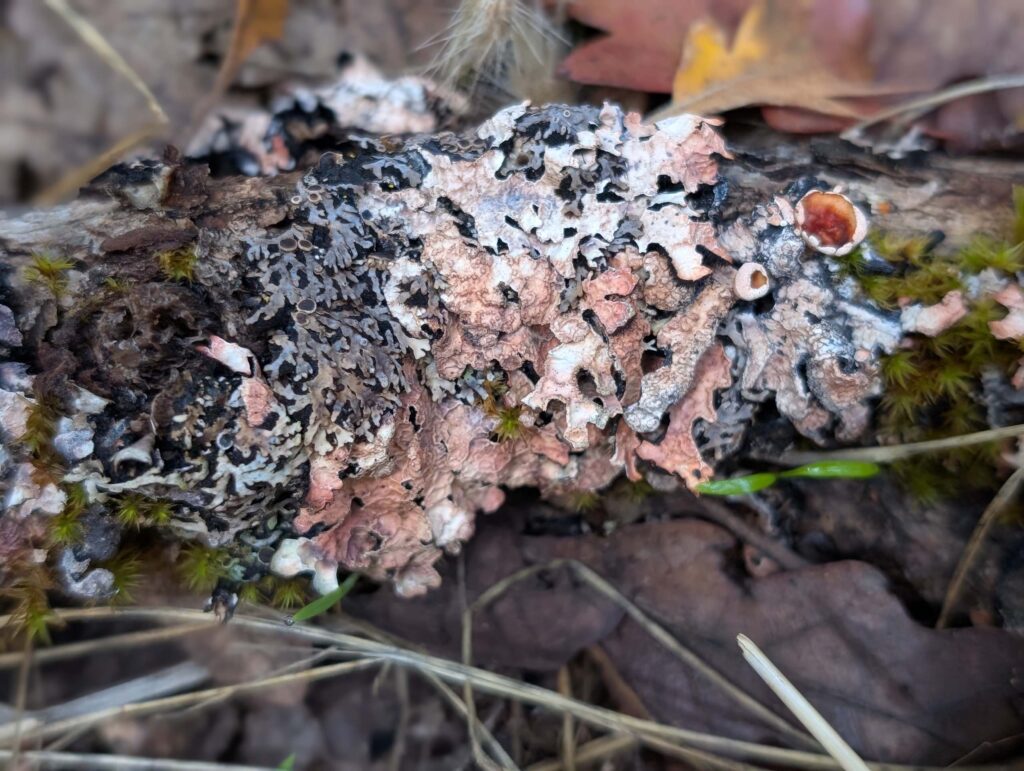
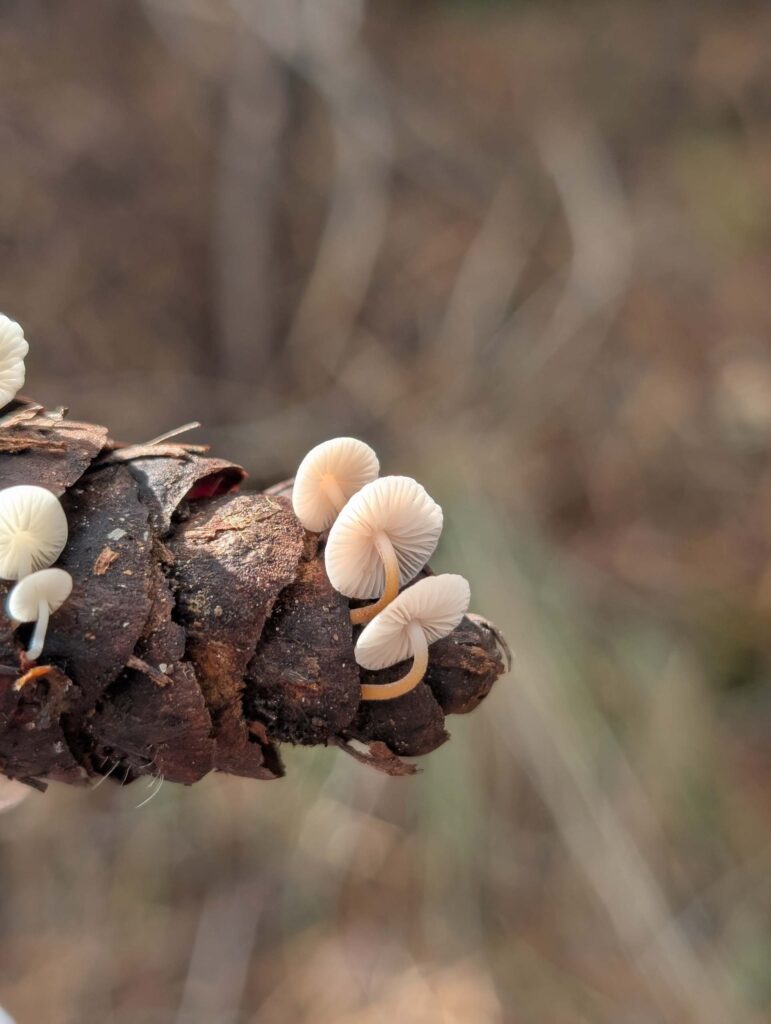
Strobilurus trullisatus.
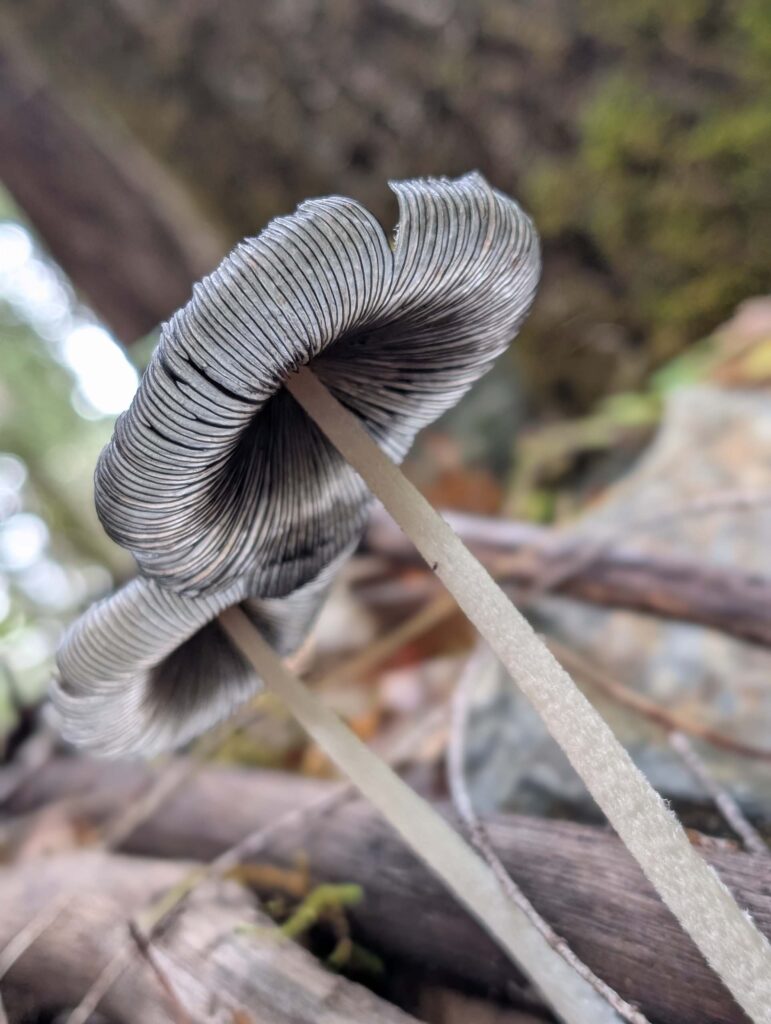
Coprinopsis lagopus.
Now is a great time to explore a little further into the “miniature worlds” existing within our larger scope. ~Ren Redlich