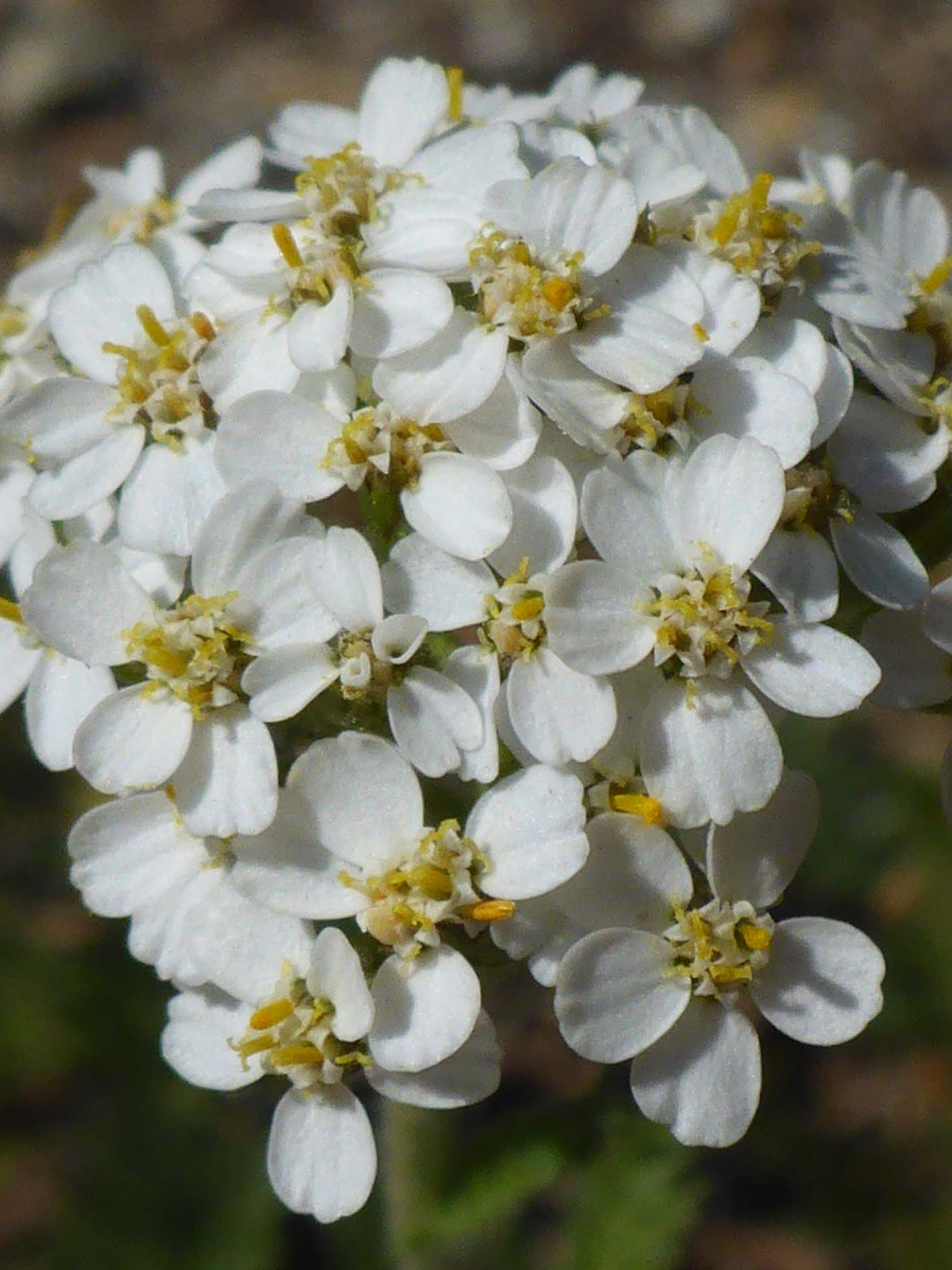
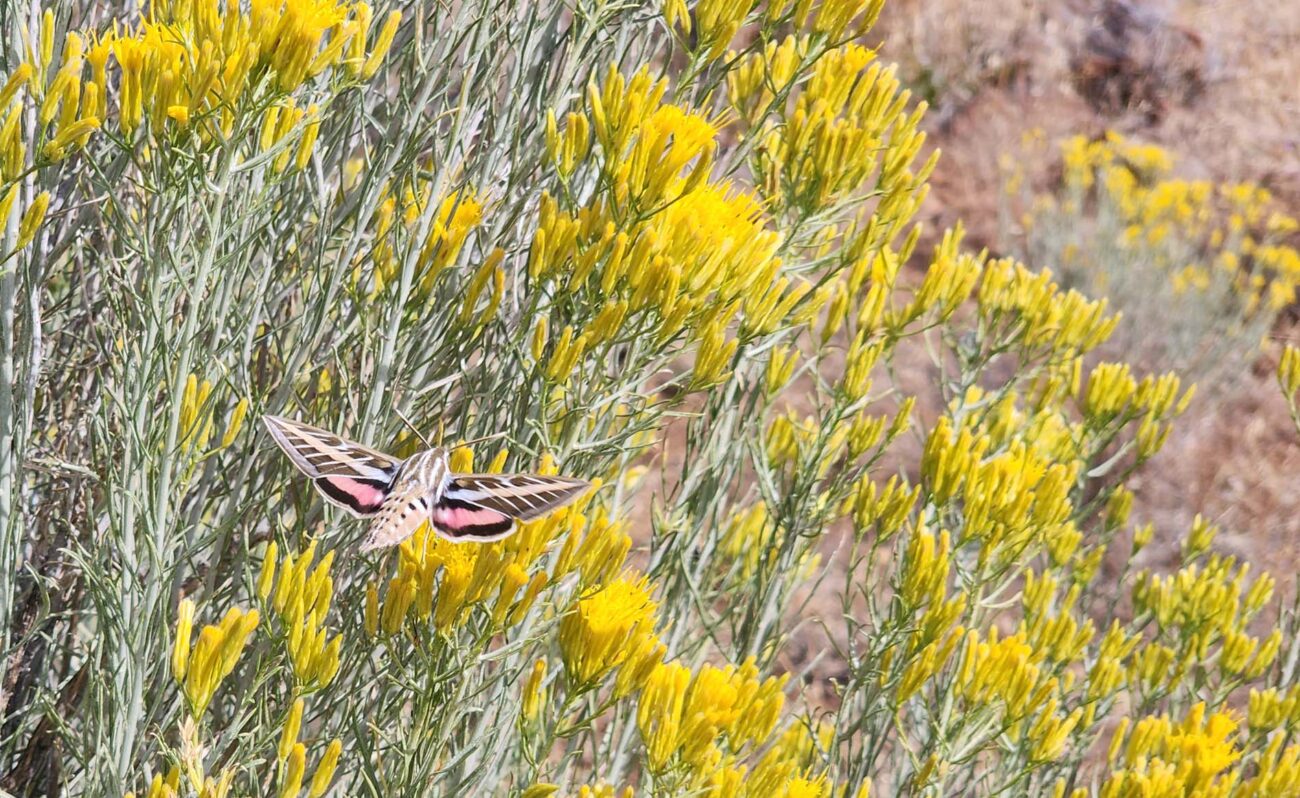
Photo taken by Don Burk on September 24, 2023, on the Hat Creek Rim.
At our September Chapter meeting, we enjoyed learning more about how to attract native pollinators from Shasta Chapter member and president of Ghost Pine Native Plant Nursery, Doug Mandel. We don’t record our meetings for posting online (we want to see you there!), but here you can download a helpful chart from Xerces Society that accompanied Doug’s presentation: Recommended Plants for Pollinators & Beneficial Insects
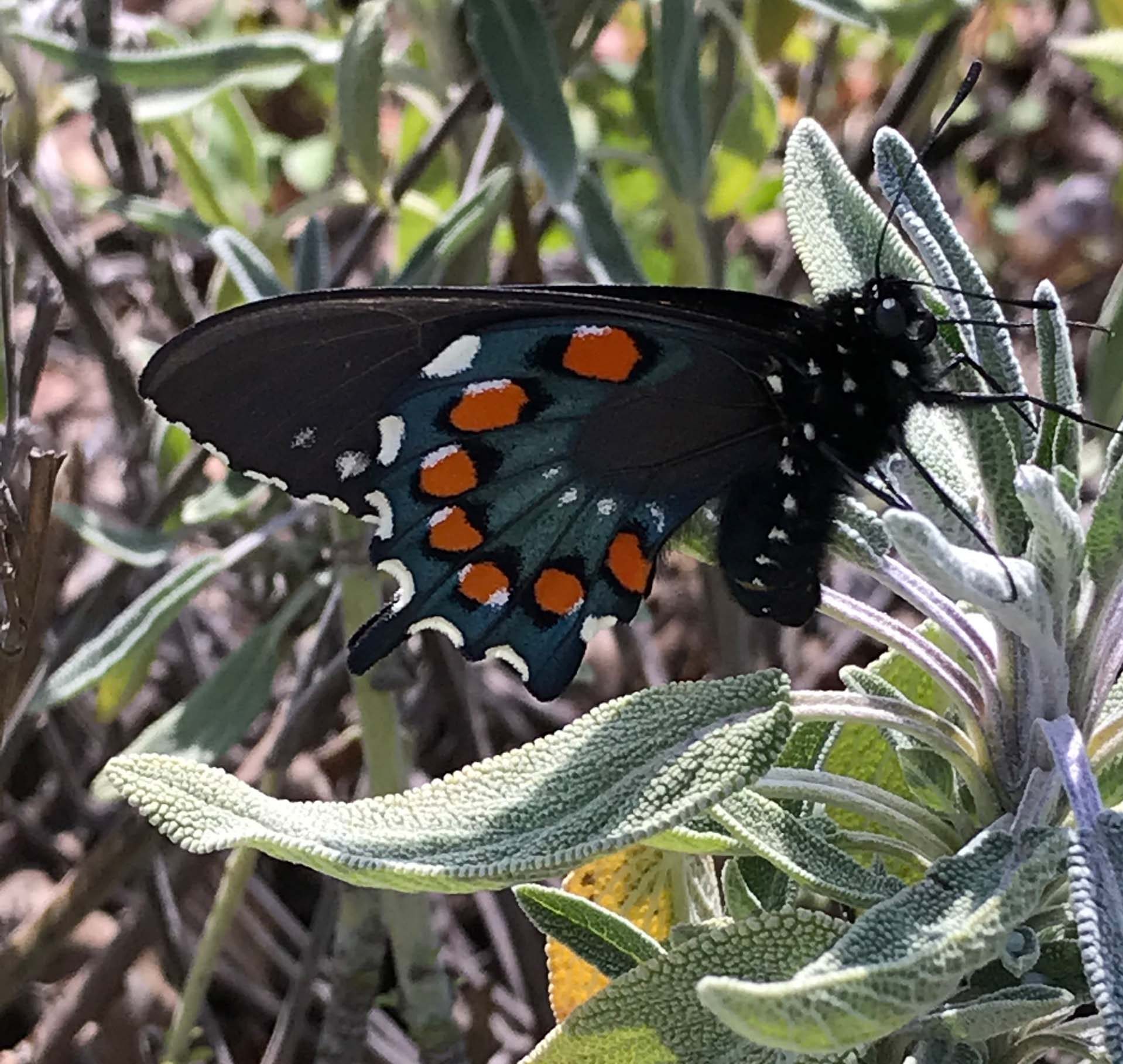
Photo taken by Susan Libonait-Barnes on March 16, 2021.
Native plant gardens are inextricably linked with pollinators of all kinds. This is perhaps the juiciest, most mind-expanding part of cultivating native plants. Each of your garden residents will soon introduce you to their pollinators. All you need to do is get out into your garden to find them. Greet the morning among your plantings and you will meet many other visitors, especially as the morning sun warms the flowers.

Photo by Susan Libonati-Barnes.
The world of native bees, beetles, moths, and butterflies is immense. Many of us, who might not have paid much attention to these small creatures, are guaranteed to be pleasantly surprised many times. Is there anything more uplifting than being awestruck by the diversity of life? For starters, your native plantings will reveal to you a wide range of native bees, none of whom are equipped or inclined to sting.
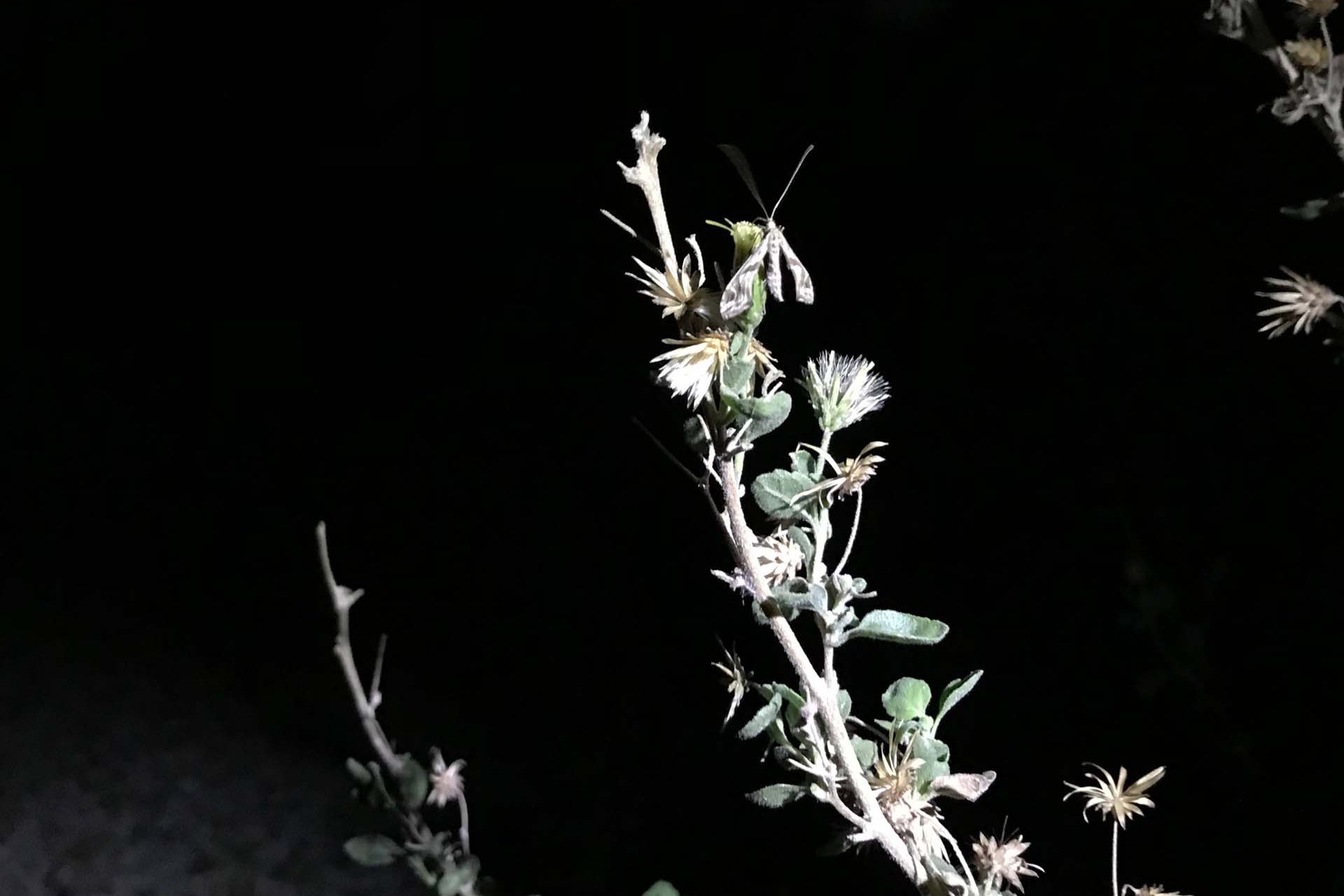
Some of our natives are primarily pollinated at night by moths. Common madia, Madia elegans, featured in our fall sale poster, is a prime example. Also night pollinated is evening primrose (hint hint… there is confirmation in the name itself!), Oenothera elata. Both have abundant flowers that open in the evening once temperatures are cooler, and remain open in the morning until the warmth causes the petals to close.
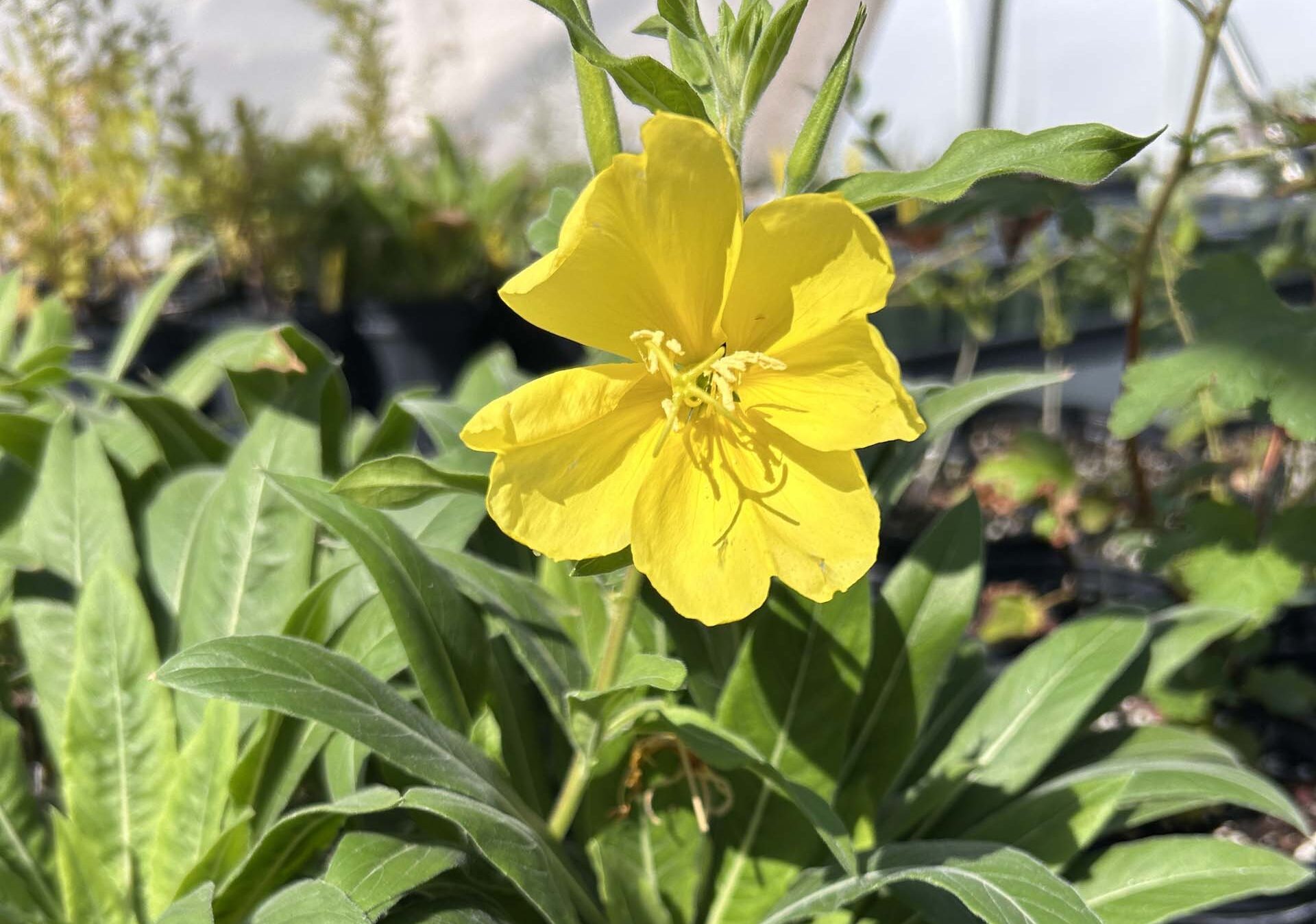
Both species will be available at our Fall 2025 Native Plant Sale and, new this year, we will offer seed packets of several species, including the annual common madia! We also carry many of the plants that the Xerces Society recommends for our region. ~MaryAnn McCrary, Nursery Manager