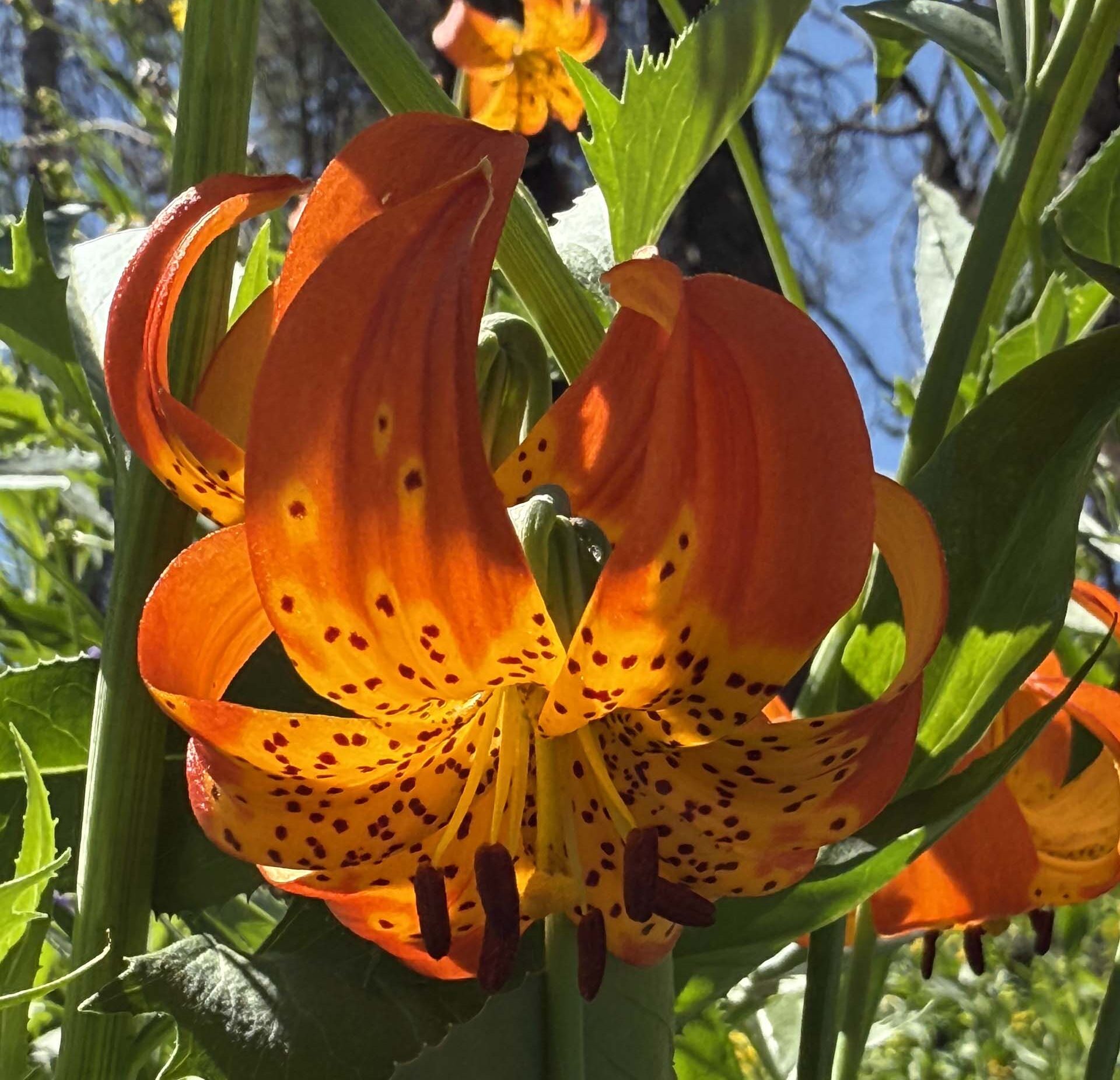
Photo by David Ledger.
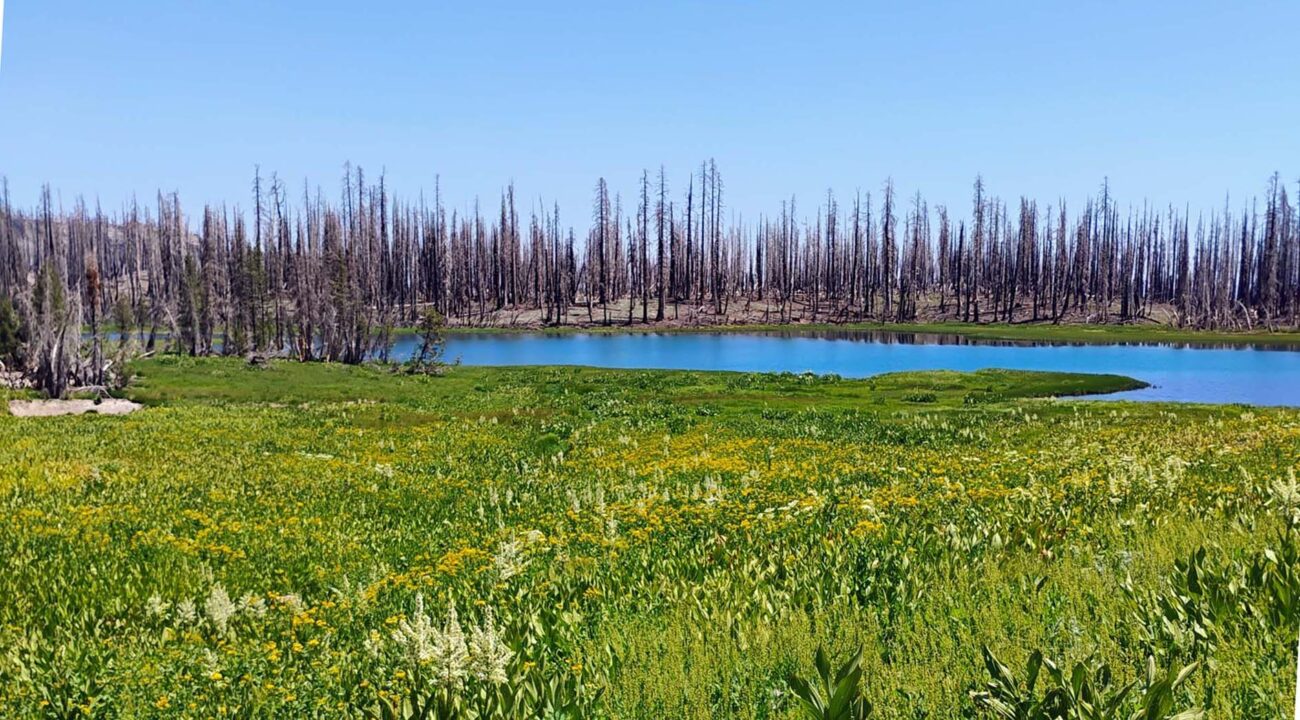
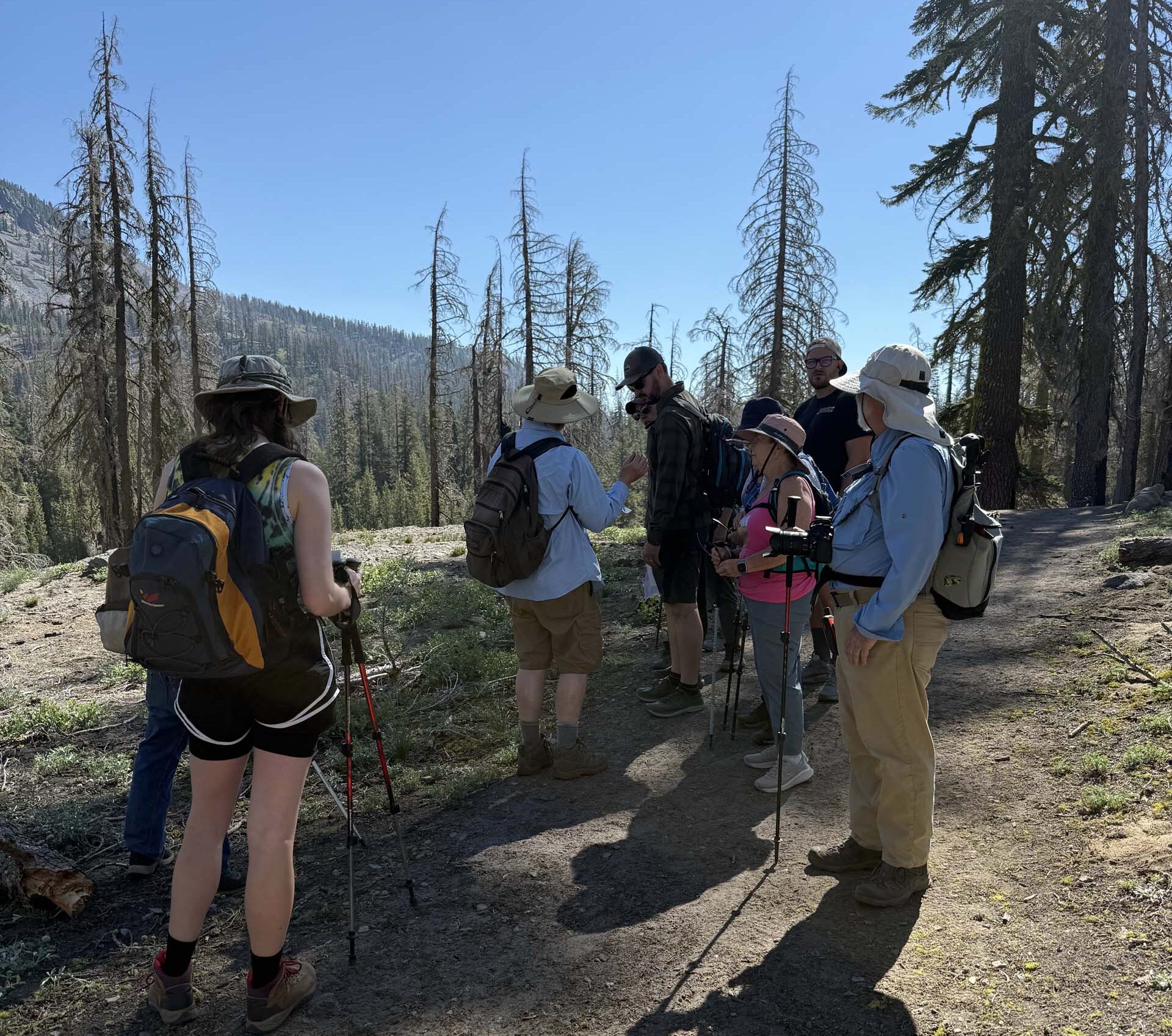
On our outing to Crumbaugh Lake, we had 18 people, including seven CNPS field trip newcomers, who greatly enjoyed this approximately three-mile hike, through burned forests and a lush meadow. Our destination, Crumbaugh Lake, was covered with wildflowers at its north edge.
We stopped at Cold Boiling Lake for a short visit, and by chance met up with a Redding man, Greg Pate, and his daughter, Katy, who is studying botany at Cal Poly, Humboldt. It is always nice to have a botany student on a field trip who can remember all the botanical terminology that the field trip leader may have forgotten over the years!
At Crumbaugh Lake we sat under two conifers to eat lunch, and then walked out to enjoy the numerous flowers surrounding the lake. Along the lake’s edge, we found many flowers, including the ever-present California corn-lily, monkshood, leopard lily, yarrow, yampah, arrow-leaved ragwort, balsamroot, meadow lupine, and Indian-paintbrush. The trail through burned trees had satin lupine, Jepson’s monkey-flower, spreading groundsmoke, marum-leaved buckwheat, and cobwebby Indian-paintbrush.
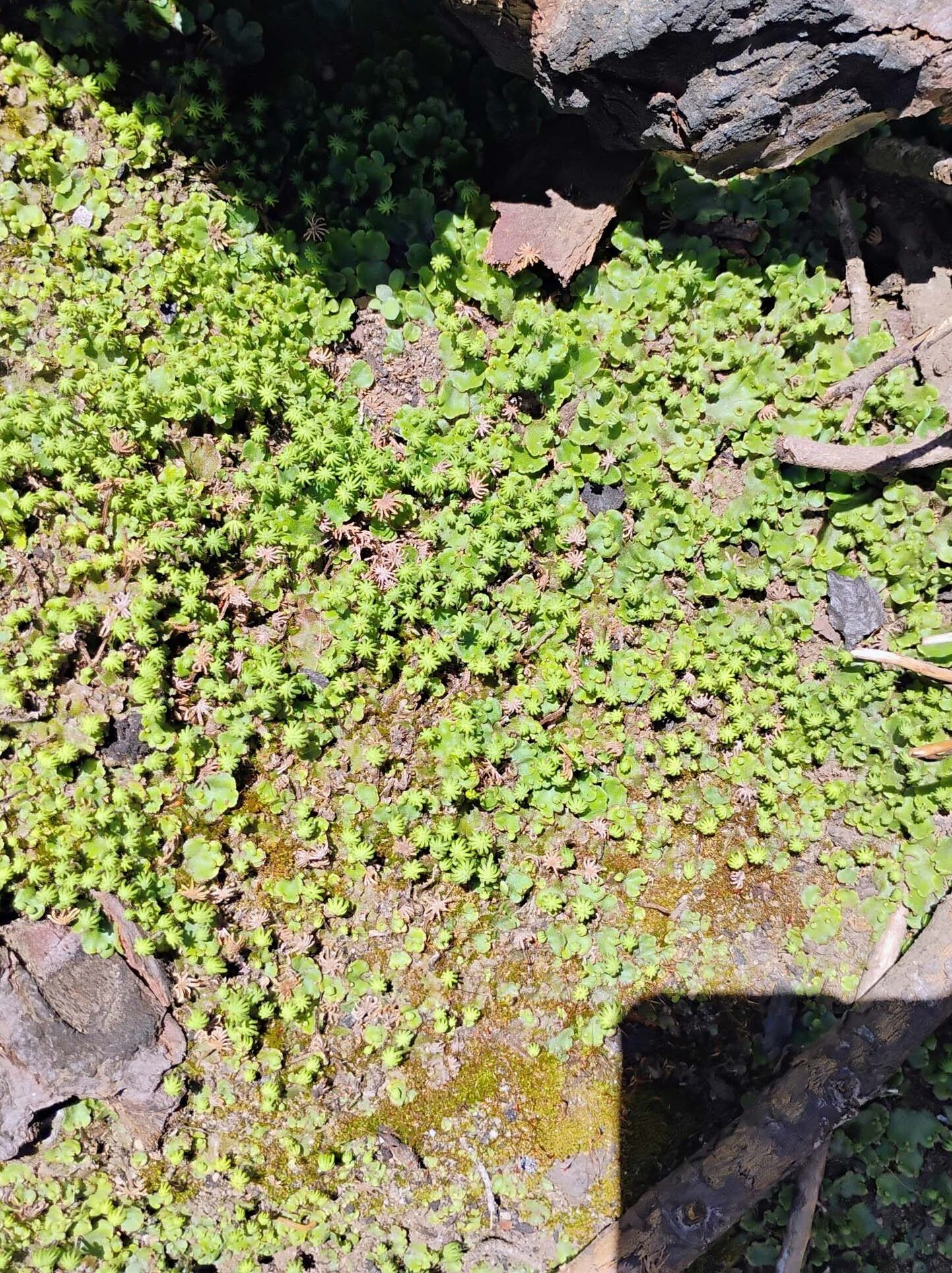
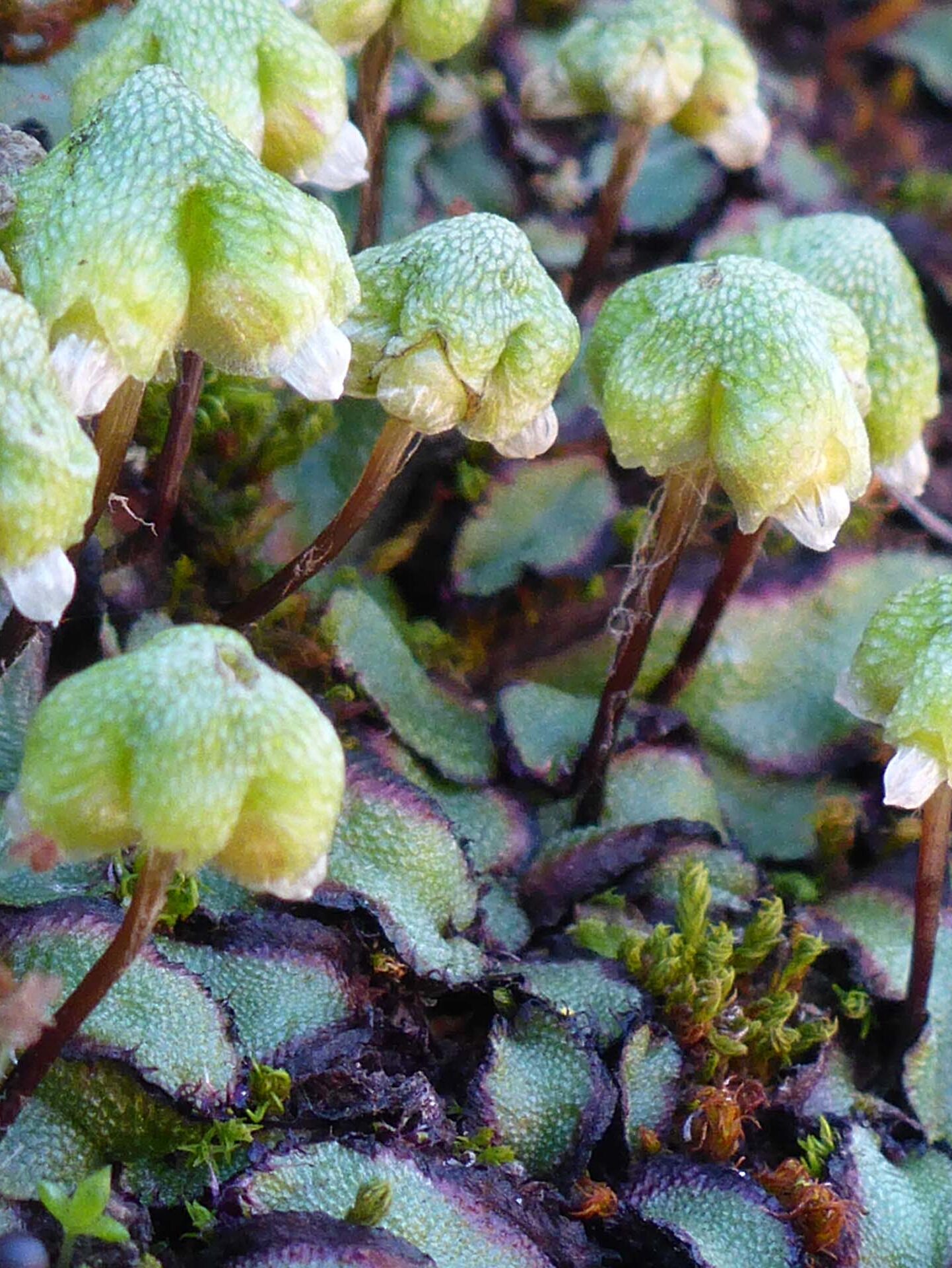
One of the most exciting finds for the hike leader (but perhaps not for the rest of the group) was the green liverworts covering several small areas of mineral soil, in almost full sun among the dead, burned trees. They were in full fruiting mode with little umbrella-like fruiting bodies (archegonium, female structure; and antheridium, male structure). The many thunder clouds frequently surrounding the mountains in the previous weeks likely provided just enough moisture for the liverworts to thrive. They require rainwater for male sperm to swim to the female structure for reproduction. Liverworts are quite ancient in the evolution of plants, having no vascular system or flowers. ~David Ledger