
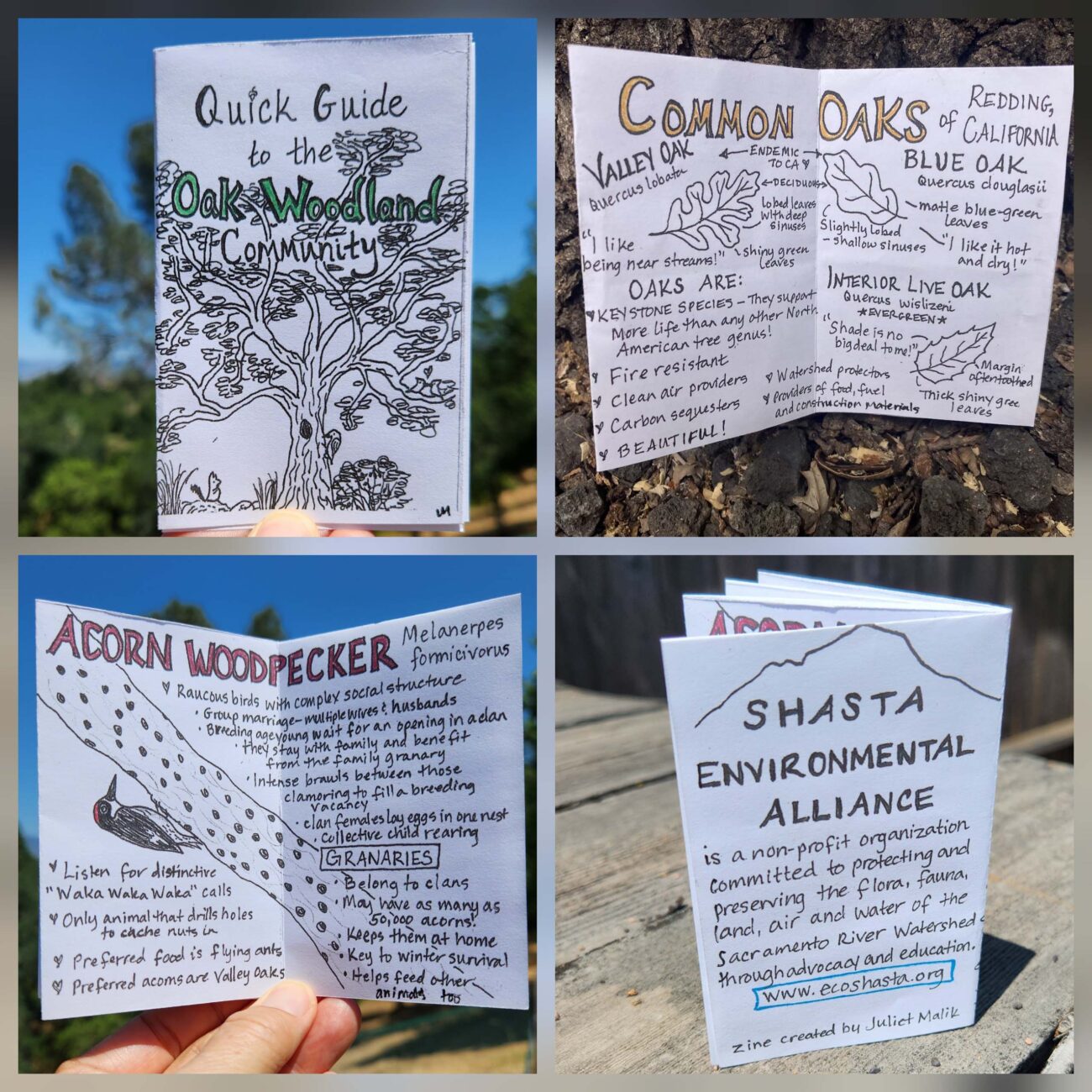
About a dozen people attended the Oak Woodland Meet and Greet walk on June 8, despite the forecast calling for temperatures well over 100 degrees. The goal of the walk was to enjoy the beauty and shade of a local oak woodland while engaging in meaningful dialogue about the vital role this habitat plays in the many lives that depend on it, including our own. A wonderful bonus to the event was the offering of free native oak seedlings from CNPS’s nursery manager MaryAnn McCrary. Thank you, MaryAnn!
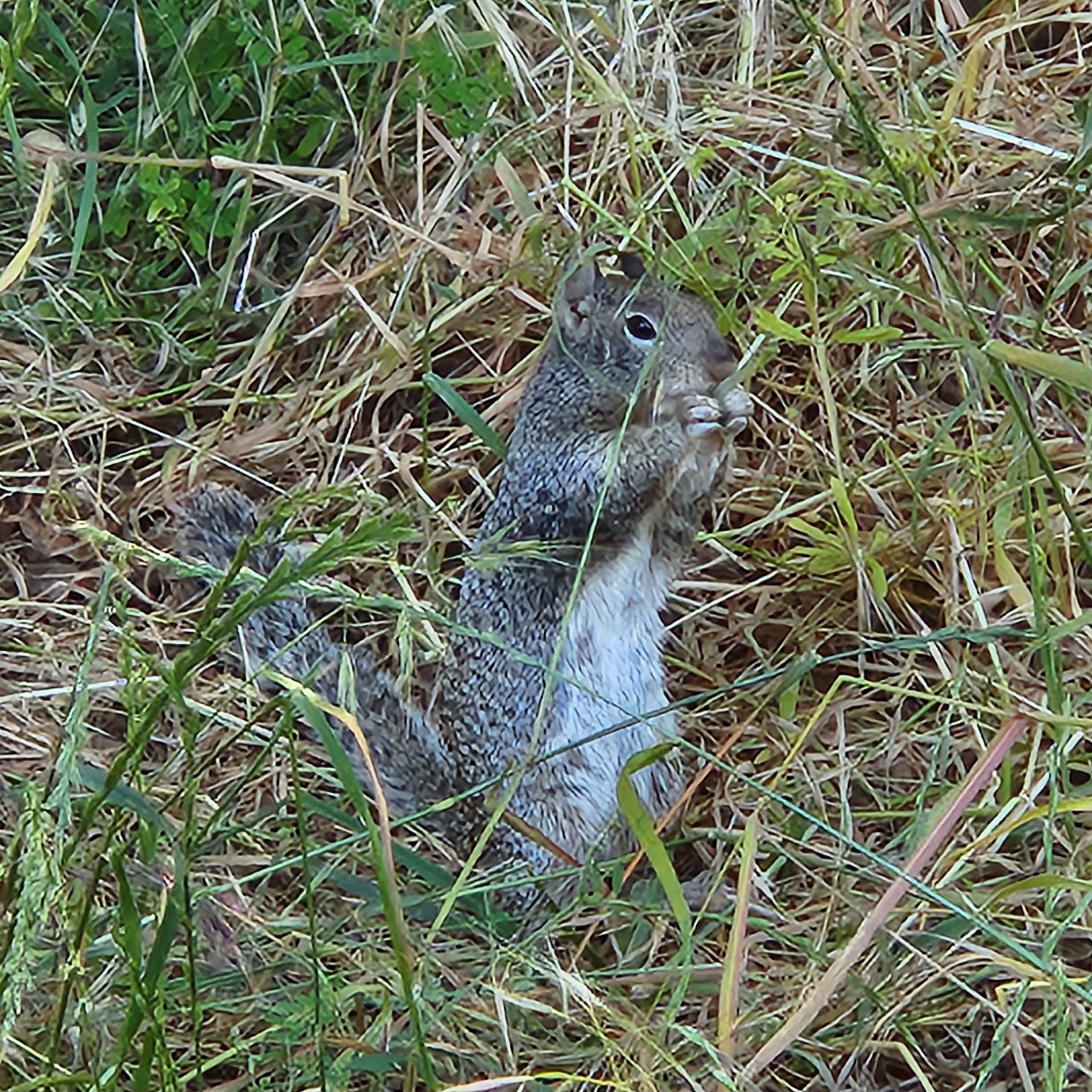
Juliet Malik was inspired to host this walk after reading Kate Marianchild’s book, Secrets of the Oak Woodlands: Plants and Animals among California Oaks, and by the recent disappointing decision of the Redding City Council to vote against implementation of mitigation fees to protect our native oaks. Throughout the walk, she stopped to highlight some of the common residents of the oak woodlands, some of which she featured in a hand-drawn zine she made for the participants. Starting from the parking lot, they could see the evidence of a large network of California ground squirrel tunnels. These ubiquitous rodents might be a menace in our gardens, but they are also a keystone species, providing necessary habitat for the declining western burrowing owl and other ground nesting animals. They are also crackerjacks at dispersing plant seeds, especially those of the California buckeye, which is toxic to nearly all other animals.
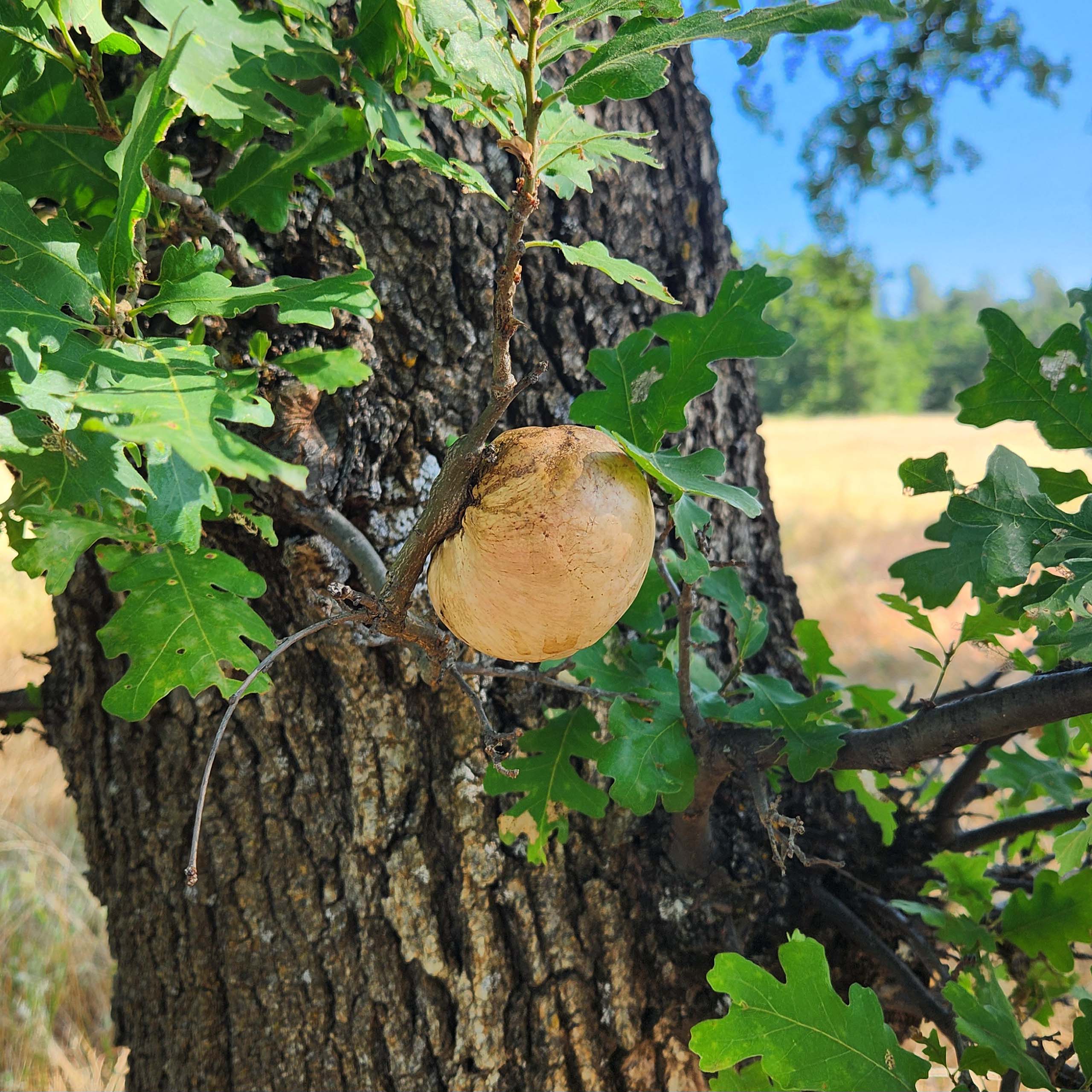
Farther down the trail the group stopped to admire some oak galls, which are essentially oak-constructed nurseries for the larvae of certain insect species. These insects have figured out how to trigger trees into forming galls when they lay their eggs on twigs, branches, or leaves. MaryAnn reminded us that oak galls also carry great significance in human history, having been the main ink source for many important documents like the Declaration of Independence and the U.S. Constitution.
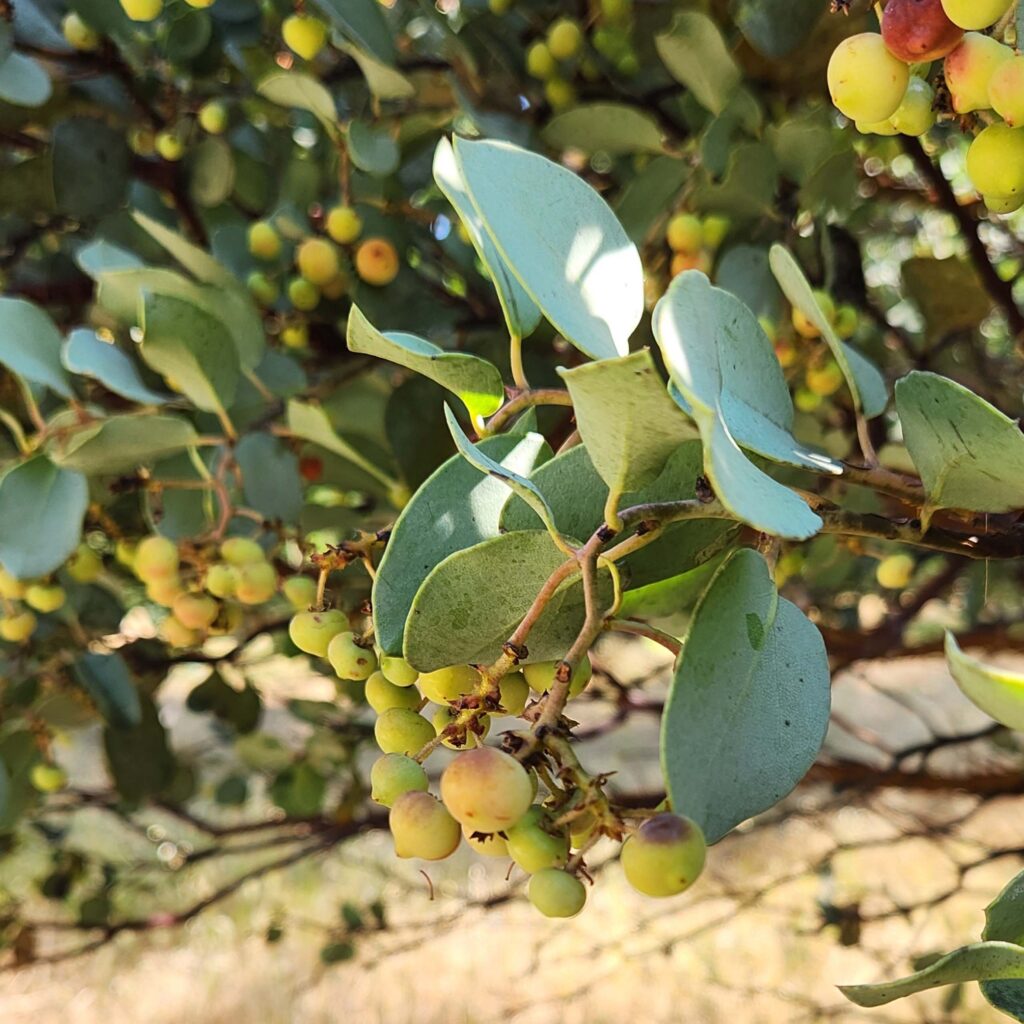
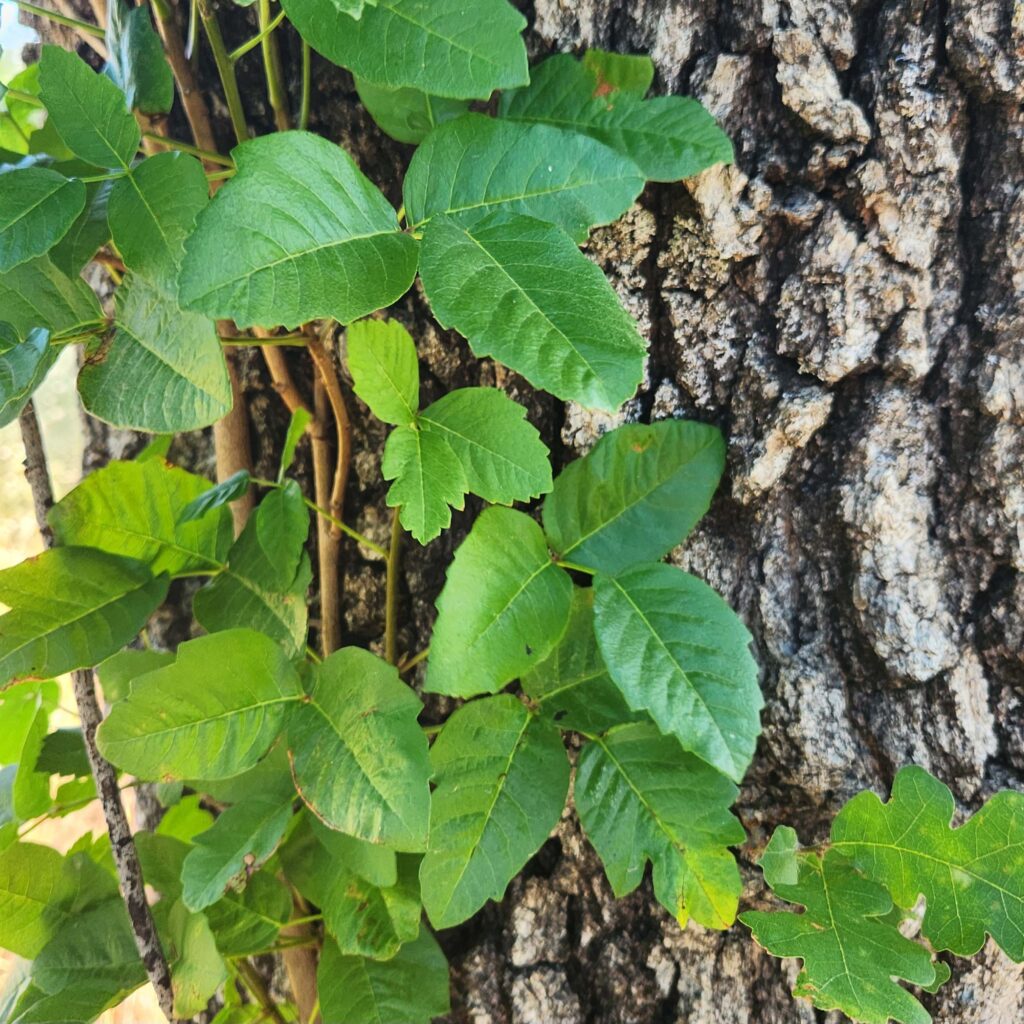
Other discussions took place around manzanita and poison oak, two common oak woodland residents that provide essential habitat and nourishment to many critters. Manzanita’s early blooming season is vital for early pollinators and their berries sustain a large number of mammals and birds. But manzanita also has a special trick: it can photosynthesize through its stems as well as its leaves, making it a veritable oak woodland powerhouse! While it may be difficult for humans to value poison oak due to the rude rash 90% of us get from coming in contact with its coating of urushiol (an oily resin), the birds, insects, and mammals of the woodland would be lacking a vital source of food and shelter without it, especially after a wildfire because poison oak serves as a nurse plant by resprouting quickly to provide protective cover for slower-to-recover species.
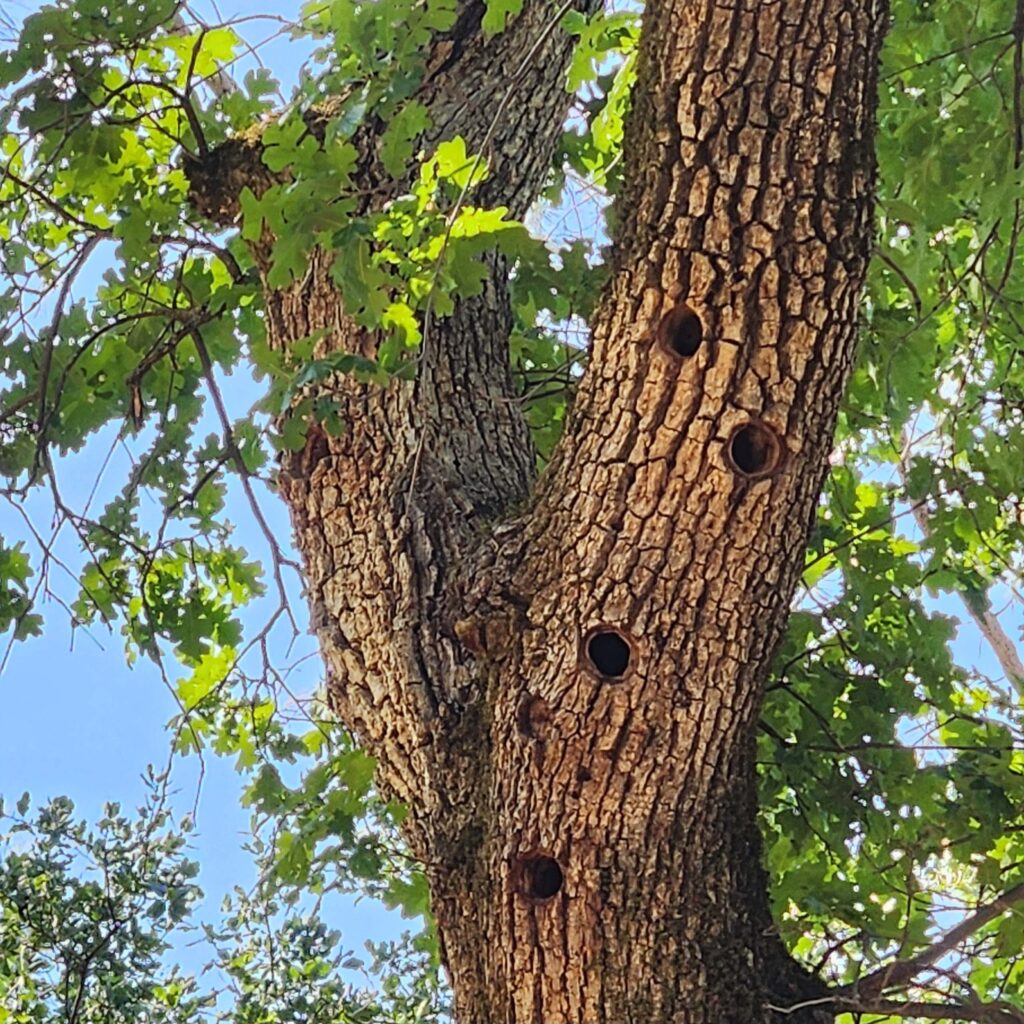
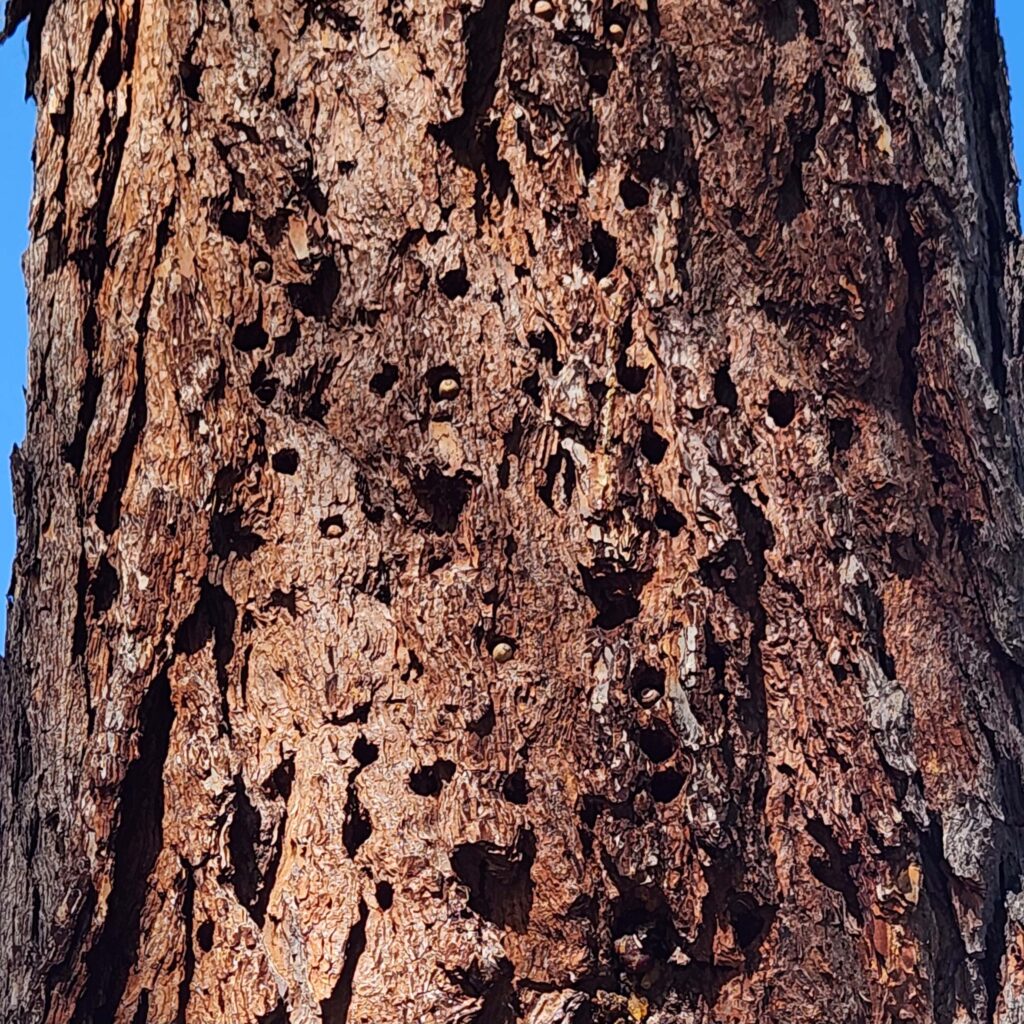
As the group wound its way toward the last shady section of the trail, they stopped next to an acorn woodpecker village, complete with acorn granaries, nesting holes, and several of the industrious birds taking care of business. They talked about this bird’s complex social structure, their dependence on acorns to get them through the winter when their preferred food of flying ants is absent, and their cooperative relationship with scrub jays who stash away the largest acorns while acorn woodpeckers cache the smaller ones.
Beyond the obvious support that healthy oak woodlands provide for the many animals and plants that live in them, conversation emerged around the human role in this ecosystem – in terms of how we benefit from them as well as our responsibilities toward thoughtful stewardship. Everyone had valuable insight and perspective to share, from fire resiliency (oaks are well-adapted to survive wildfire), soil stability, water health, and carbon sequestration to shade, beauty, spiritual nourishment, and even to their role in our lives as historical witnesses (oaks can live for over 600 years). The group shared their frustrations over decisions being made by local leaders who appear to care very little about these life-supporting attributes. While solution-finding is challenging, coming together under the shade of mighty valley oaks was a potent reminder of the need for community and connection. Let’s keep coming together, let’s keep sharing ideas because that’s where hope and solutions will emerge. ~Juliet Malik